
Key takeaways
- ISSB has achieved significant global momentum: Almost 50 jurisdictions have adopted or are moving towards adopting its sustainability disclosure standards.
- The focus is now on implementation: The ISSB is helping companies to apply the standards effectively through guidance and practical support, including on how to report material information to investors.
- Sustainability reporting is becoming part of mainstream corporate reporting: There are stronger links to strategy and financial performance.
- Looking ahead at the next five years: The next priority is to continue to reduce reporting complexity and create a more consistent global reporting landscape by supporting adoption of ISSB Standards in jurisdictions around the world and advancing interoperability.
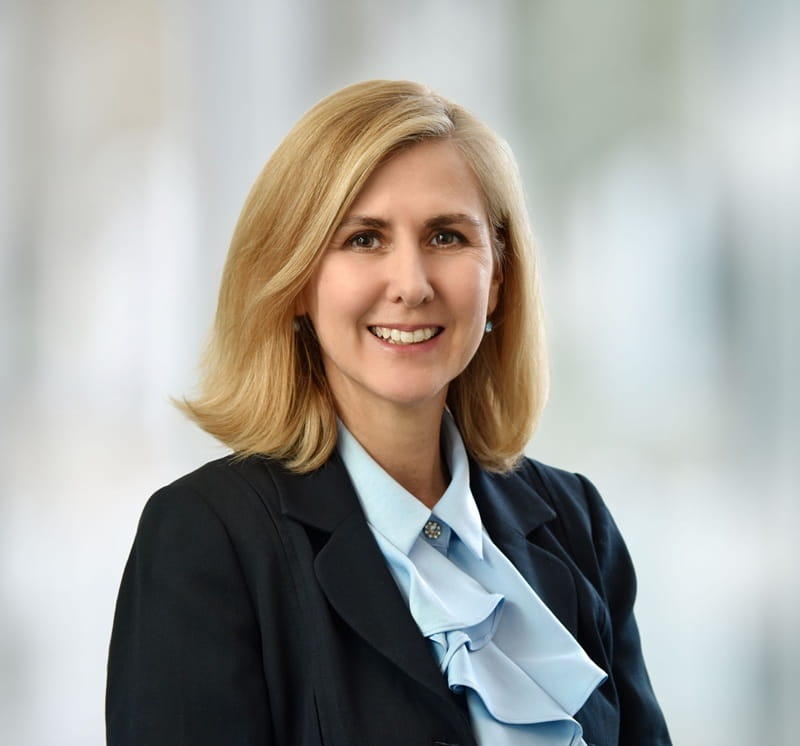
ICAEW spoke to Sue Lloyd in 2022, when the newly formed International Sustainability Standards Board (ISSB) was setting out to establish a global baseline of sustainability-related financial disclosures. At the time, Lloyd described the task ahead as a journey that could take several years. Almost five years on from the ISSB’s creation, we caught up with her again to reflect on how far the board has come and what lies ahead.
From ambition to global baseline
Five years ago, the prospect of establishing a globally consistent approach to sustainability reporting was an ambitious undertaking. Today, with nearly 50 jurisdictions having decided to adopt or otherwise use the ISSB’s Standards, or in the process of doing so, the board has made significant progress towards that goal.
For Lloyd, one of the defining achievements has been delivering the ISSB’s first two standards – IFRS S1 General Requirements for Disclosure of Sustainability-related Financial Information and IFRS S2 Climate-related Disclosures – within the intended timeframe by the end of June 2023. IFRS S1 sets out general requirements for disclosing sustainability-related risks and opportunities that could reasonably be expected to affect a company’s prospects, while IFRS S2 focuses specifically on climate-related disclosures. Together, they establish a “global baseline” designed to provide investors with consistent, comparable data.
“It was a huge achievement that we were able to complete the first two standards on a timely basis,” she explains. The standards were unveiled at stock exchanges around the world and having been responsible for delivering the technical work, Lloyd describes the occasion as a personal “significant career milestone”.
For the board, the achievement is twofold: firstly, developing standards capable of meeting investors’ information needs. As Lloyd told us in 2022: “Corporate reporting is changing, with investors and other capital market participants asking for more information about companies’ sustainability-related risks and opportunities.” The second achievement has been securing international support for the adoption of ISSB Standards. “I think establishing the right basis of reporting and then seeing this incredible adoption is one of our biggest achievements in the last five years,” Lloyd comments.
While she anticipated initial interest from developed economies with sophisticated capital markets, she has been particularly encouraged by progress in emerging markets and developing economies.
Turning standards into practice
While many companies were already reporting on climate or wider sustainability issues, applying a set of standards with more specific requirements represents a significant shift, she explains. The ISSB Standards require companies to provide information about how sustainability-related risks and opportunities affect their business model, strategy, cash flows and financial performance. They also require sustainability-related financial disclosures to be published as part of the same reporting package as the financial statements, as opposed to being treated as an entirely separate exercise.
“The biggest learning for me was just how big this change in reporting was going to be for everybody around the world,” Lloyd says. Making the standards usable across different markets and businesses has, therefore, become a central part of the ISSB’s work. Educational materials, implementation guidance and engagement with professional bodies are helping companies to understand what is required of them and how to apply it proportionately.
“The strongest filter in the standards to make this a realistic and appropriate ask of companies, is the filter of materiality – a test that accountants know really well because it is the same test that applies when you are preparing financial statements,” Lloyd explains.
Applied properly, the materiality principle should help companies concentrate on the sustainability-related issues most relevant to their prospects, rather than becoming overwhelmed by an extensive list of possible disclosures. Lloyd also emphasises the importance of collaboration between finance and sustainability teams. Her advice to finance teams preparing for implementation and potential future assurance is straightforward: start now, document the sources of information and assumptions being made, and understand what data and processes are already available across the business.
Building investor confidence
While it remains too early to assess the full effect of the standards on capital allocation decisions, Lloyd says there are encouraging signs that ISSB-based disclosures are already influencing investment processes.
Lloyd emphasised in 2022 that “the quality of what we produce matters”. This remains a key consideration in 2026. She explains: “Investors use a variety of information and the information they like the most is that which is high quality, verifiable and material to understanding how a company is going to generate cash flows and performance over the short, medium and long term. That’s what our information is designed to deliver.”
Assurance is another important component of credibility. Lloyd notes that investors may be less focused on the details of differing jurisdictional assurance requirements, while those differences can create practical complexity for preparers. However, even when assurance is voluntary, it can increase confidence in information used for business decisions, give directors greater comfort when signing off the report and help companies prepare for future assurance requirements.
She also highlights the opportunity to connect sustainability reporting more closely with financial statements. A coherent annual report should help investors understand not only a company’s current performance, but also how sustainability-related risks and opportunities could affect its prospects over the short, medium and long term.
A more efficient reporting landscape
As sustainability reporting requirements continue to evolve across jurisdictions, the efficiency of doing this, including interoperability, is another key priority for the ISSB. Companies operating internationally may need to comply with multiple jurisdictional reporting frameworks and, without sufficient alignment, they risk having to duplicate work, maintain separate systems and produce overlapping disclosures.
“If everybody was speaking the ISSB’s language, it would be seamless,” she says. The board is therefore encouraging jurisdictions to align their requirements with ISSB Standards wherever possible. It is also exploring approaches that allow foreign companies to use ISSB-based reporting to satisfy domestic obligations, reducing the need to prepare entirely separate reports. This is the aim of the ISSB’s global passporting initiative, announced at the 2025 IFRS Sustainability Symposium. The proposed arrangements would mean jurisdictions accept reports prepared in accordance with the ISSB Standards as written by the ISSB for foreign companies, with incremental local disclosures where necessary. To support this work, the ISSB expanded its Jurisdictional Working Group, now known as the Jurisdictional Adopters Working Group, to facilitate discussions among regulators on how passporting could work in practice.
Across jurisdictions, the focus is increasingly on aligning sustainability reporting requirements and ensuring connections between sustainability reporting and financial statements, while reducing duplication for companies operating across multiple markets. In the UK, the Financial Conduct Authority (FCA) has finalised rules requiring in-scope listed companies to report against the UK Sustainability Reporting Standards (UK SRS) on a comply-or-explain basis for accounting periods beginning on or after 1 January 2027.
In the EU, work with the European Commission and EFRAG, which develops the European Sustainability Reporting Standards (ESRS), has focused on helping companies navigate both frameworks. A jointly developed interoperability guide, published in May 2024, has supported that effort. In addition, changes to the European reporting framework in 2026 have created greater flexibility, enabling companies to comply using an ISSB report with incremental disclosures. ICAEW's October 2026 consultation response on ESRS for certain non-EU undertakings in accordance with article 40a of the accounting directive recommends that the final standard explicitly introduce an ISSB-plus approach that allows non-EU groups to use their group-level ISSB-based reporting as the baseline for ESRS-40a reporting.
For Lloyd, the objective is not simply technical alignment, but practical efficiency for preparers. This reflects a further evolution in sustainability reporting over the past five years: a move away from treating sustainability, or environmental, social and governance (ESG), as a standalone topic towards focusing on the risks and opportunities that affect a business and its prospects in the broader sense of the word “sustainability”.
The ISSB also continues to strengthen its relationship with its sister board, the International Accounting Standards Board (IASB), which develops IFRS Accounting Standards. The two boards intend to conduct their next agenda consultations concurrently in 2027, allowing stakeholders to consider their priorities together and identify opportunities for joint work.
For Lloyd, this is all part of efforts to ensure that financial statements and sustainability-related financial information work together as a coherent package of information focused on investors’ information needs.
Collective responsibility
Looking ahead, Lloyd groups the ISSB’s priorities into two areas: continuing to support adoption and continuing to develop the global baseline. The immediate task is to help the nearly 50 jurisdictions already engaged with the ISSB Standards to complete their decisions and progress in their implementation. As well as further growth in the number of jurisdictions using the standards, the board would also like to see depth being established within adopting jurisdictions, by reporting requirements being extended to more companies.
The ISSB intends to take a proportionate approach to further standard setting, recognising that companies and markets still need time to implement the existing requirements. “We’ll still have a lot of focus on supporting the good understanding and implementation of what’s already required, rather than getting too carried away with adding new disclosure requirements,” Lloyd says.
Indicative of this approach, the ISSB has recently published its consultation on proposals for nature-related disclosures in October 2026. Rather than being published as a separate standard, the proposals are in the form of a Practice Statement. This approach recognises that material information about nature-related risks and opportunities, where they could affect an entity’s prospects, is already required to be disclosed under IFRS S1. The focus of the proposals therefore is to provide more detail on how companies can provide this information and how the quality and comparability of nature-related information can be improved globally.
For the next five years, Lloyd's message is one of collective responsibility. Regulators, companies, investors, accountants and professional bodies all have a role in making the standards work in practice, she explains. Supporting this effort, ICAEW is an official ISSB training partner, with its 2026 course, Sustainability reporting: applying IFRS S1, IFRS S2 and UK SRS, now available to help professionals develop the knowledge needed to apply the standards. “I really believe that this is a collective effort and an opportunity to provide information that will truly be useful to inform investment decision-making,” she says.
For Lloyd, the first five years established the foundations. Now, the task at hand is to ensure that the standards are understood, applied consistently and used to support more resilient businesses and better-informed capital markets.
Further resources
Sustainability summit
This two-day virtual summit provides a chance to hear from policymakers, regulators, businesses and practitioners on sustainability reporting, assurance, practical implementation and how to remain resilient.

