
A couple of weeks ago, we met up with the brilliant Excel Comedian and Excel MVP, David Benaim, and Harry Gross, an exceptionally talented mind in the AI and Excel space.
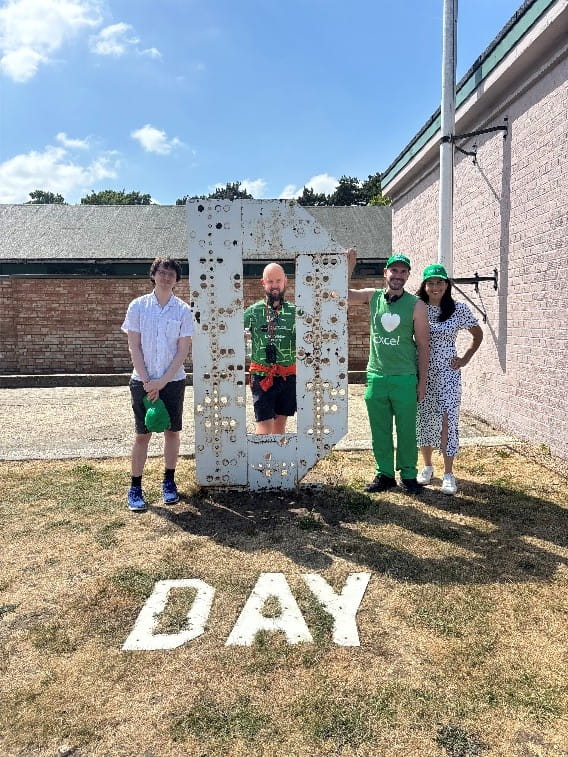
We took a trip to Bletchley Park and The National Museum of Computing, where we were surrounded by the world’s first computers and stories of codebreakers whose work changed the course of history.
We knew we’d be in for an incredible history lesson, but we didn’t expect to leave thinking about Excel.
A brief history lesson
For those unfamiliar with the site, Bletchley Park was the centre of Britain's codebreaking operations during the Second World War. It became home to the Government Code and Cypher School (C&CS), where thousands of mathematicians, linguists, engineers and analysts worked to intercept and decode encrypted communications from Germany and their allies.
It is perhaps best known for its role in breaking the German Enigma cipher, and there is broad agreement that the intelligence generated at Bletchley Park significantly accelerated Allied decision-making and helped shorten the war by around two years.
Today, the site stands not only as a memorial to those who served there, but also as a reminder of how analytical thinking, collaboration and technology can combine to solve seemingly impossible problems.
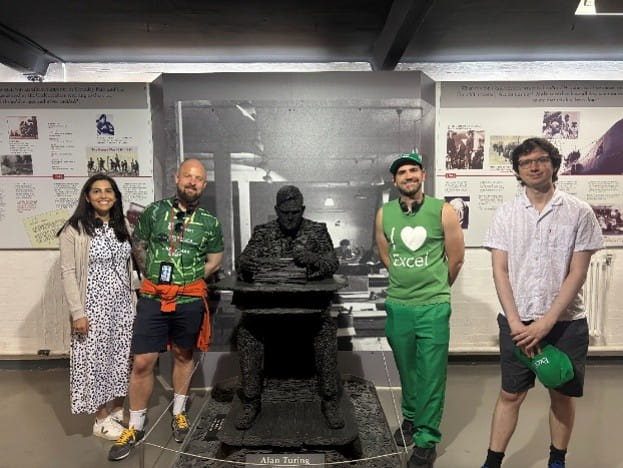
The real challenge wasn't technology
When people think about Bletchley Park, they usually think about mathematics, cryptography or Alan Turing.
What struck us most was that the real challenge faced almost 80 years ago wasn't that of purely creating technology. The challenge was turning huge volumes of information into actionable insight quickly enough for someone to make a decision.
Thousands of intercepted German messages were arriving from multiple sources. The information was incomplete, and the data was messy. In many ways, that sounds familiar to us finance folk.
Most finance teams today are not suffering from a shortage of data. If anything, the opposite is true. Between ERP systems, CRM data, operational reports and spreadsheets, organisations are drowning in data.
The challenge is not collecting data; it’s identifying what matters… the insights!
The codebreakers at Bletchley Park spent their days searching for meaningful patterns hidden within enormous volumes of data. Modern accountants and analysts are often doing exactly the same thing, just with different tools.
Whether you're searching for an anomaly in a set of management accounts, investigating an unexpected variance in performance, or tracing the source of a forecasting error, you're essentially engaged in the same process: finding signals within noise.
Pattern recognition is still the superpower
One of the recurring themes throughout the museum was the importance of pattern recognition - much of the work involved spotting recurring structures, relationships and clues that others had missed.
This felt surprisingly similar to life in Excel.
Many of the most valuable analyses we perform rely on our ability to identify patterns, including:
- Unusual transactions
- Seasonal trends
- Cost drivers
- Data quality issues
The tools might have become more sophisticated, but the underlying skills remain the same.
Experienced Excel users tend to develop an instinct for when something "doesn't look right and those moments of curiosity often lead to the most valuable insights.
Colossus and the birth of automation
I (Giles) would say that the most fascinating exhibit at The National Museum of Computing was the reconstruction of Colossus, widely regarded as the world's first programmable electronic digital computer.
But here’s what really got me thinking. They didn’t build Colossus because they wanted a bigger computer, they built Colossus because data analysis without it had become a bottleneck.
The volume of data had simply grown beyond what people could process efficiently themselves and with their existing tools and that lesson still feels highly relevant today.
Most innovations in Excel follow exactly the same pattern. We adopt Power Query because manual data preparation is taking too long. We embrace Dynamic Arrays because repetitive, traditional formulas feel inefficient. We automate reporting because our time is better spent analysing results than copying and pasting data between workbooks.
Technology creates value when it removes friction.
The organisations that gain the most from modern tools are usually not the ones chasing the latest feature, they are the ones identifying their biggest bottlenecks and applying technology thoughtfully to solve them.
In that sense, Colossus might have been the original automation project.
The women of Bletchley Park
Another aspect of the story that surprised us was the scale and diversity of the workforce behind the operation. Around three-quarters of the people who worked at Bletchley Park were women, carrying out roles ranging from codebreaking and analysis through to operating the machines that were built there.
Teams with diverse skills and perspectives create brilliant innovation.
People, process and technology
One of the most important lessons from Bletchley Park remains highly relevant for Excel users today. Its success was not driven by technology alone, but by the effective combination of people, process and technology.
Bletchley Park brought together mathematicians, linguists, engineers, analysts and administrators, supported by robust processes for collecting, analysing and sharing information. Technology helped remove bottlenecks and accelerate decision-making, but it was only part of the solution.
The same is true in today's organisations. While AI attracts much of the attention, the real obstacles are often familiar ones:
- Inconsistent or poor-quality data
- Weak or error-prone processes
- Undocumented assumptions
- Knowledge trapped in spreadsheets or teams
- Limited skills, time or support to adopt new approaches

Excel, AI and automation can all help solve these challenges, but only when they are built on solid foundations - even the most advanced technology will struggle if the underlying data and processes are unreliable.
Finance teams seeing the greatest benefits from AI are not necessarily those with the most advanced tools. They are the ones with reliable data, well-structured processes and people who understand the business problems they are trying to solve. Just as importantly, they have the curiosity and persistence to challenge established ways of working and turn ideas into practical improvements.
If you’ve tried to teach people a new Excel function recently or perhaps showed them how Power Query could revolutionise their processes, don’t be surprised if it takes time for people to adopt it. Change can be scary and overwhelming, but we must persist.
As Bletchley Park demonstrated, lasting innovation comes from aligning talented people, effective processes and the right technology to solve real-world problems.
Same challenge, different tools
Walking around the exhibits, it was impossible not to reflect on how far technology has advanced (modern computing power would have seemed unimaginable to the people working at Bletchley Park!)
Yet despite those advances, the core challenge remains remarkably consistent.
We are still trying to turn raw information into better decisions.
We're still searching for patterns.
We're still trying to automate repetitive tasks so we can focus on analysis.
And we're still discovering that technology delivers the greatest value when it complements human expertise rather than replaces it.
From codebreaking machines that cracked Enigma at Bletchley Park, to having AI within spreadsheets today, the tools have evolved beyond recognition.
The mission, however, remains exactly the same.
Standing in the birthplace of modern computing, surrounded by machines that once represented the cutting edge of technology, we were reminded that the real value was never the technology itself…
It was what people were able to achieve with it.
For accountants, analysts and Excel users, that's a lesson every bit as relevant today as it was in the 1940s.
Archive and Knowledge Base
This archive of Excel Community content from the ION platform will allow you to read the content of the articles but the functionality on the pages is limited. The ION search box, tags and navigation buttons on the archived pages will not work. Pages will load more slowly than a live website. You may be able to follow links to other articles but if this does not work, please return to the archive search. You can also search our Knowledge Base for access to all articles, new and archived, organised by topic.
- Cells, Chaos, and Collaboration: Excel on The Road in Amsterdam
- Global Excel Summit 2026: The sum of what you missed, sorted by where to begin
- Excel on the Road is… back on the road!
- From codebreaking to spreadsheets: what Bletchley Park can teach today’s Excel users
- Edinburgh Fringe: Excel comedy laced with tips, and flat earth believers