
Welcome to another article from Giles Male and Fay Bordbar, Excel experts, and founders of ‘Excel on the Road’. In this article, Fay and Giles cover their travel to Amsterdam, fresh from the Global Excel Summit, to take part in a European Excel competition! While expecting it to be challenging in the way these competitive Excel events often are, what they did not expect was how much of what they learned carried over into broader Excel work (the non-competitive kind).

Here are four lessons we took away from our Amsterdam experience:
Lesson 1. Your Excel setup matters more than you think
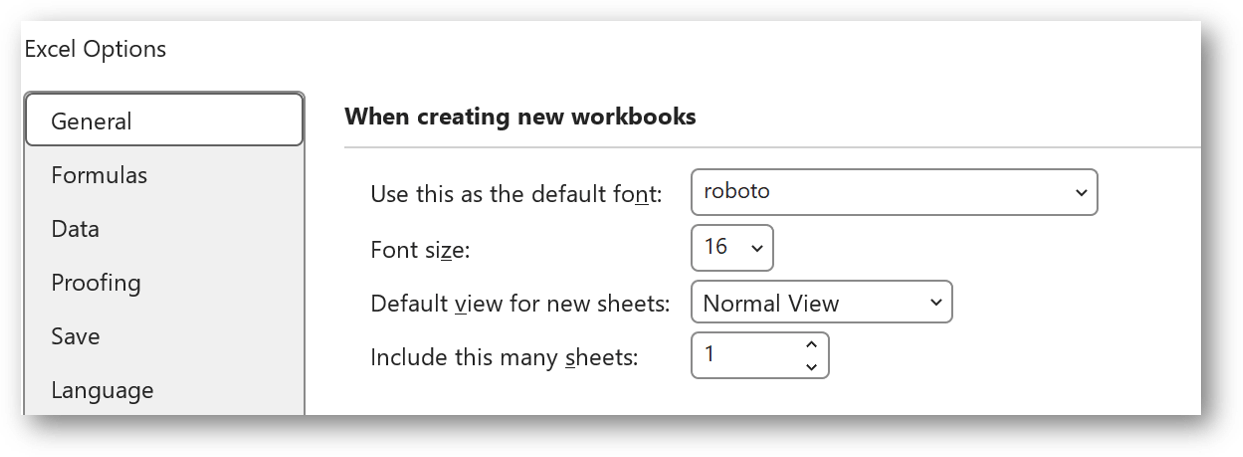
One of the earliest realisations came before any of the Excel battles began. It quickly became clear to us how much our technical environment could either boost us or slow us down. In a competitive setting, every little bit of hardware and software friction has a huge impact on your performance - be it font size that makes the formula bar harder to read, a keyboard layout that feels unfamiliar, or regional settings that change how numbers and formulas behave.
These are not things we describe as “Excel skills”, yet they have a direct impact on how confidently and efficiently we work.
What this reinforced for us was:
- Your Excel setup is part of your toolkit, not an afterthought.
- You should be comfortable adjusting your Excel settings or at least understand what can be changed. At a minimum, know how to change your language and regional keyboard settings, delimiters, and decimal separators.
- Moving between environments always carries a hidden cost; consider bringing your own portable hardware (ergonomic keyboards FTW!) whenever possible.
Lesson 2. Collaboration works best when you talk through your logic early
There were two team competitions: Mixed Doubles and Team Relay. I (Fay) competed in the Mixed Doubles, and then we both watched on as the chaos of the Team Relay unfolded. Each competitor had a fixed time limit, a two-minute handover window, and just one shared computer per team. Watching these pros scramble to explain their half-built solutions to their teammates in real time was equal parts impressive, amusing, and revealing.
It highlighted two things that sound obvious but are easy to overlook under pressure. First, you must talk through your approach as early as possible and keep talking as you build. When the pressure to deliver is high, the temptation is to retreat inwards and focus on the next formula. That instinct is usually wrong. Second, ask for feedback and ideas early. The worst version of any collaborative Excel session is discovering five minutes before the end that your teammate had a better solution all along.
We will take both of these into our Excel and AI training. Getting students to explain their logic out loud, early, and regularly, is one of the most valuable things you can do in a session. It helps the person speaking as much as it helps everyone listening.

Lesson 3. Sometimes you just have to start again
This was the most significant lesson I (Fay) experienced first-hand in Amsterdam.
When you’ve been working on an Excel solution for a long time and it’s just not working for you, the default response is often to dig your heels in and stubbornly debug for as long as it takes. You tweak formulas, trace dependents, and precedents endlessly, and eventually start vocally praying to the Excel gods (and any other gods that might be listening in at 2am...)
Sometimes you just need to sleep on a problem and you magically spot the issue within five minutes when you get back to your desk the next morning (we didn’t have that luxury in the Esports battles!), and sometimes you just have to start over.
This can apply to smaller scale Excel challenges you’ve been struggling with for a while, or entire workbooks - especially when you inherit someone else’s work.
It feels counterintuitive because it involves letting go of work you have in front of you, but in practice it can often get you to a reliable solution faster.
This has an interesting parallel with how we are starting to use AI in Excel. If a tool generates a complex formula or model, the dilemma you face is whether to invest your time trying to understand and debug the logic, to try again within another prompt, or to just simply build something yourself.
The value is not just in having an answer, but in being able to interpret, explain, adapt, and trust it.
Lesson 4 - It is not all about winning
Sure, competitions have winners. But if winning is the only thing you measure yourself against, you miss most of the value that’s on offer.
What stood out in Amsterdam was:
The range of skill levels across the participants who attended
The willingness to help and share knowledge
The conversations and friendships formed between rounds
For me, this is what stuck:
The process of upskilling does not have to be boring, or strictly corporate / classroom based. Learning experiences can be competitive, social, and even a bit chaotic. The combination of challenge and community is powerful, and from an ICAEW perspective, this is worth calling out.
We often talk about continuous professional development in structured terms. Courses, certifications, webinars and more. But there is also so much value to be gained from contributing to articles and blogs, or taking part in competitions, hackathons, and community events. Informal learning spaces build skills differently, and in ways that seem to stick.

If there is one thing Amsterdam made clear, it is this:
You can be very good at Excel, and it can still feel very difficult. That is not a bad thing.
Take every Excel challenge you face as a learning opportunity and share your experiences with others. There is almost no problem you will come across that someone else hasn’t had to overcome before.
Not For Profit Initiative
We’re going to be fully supporting a new not-for-profit competitive Excel organisation that will bring more of these amazing battles and competitions to life, in an environment where all spreadsheet skill levels are welcomed and the community is at the heart of all decisions.
This new organisation will be run by the best Excel Esports players in the world with a clear vision to bring fun and learning opportunities to the masses.
If this sounds like something you’d like to get involved with, please reach out to us via LinkedIn @ExcelOnTheRoad or Instagram, where we will announce more in the coming months.
We’re also speaking at the following ICAEW event on 8th July: ICAEW Spreadsheet Competency Framework: A refreshed perspective on proficiency and skill - we’d love to meet you in person!

Archive and Knowledge Base
This archive of Excel Community content from the ION platform will allow you to read the content of the articles but the functionality on the pages is limited. The ION search box, tags and navigation buttons on the archived pages will not work. Pages will load more slowly than a live website. You may be able to follow links to other articles but if this does not work, please return to the archive search. You can also search our Knowledge Base for access to all articles, new and archived, organised by topic.
- Cells, Chaos, and Collaboration: Excel on The Road in Amsterdam
- Global Excel Summit 2026: The sum of what you missed, sorted by where to begin
- Excel on the Road is… back on the road!
- From codebreaking to spreadsheets: what Bletchley Park can teach today’s Excel users
- Edinburgh Fringe: Excel comedy laced with tips, and flat earth believers