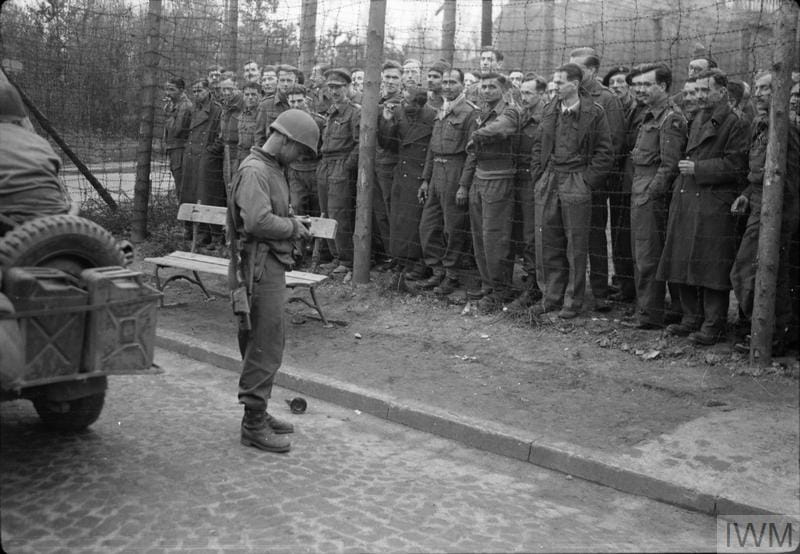
The possibility to sit accountancy exams while imprisoned became a major source of morale for captive professionals and drove significant personal achievements.
Even before Britain formally declared war against Germany, the encroaching threat of World War II was shaking up the profession’s exams system. For example, in July 1939, the Council of the Institute of Chartered Accountants mulled special consideration for unsuccessful candidates of Intermediate and Final exams who could prove that military service had seriously affected their studies.
In October that year, one month after war was declared, the Institute announced that Preliminary, Intermediate and Final exams scheduled for November would be postponed to the following January.
As the war took hold, columns in industry journal The Accountant began to carry the names of professionals who had been killed in action. Other troops serving abroad – some of them Institute members – were being captured as prisoners of war (PoWs) and sent to camps all over Germany, as well as locations in Italy.
It would undoubtedly have been difficult for many of those captives to conceive of a light. But there was one: the light of learning. And it beamed from an unlikely, yet heartening, new twist in the profession’s exams system.
Elaborate effort to maintain accountancy exams
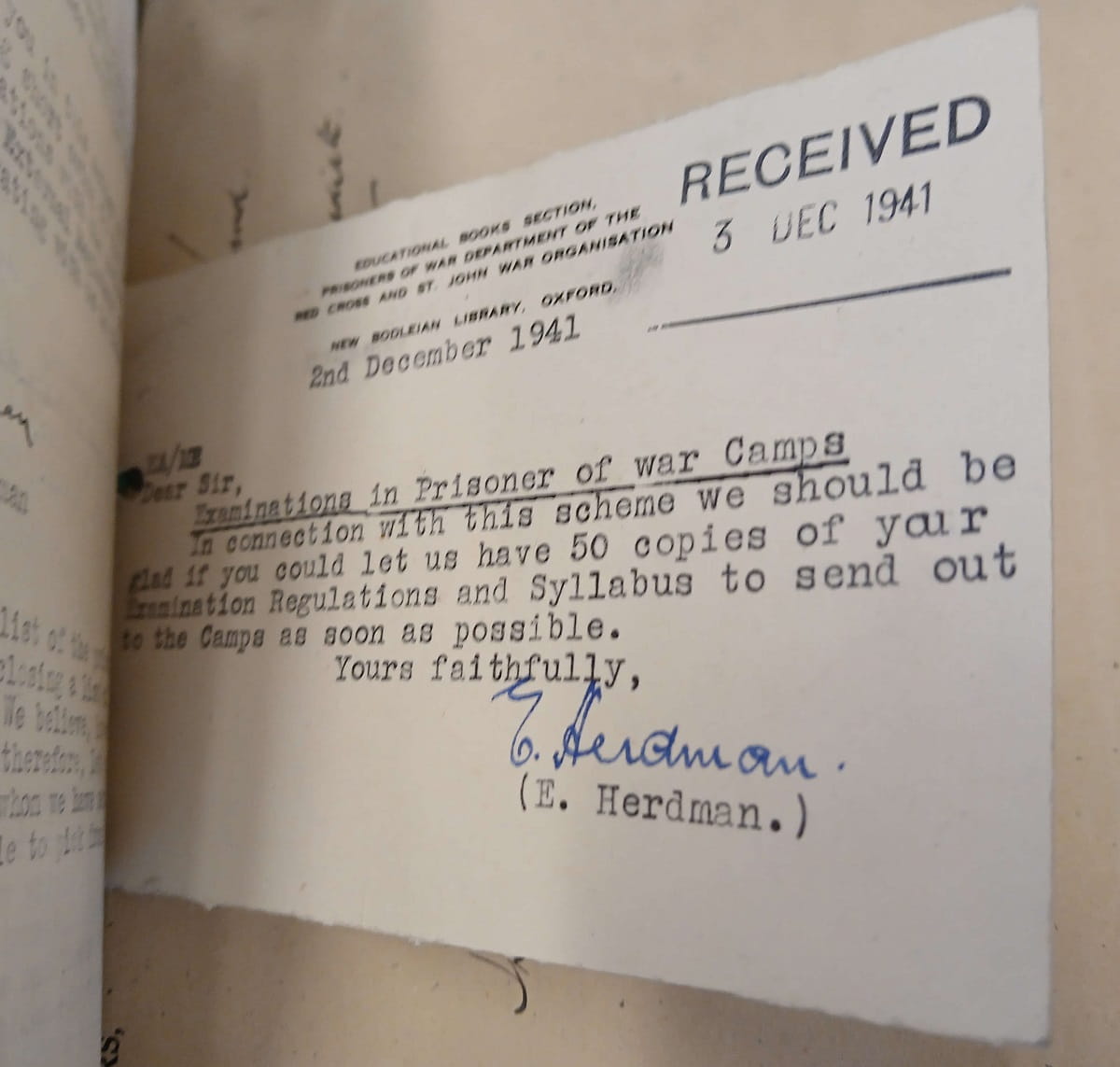
In October 1941, a request reached the Institute from a PoW member, asking the body to consider enabling prison camps to be used as venues for accountancy exams, which required the Privy Council’s approval to temporarily set aside stipulations in the Institute’s charter on appropriate exam locations. From that one, rolling pebble flowed an avalanche of activity to make this possible.
Alongside a host of other professional bodies with similar thoughts on their minds, the Institute joined an elaborate effort to maintain the continuity of British vocational training among captives. The scheme was delivered through the Educational Books Section of the Joint War Organisation of the British Red Cross and Order of St John.
By October 1942, the Institute was supplying books on accountancy and other, related subjects to an array of German PoW camps. This scheme managed to create a much-needed sense of community between accountants who were imprisoned in camps scattered all over Germany and reduced the isolation from the outside, professional world. While Italy did not participate in the scheme, accountancy training still took place in their camps.
A special report on the project, published in a June 1943 issue of The Accountant, set out some extraordinary statistics. Up to the end of April that year, the Educational Books Section had fielded more than 24,000 requests for books and courses and coordinated the distribution of around 130,000 books and 6,000 courses. It had received more than 2,000 applications for exams, and a further 2,000 PoWs were studying for exams yet to take place. Some 300 exams had already been held. Out of 276 results that had emerged, 232 were successful, including several honours. In all, more than 70 different trade bodies and educational institutions were involved with the scheme.
Between the Institute and other societies within the profession, the scheme had received 66 applications for accountancy exams.
As well as for Prisoners of War, arrangements were made for men serving overseas to take examinations locally, presumably once the tide of the war had turned and there were safer areas and time for study. These started to be listed in the exam results section of The Accountant in September 1944 (August 1944's exams).
Outstanding achievements and contributions
In July 1943 The Accountant published the names of eight PoWs who had completed Institute exams in the camps Oflag VII-B and Stalag Luft III. Up to 1946, the journal would continue to list PoWs – and, later on, those returning from prison camps – who had concluded exams during their time in captivity.
Some PoWs with Institute links distinguished themselves in remarkable ways, whether in exam successes, tutoring fellow prisoners, or the hands-on practicalities of financial management – as the following examples illustrate:
Alan Russell Dickinson ACA – whose story will be charted in greater detail in a separate article for this series – won the prestigious Sir Ernest Clarke Prize for the quality of his Final exam for the Chartered Institute of Secretaries, held in December 1942 at Stalag XX-A. Dickinson also did some accountancy lecturing and was camp librarian. As a conscientious objector, Dickinson had been captured in Greece while serving with the Friends’ Ambulance Unit to support British troops.
Captain Douglas Harold Whinney FCA of the 4th Battalion, Oxfordshire & Buckinghamshire Light Infantry, acted as chief instructor at Oflag VI-B while a PoW. He was a member of the Whinney accounting family and articled to Charles Palmour of Whinney, Smith & Whinney (Palmour was ICAEW President at the time – a role once held by his grandfather). Whinney was captured at Watou, Belgium, near Dunkirk, in May 1940 and was held in five different camps, at one point enduring a six-month bout of diphtheria.
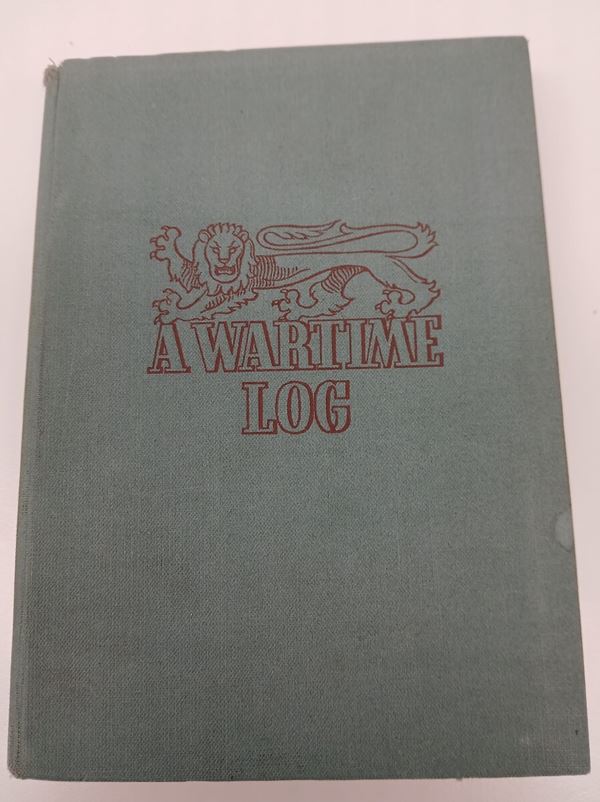
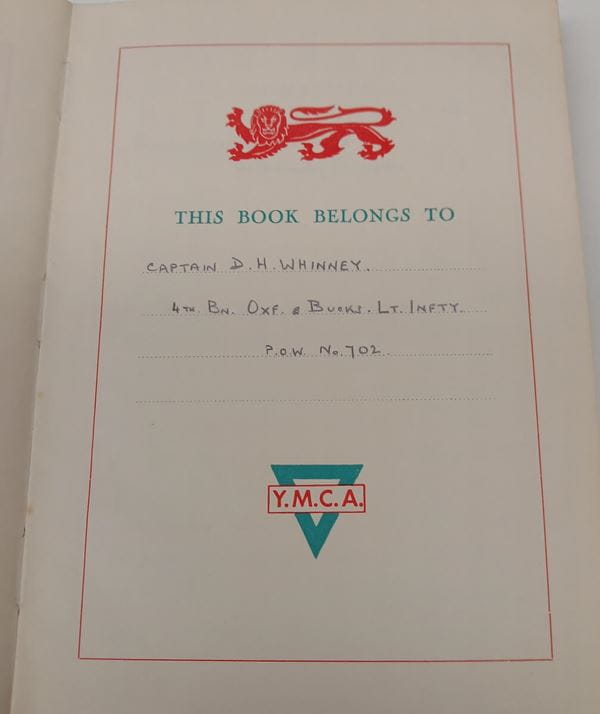
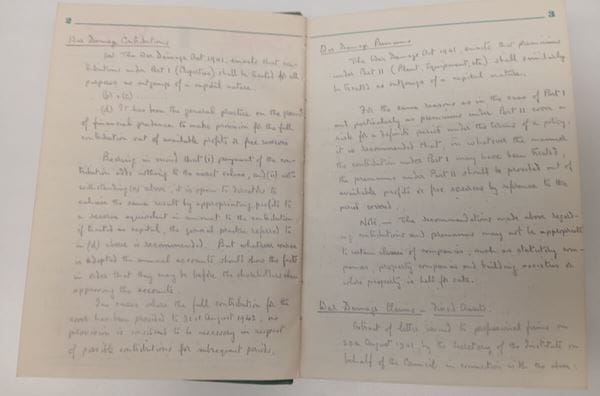
The family of Captain Douglas Harold Whinney FCA recently donated a copy of the lecture notes that he used in his tutoring in the camps.
Flight-Lieutenant John Arthur Gillies ACA received an MBE in 1946 for using his PoW time to set up and run an initiative enabling captive, non-commissioned aircrew members to receive regular sums of money – which, as non-coms, they were not entitled to under the standard PoW system. Managed with the consent of German authorities, the scheme grew to a point where it was sending funds to family members of Polish and Czech RAF personnel in British prison camps. German camp officers were so impressed with Gillies’ efficiency that they ended up relying on him for the accuracy of their own financial records.
Highly-organised education amid wartime chaos
What is abundantly clear from the impact of the Red Cross scheme is that the Institute, its qualifications path and the ensuing accountancy skills acted as a powerful lifeline for member PoWs at the toughest time.
In its special report on the scheme, The Accountant explained that PoW exam candidates comprised men who were either preparing for professional careers before the war and wished to complete their qualifications, or wished to equip themselves for post-war life. Others wanted to improve their knowledge of a specific subject and found it helpful to have exams on the horizon to test their progress.
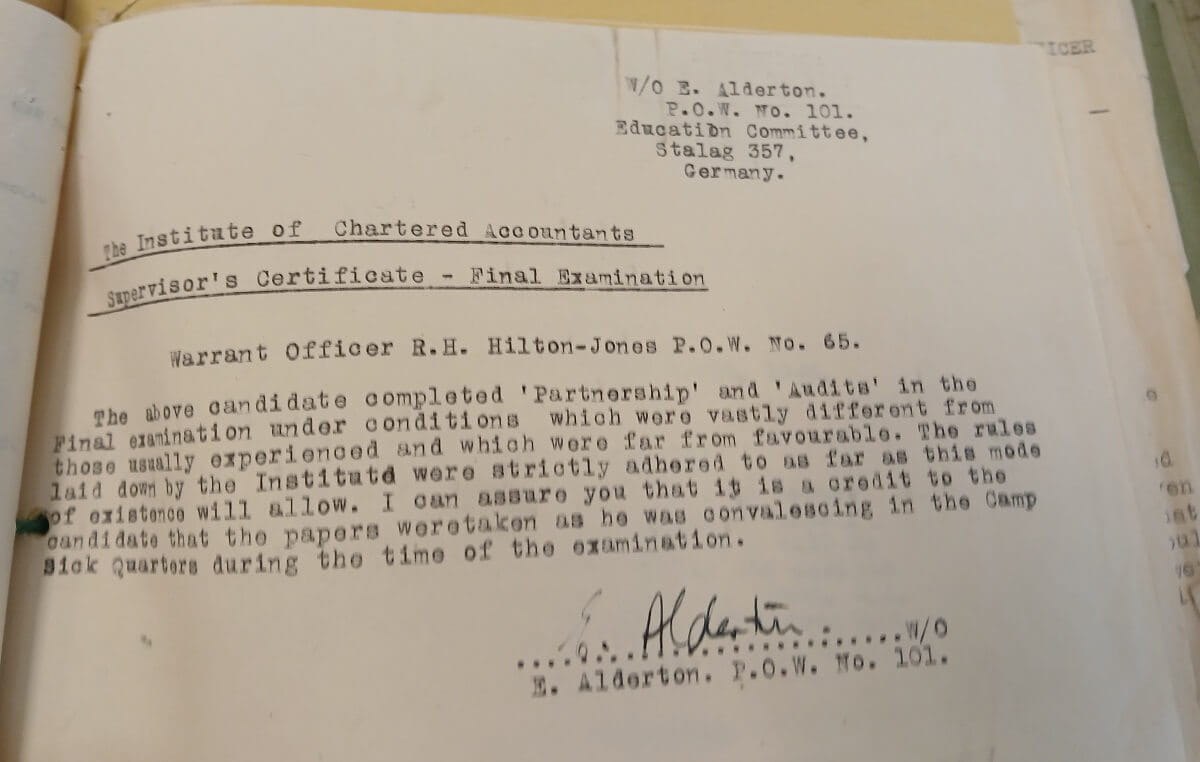
Importantly, the education that those men experienced was highly organised. Each camp had a specially assigned educational officer – and invigilators had to fill in forms to confirm that exams were being held strictly in line with proper controls and procedures. One report from Oflag 79 asked the marking team to take into consideration that a set of exams had taken place during a “prolonged air raid”.
Find out more about accountants' roles during World War 2.
Research
The research for this article was undertaken by the ICAEW's Library and Information Service
You may also be interested in

Prisoners of War
Listing of known chartered and incorporated accountants and articled clerks in PoW camps in WW2
Read their storiesPOW escapes: Willis, Munyard, Boyce and Furman
In the Second World War, captured accountants distinguished themselves not just in their commitment to continuing their training – but the courage to attempt escapes
Read their storiesPoW escapes: Mounsey and Peacock
Two young men who were held as Prisoners of War in World War Two and made heroic attempts to escape their incarceration
Read their stories