Key takeaways
- UK Q2 economic performance: The UK economy proved to be resilient in the second quarter of 2026, but it is likely to slow as the year goes on.
- UK employment slowdown: The number of UK job vacancies fell by 0.8% in the three months to June 2026. UK job vacancies are now 10.3% below pre-Covid levels.
- UK inflation rate rise: Inflation in the UK increased from 2.6% in June 2026 to 2.9% in July 2026, driven by Ofgem’s energy price cap increase.
UK economy enjoys resilient second quarter
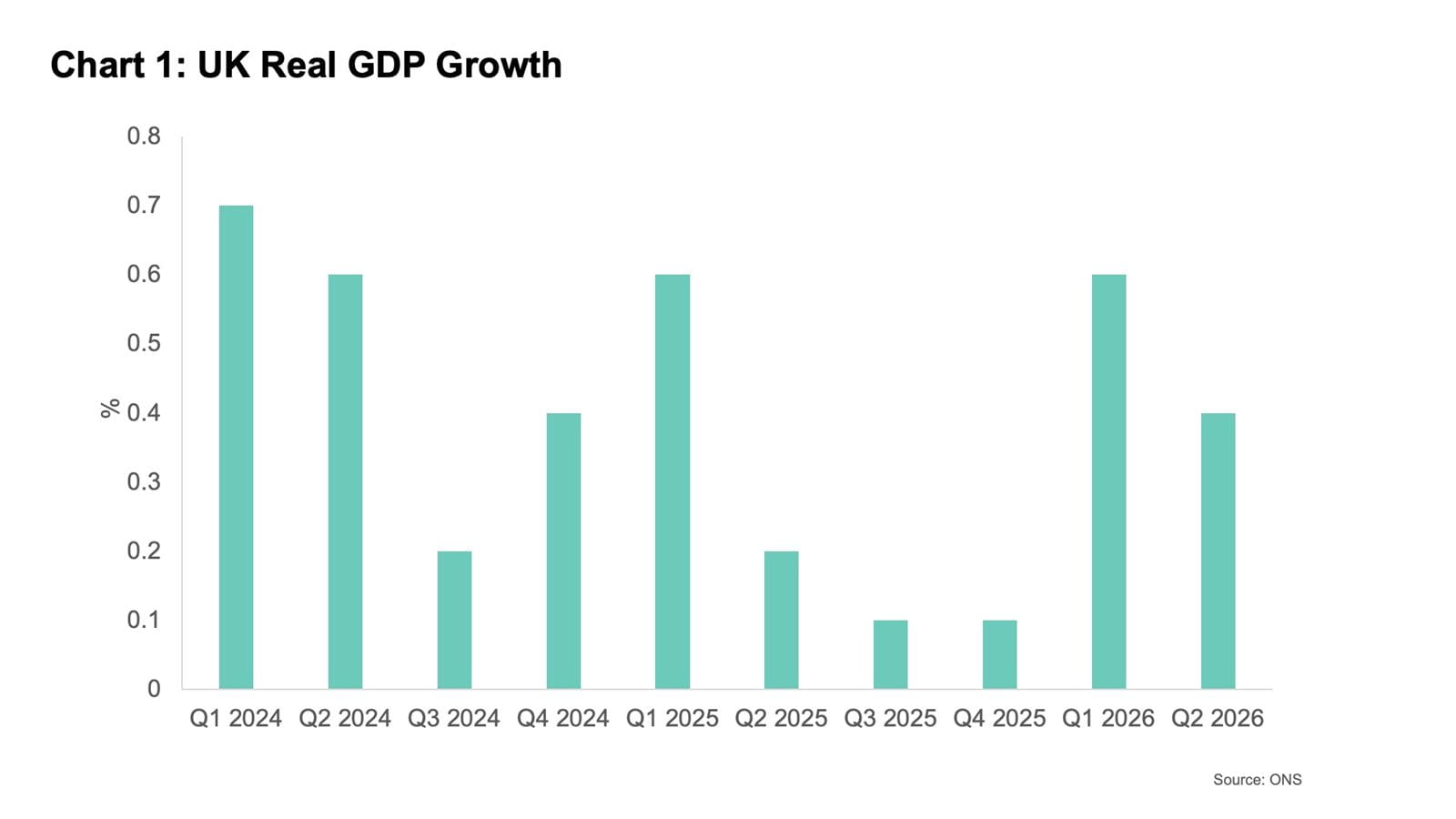
UK GDP grew by 0.4% in the second quarter of 2026 (see Chart 1); down from 0.6% in the previous quarter, but still strong by recent standards. This apparent resilience comes with an asterisk.
Much of the second quarter's strength was driven by temporary factors, including Iran war-driven stockpiling by businesses, unusually warm weather and the World Cup, rather than genuine momentum. Monthly GDP is estimated to have grown by 0.3% in June, following no growth in May.
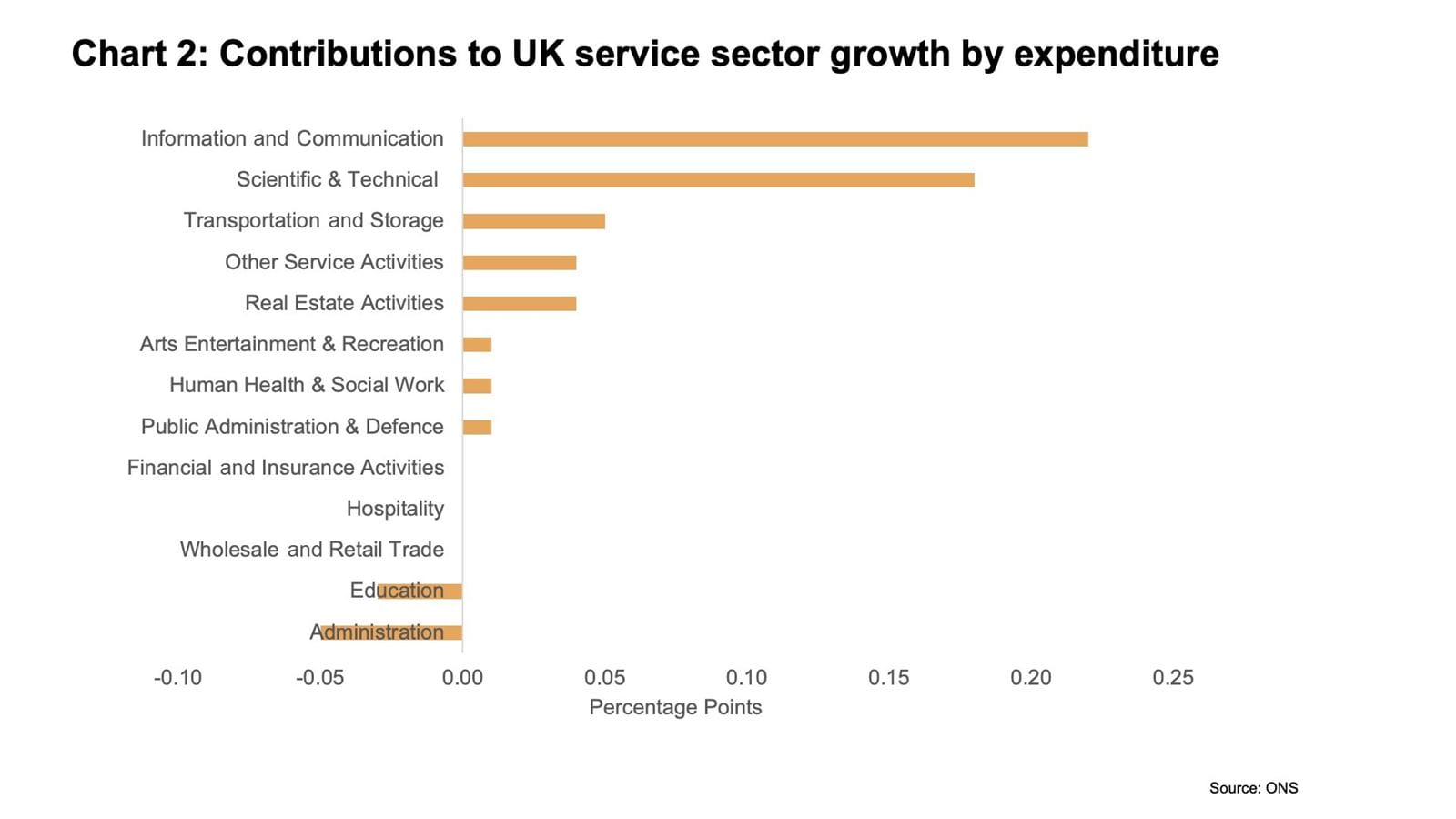
Professional, scientific and technical activities were up 1.7%, driven by growth in:
- advertising and market research (4.3%);
- scientific research and development (3.9%); and
- legal activities (2.5%).
However, the construction sector increased by 0.3%, while industrial production output showed no growth.
On the expenditure side, business investment is estimated to have increased by 1.7% in Q2 and is now estimated to be 0.8% higher than it was in the same quarter a year ago.
UK labour market stuck in ‘low-churn limbo’
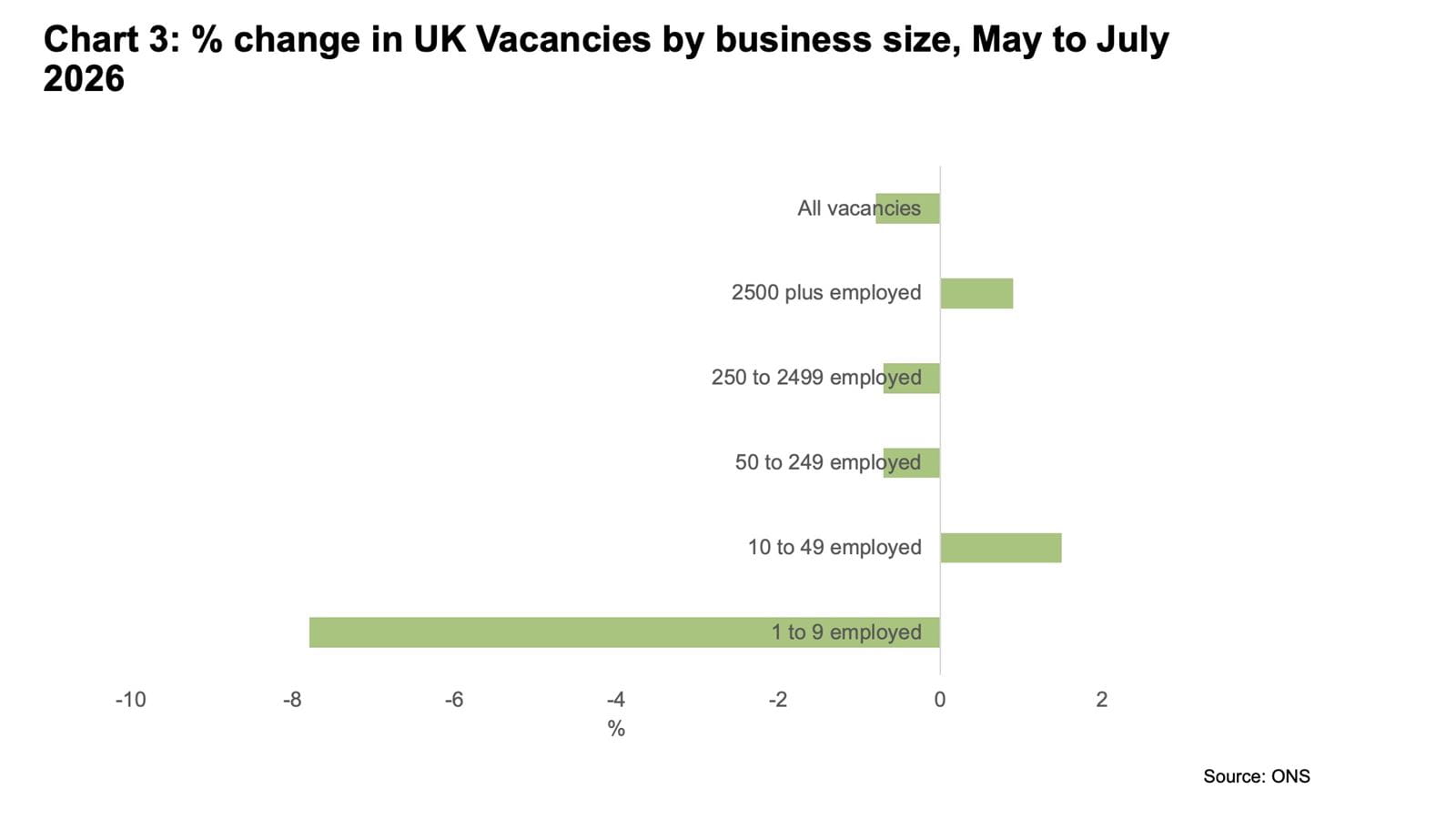
UK’s unemployment rate held at 4.9% in the three months to June 2026. The number of job vacancies, a key indicator of labour demand, fell by 0.8% to 707,000 in the three months to July 2026. Total vacancies are now 10.3% below their pre-Covid level.
By business size, the largest quarterly decrease in vacancies was in micro businesses (1 to 9 employees) (see Chart 3). These figures suggest that the UK's labour market remains stuck in a low-churn limbo. Employers are reluctant to hire, fire or offer bigger pay rises as they grapple with rising costs, intensifying global headwinds and heightened policy uncertainty.
UK inflation reaccelerates
Official figures suggest an increase in UK inflation from 2.6% in June to 2.9% in July – the highest rate since March and above the Bank of England’s 2% target. The sudden uptick on the headline rate was driven by July’s increase in Ofgem's energy price cap.
The regulator raised the price cap on gas and electricity costs by 13%, which increased the average annual household bill by £221. Gas prices rose by 14.7% in July, the biggest increase since October 2022.
This is unlikely to be a one-off; drought-related increases in food prices, rising fuel prices and surging energy costs raise the prospect of inflation topping 3.5% later this year, especially if disruption in the Strait of Hormuz persists.
UK interest rates on a knife edge
At their latest meeting, the Bank of England held interest rates at 3.75%, with members of the Monetary Policy Committee (MPC) voting six-three in favour of this outcome. The vote split was tighter than previous votes and confirms a hawkish shift within the committee. Inflation worries are outweighing concerns over the economy, but the committee has kept a September rate rise on the table. Therefore, interest rates remain on a knife edge.
Policy may not change for the rest of the year, with rate-setters relying on tough talk rather than higher rates to contain inflation. But the longer the Iran conflict persists, the greater the risk that the committee's patience will finally snap.
Implications for accountants, business owners and the economy
Overall, these figures point to a more challenging second half of the year for the UK economy. The squeeze on household incomes from higher inflation and energy costs will increasingly stifle growth, particularly if pre-Budget speculation further dampens confidence.
Expected weaker GDP growth and higher inflation could make the Chancellor's Budget balancing act more challenging by increasing fiscal pressures and limiting his policy options at a time of heightened financial market volatility.
What to watch for next month:
- The monthly GDP data to be released on 11 September, should confirm that UK GDP growth slowed in July, following June’s robust reading of 0.3%.
- The inflation figures for August due out on 16 September could see a slight increase in the headline rate from the latest reading of 2.9% in July.
- On 17 September, the Bank of England’s Monetary Policy Committee are likely to keep interest rates on hold at 3.75%.
Join your peers...
ICAEW's Annual Conference 2026 is themed "Turning business complexity and change into value" and offers practical support to help you respond to economic, political and technological disruption.

Further support
Resources
Economy
Expert analysis on the latest national and international economic issues and trends, and interviews with prominent voices across the finance industry alongside data on the state of economy.
Visit the hubStay up to date

Subscribe to ICAEW podcasts
ICAEW podcasts help you to dissect the latest headlines and offer expert analysis on the key issues from across the world of business, finance and accountancy.
ICAEW support

Training and events
Browse upcoming and on-demand ICAEW events and webinars looking at the global economy and trade.
Events and webinars A-Z of CPD Courses