Key takeaways
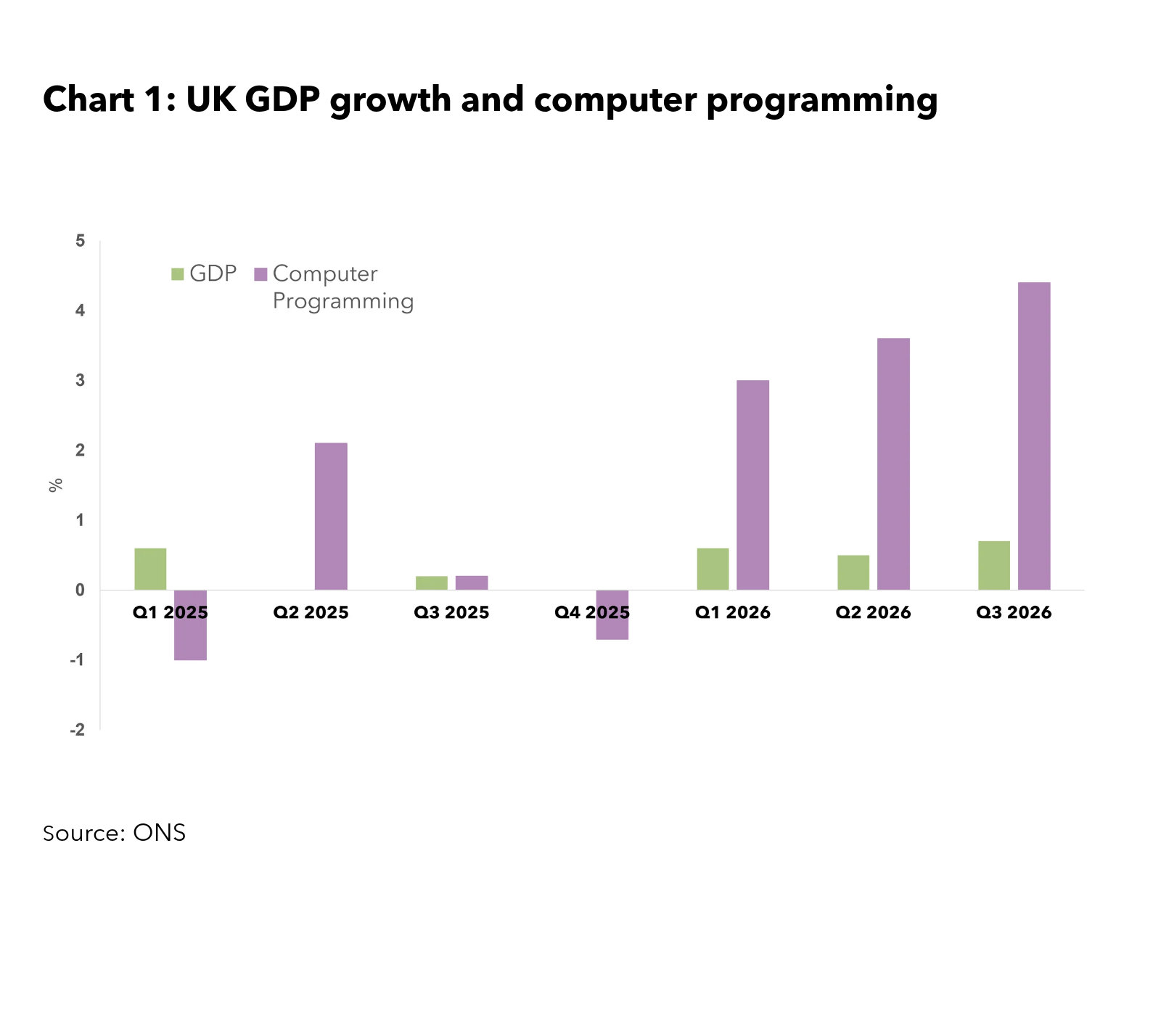
- UK economic resilience: UK GDP grew by 0.7% in the third quarter of 2026, according to Office for National Statistics data, driven by the services sector, with computer programming in particular growing output by 4.4%.
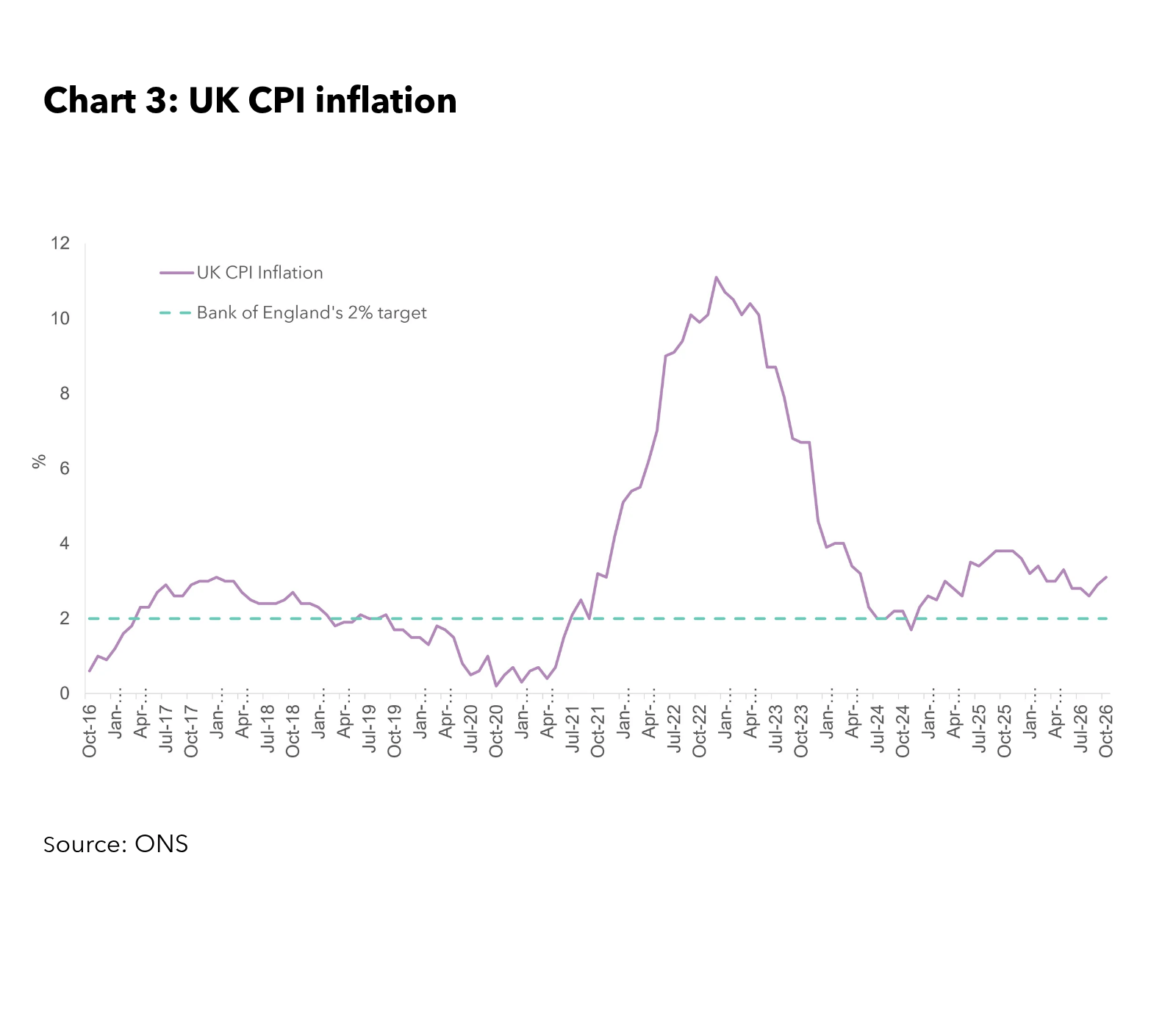
- Inflation increases in the UK: UK CPI inflation rose from 3.5% to 3.6% in October 2026, driven by rising fuel and diesel prices as a result of the Iran War.
- UK interest rates: The Bank of England’s Monetary Policy Committee voted eight-to-one to raise interest rates from 3.75% to 4% in response to rising inflation.
AI fuels UK economic growth
UK GDP grew by 0.7% in the third quarter of 2026, according to official figures, the strongest quarterly outturn since Q1 2024, up from growth of 0.5% in the previous quarter.
Services were the main contributor to Q3 economic activity, growing by 0.9%. Within services, computer programming grew its output by 4.4% (see Chart 1), its fastest growth in the last three years.
Businesses are ramping up investment, including in infrastructure (eg data centres), tech hardware and computer programming, to strengthen their resilience against growing headwinds, while also boosting economic activity.
In contrast, the construction sector output contracted by 0.7% in Q3, primarily due to a 4.7% drop in private new housing.
Monthly GDP rose by 0.2% in September, largely driven by 0.2% growth in services, with production growing by 0.3%, and construction rising by 0.8%.
Firms and households remain resilient
Business investment is estimated to have increased by 0.4% in Q3 2026 and is 3.0% higher compared with the same quarter a year ago. Meanwhile, consumer spending increased by 0.6%, partly reflecting increases in transport and housing costs.
Government spending increased by 0.6% in Q3 and is now estimated to be 1.6% higher compared with Q3 2025. The increase in government consumption reflected growth in public administration and defence, and health.
Jobs market remains stuck
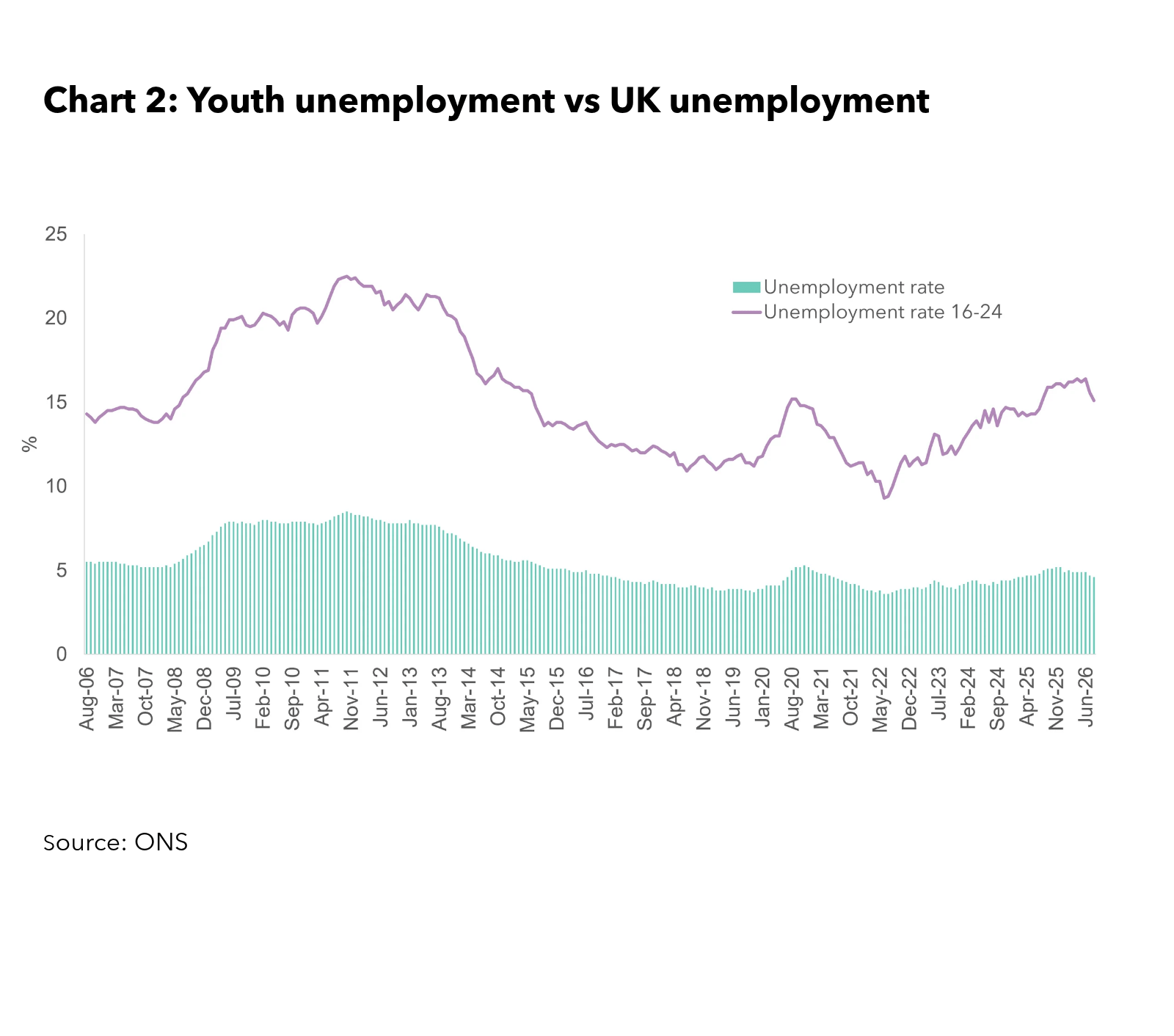
The UK’s unemployment rate fell from 4.7% to 4.6% in the three months to September 2026. UK payrolled employment fell by 34,000 employees (0.1%) in October 2026, compared with September 2026. Over the past year, the largest decrease was in the wholesale and retail sector, with a fall of 79,000 employees; the administrative and support services sector experienced the largest increase, with a rise of 52,000 employees.
Young people in particular are struggling to enter the labour market. The unemployment rate among 16–24-year-olds is at 15.1% in the three months to September 2026. While lower than recent months, it remains above the 10-year average of 12.8% and is more than three times the current national rate (see Chart 2).
The UK jobs market remains stuck in a state of inertia. Firms are reluctant to hire or fire as rising employment costs and automation blunt the boost from a resilient economy.
UK inflation on the up
UK CPI inflation rose slightly from 3.5% to 3.6% in October 2026; the highest rate in a year and well above the Bank of England’s 2% target (see Chart 3).
Higher petrol and diesel prices are driving this; the average price of petrol stood at 174.7 pence per litre in October, the highest rate since August 2022. Average diesel prices stood at 199.5 pence per litre in October, the highest price since records began in January 1996.
Pump prices have been driven higher in recent months as US-Iran hostilities continue, filtering through into wider inflation.
Elevated fuel prices and El Niño-linked food price rises are likely to keep the headline rate moving higher, before the 26% increase in household energy bills in January push it towards 4.5%.
UK interest rates rise to 4%
At their latest meeting, the Bank of England voted to raise interest rates from 3.75% to 4.00%, with the Monetary Policy Committee voting eight-to-one in favour.
The strong backing for this decision and the tone of the minutes suggest further increases are probable, even if most rate-setters are in no hurry to tighten policy aggressively.
Policymakers are likely to remain on high alert to mounting price pressures, leaving a December rate rise looking likely.
Bank of England forecasting higher growth and inflation
The Bank of England’s latest Monetary Policy Report reveals a mixed outlook for the UK economy. The central bank now forecasts UK GDP growth to hit 1.6% this year and 1.3% in 2027. In its July forecast, it had forecast GDP output of 1.1% for both years.
The Bank now expects UK inflation to peak 5% by the middle of next year. It is then projected to fall as the impact of rising energy prices on annual inflation fades, aided by higher interest rates.
Implications for accountants and the economy
Taken together, these figures suggest that the UK economy currently remains resilient to rising inflation and heightened global instability.
This potent third quarter probably marks the peak for economic growth for some time, with output set to slow sharply in Q4 as the financial squeeze from higher energy bills weakens spending and investment, compounded by rising interest rates.
What to watch for next month:
- The monthly GDP data to be released on 11 December, should confirm that UK GDP growth slowed in October 2026, following the growth of 0.2% in September.
- On 16 December, UK’s inflation for November could confirm another modest rise in the headline rate.
- On 17 December, the Bank of England's Monetary Policy Committee could increase interest rates to 4.25%.
Public Sector Conference
This virtual conference brings together financial reporting, audit and professional skills for the whole public sector community. Hear from industry leaders and experts.

Further support
Resources

Economy
Expert analysis on the latest national and international economic issues and trends, and interviews with prominent voices across the finance industry alongside data on the state of economy.
Visit the hubStay up to date

Subscribe to ICAEW podcasts
ICAEW podcasts help you to dissect the latest headlines and offer expert analysis on the key issues from across the world of business, finance and accountancy.
ICAEW support

Training and events
Browse upcoming and on-demand ICAEW events and webinars looking at the global economy and trade.
Events and webinars A-Z of CPD Courses