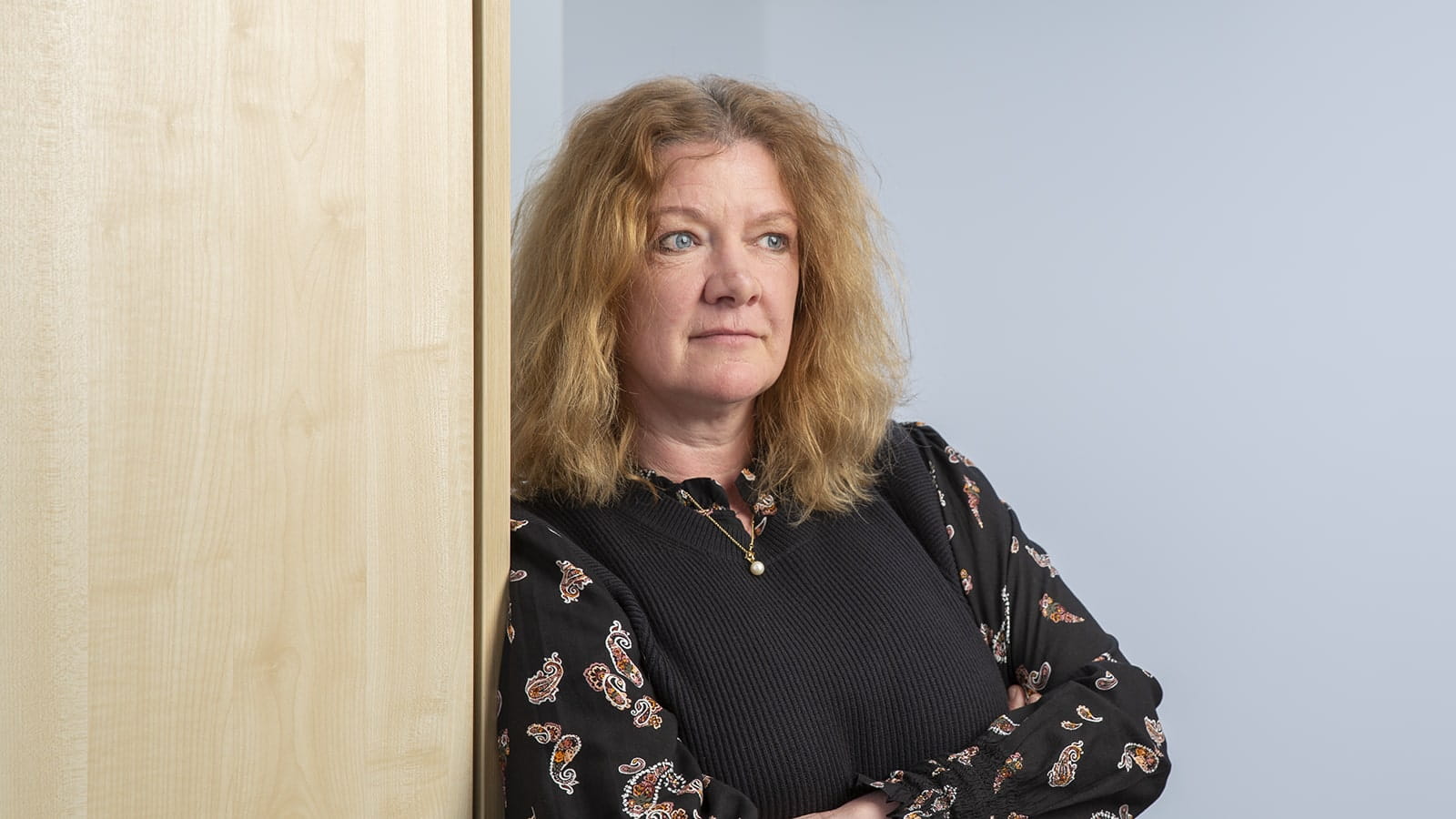
Bold moves are something of a theme for HMT corporate finance partner Wendy Hart. In February 2021, after a 33-year career with Grant Thornton in the Thames Valley, she joined corporate finance advisory boutique HMT at its Henley-on-Thames office. “I’m not sure I would have done it had we not been in lockdown,” she says. “But I was very bored with the four walls of my study.”
Grant Thornton had just re-orientated the business along service lines, she explains, and she really enjoyed working across the services. “For months before I made the decision, the only people I had any contact with were the corporate finance people. It felt like I might as well be in a boutique.” Like many others, lockdown gave her time to reflect: “I thought: ‘Am I seriously going to stay in the same place, in the same city with the same firm, for the whole of my career? Or am I going to be brave enough to do something else?’”
She describes the decisions that have shaped her career as actually just a combination of luck and glorious innocence. She’d had a successful and very enjoyable career at Grant Thornton. Fears about winning any work outside of it after 33 years of backing from the Big Six firm, or whether her new team at HMT would be able to support the deals she did bring in, went unfounded: “I needn’t have worried. It’s the same work I’ve always loved, but I do feel energised by the change.” She also relishes the greater autonomy afforded by being in a smaller firm. She is now able to take on assignments that might be interesting to her, but only become fee income-generative over the longer term.
Tough training
Hart has seen a lot of change during her career. She joined Grant Thornton straight from university in 1988 and trained as an ACA (see Chance can be a fine thing, page 10), before moving into special projects, then corporate finance, becoming a partner in 1998 at the relatively young age of 31. She admits that these days it would be almost impossible to make partner so quickly: “Then, you could be appointed on potential – you didn’t need to have a portfolio of millions of pounds already. I think I proved them right, though.”
She had two mentors on her journey to partner at Grant Thornton – Alysoun Stewart and Tracey James. No doubt helping her case was her vision of modernising the local Grant Thornton client base in line with the changing business landscape around Oxford. She had become aware of many new tech businesses in the area during her 18-month secondment to NatWest in 1996. Grant Thornton’s Oxford office was a pretty traditional place at the time, she says, but there was a burgeoning number of tech clients locally: “As a 31-year-old new partner, I was keen to change and modernise the outlook. I wanted Grant Thornton in Oxford to be seen a little bit differently. The technology practice was then picked up nationally and for quite a long time I ran the national tech practice.”
Hart likes businesses that “go hard and fast”, rather than slow builds, “so I have always done a lot with technology enterprises, such as university spinouts. Oxford also has cluster businesses, which aren’t actual spinouts, but have people who have come from the university.” However, she explains, this can be tough for corporate finance advisory because many such companies don’t have the resources to pay great fees, so for the most part she focused on exits.
“I like working with entrepreneurs who want to exit, be it through buyouts, private equity growth investment – where they don’t exit – or trade deals. I work across a real breadth of technology and resist any attempt to narrow it down. It suits me for it to be as broad as possible.”
Two decades ago, the experience of corporate finance in a professional firm was far more holistic than it is now, Hart explains. “For years after I was made a partner, I was also often pitching alongside audit and tax teams for a new client for the whole of the firm. Audit independence has changed that. It was only really latterly that it became so centred on service lines. I was very happy when I was part of a team pitching for a client with the idea that you help them grow and build the business, then at the end you sell it.”Breaking new ground
Back then, making corporate finance partner as a woman in her early thirties was not without its challenges. However, getting into the partnership was not as problematic as actually being partner, Hart says: “Getting to the point where I was delivering what I needed to deliver, while having two small children, was really difficult. But because I was unusual at the time, there was some naivety on my part, which was actually a blessing – I just didn’t know what it was all going to look like. The stimulation of the job, though, has made all of the juggling worthwhile.”
She also says that not having children at the time when she was actually made partner meant the decision was easier for her. “If I’d had children first, I might have been one of those people who thought: ‘I’ll just wait a bit.’ So you wait a bit, things get harder, you lose a bit of time, you lose a bit of ground and a bit of momentum and then it’s more difficult to put together a business case. Again, I was very lucky to get partnership so young because it meant I could do things in the order I did. It was like boiling a frog – the water heats up slowly and you don’t know you’re being boiled until you’re almost cooked.”
There is now a real determination to recruit women, she says. “But it has to get to a tipping point where that’s the norm rather than the exception.”
Chance can be a fine thing
Hart graduated from the University of Oxford in 1988 with a degree in modern history. At the time, she would have liked a career in journalism, but the reality was that she knew she had to get a professional qualification – and her father was an accountant.She got offers from all of the Big Seven firms (as there were then), but really didn’t want to work in London, preferring to stay in Oxford. Grant Thornton was the biggest firm in the city of dreaming spires, so it was a pretty simple decision.
But the ACA exams proved the hardest she’d ever done – she even failed one. “There were definitely times when I questioned whether I had made the right decision, but it all came good in the end,” she says.
After qualifying in 1992, she came to the conclusion that she wasn’t a “natural auditor” and moved across to the special projects team, which involved corporate finance, restructuring and insolvency assignments. “The opportunity came up to work with one of the partners in that team as something of a bag carrier.” She instinctively made the leap.
Corporate finance and M&A piqued her interest more than insolvency, which “seemed to be always about bringing bad news one way or another”, she says.
“An awful lot of accountancy is fairly transitory in nature; relationships you build with clients can be superficial. But doing corporate finance is a bit like serial monogamy. When you’re conducting a transaction, you really do have a very intense relationship with the client – you develop a proper friendship.”
Between 1996 and 1998, she took a secondment at NatWest’s corporate bank. Then when she returned she focused on corporate finance assignments, quickly making partner. “There was a lot of luck in it,” she says. “When I left to go to the bank in 1996, there were two partners in the team. When I returned 18 months later, one partner had decided to retire and the other one had gone into industry. So the opportunity was there.”
Different times
“There is a bit of an unhelpful narrative, which is that women lack confidence,” says Hart. “I often hear it said that ‘we just need to bolster their confidence’. It is really patronising.”
Her view is that women simply need to see that the rest of their lives can work alongside their career: “It’s not a confidence thing; it’s a pragmatic thing.”
Women don’t need to ‘find their voice’, she adds – it’s more about companies addressing the male-dominated culture of M&A. “It’s not an intentionally exclusive culture – it’s just a culture that doesn’t think about where somebody else might be coming from or what they might be dealing with, or whether what you’re proposing is going to actually work for the minority in the room.”
Hart says someone asked her recently if she would be able to “negotiate hard enough with the US buyer”. “You don’t survive 30 years in corporate finance without being able to do that. And that question would just never be asked of a man. So you still get a little bit of that around the edges.”
However, she says she rarely walks into a room now and feels at a disadvantage as a female corporate finance adviser – something that she has experienced in the past. “I think that’s a combination of me having a track record that gives me confidence and the world changing with me. I have now seen pitch teams lose because they were all male.”
The world, and the world of business, is a far more diverse place these days, she says: “If all you present is a sort of stale, pale male pitch team, it’s going to work for fewer and fewer people as time goes on.”
