
Key takeaways:
- The UK tax gap has been averaging at around 6% in recent years.
- Around two-thirds of the deficit (62%) arises from uncollected taxes on income.
- More than two-thirds (70%) was attributed to small businesses in 2023/24 and 24/25.
HMRC currently pegs the UK tax gap – the difference between the total theoretical tax owed and the amount actually collected – at around 6% of that total. Approximately 70% of that deficit is from taxes on income: corporation tax, VAT and income tax gauged through self-assessment. Two-thirds of the gap (62%) was attributed to small businesses in 2023/24 and 24/25, according to department research.
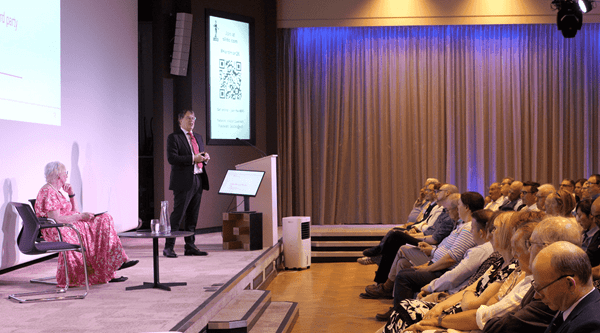
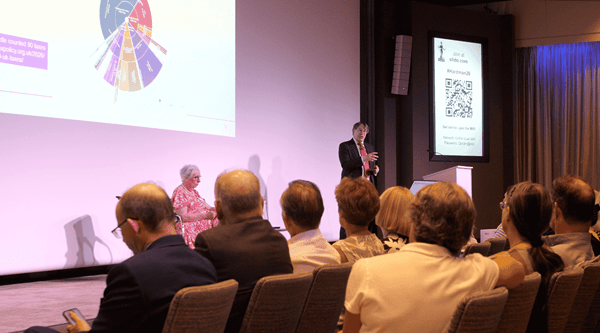
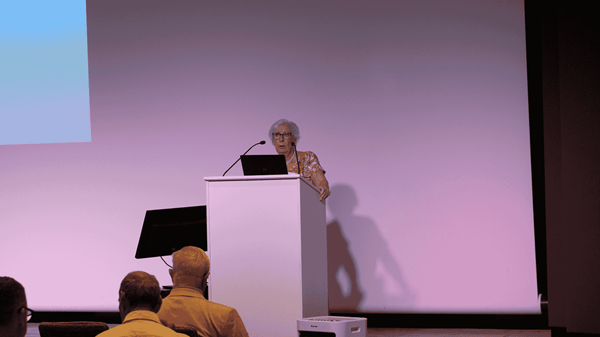
Why the shortfall? For Bill Dodwell, Non-Executive Director at HMRC since 2024, the answer is complexity. As Tax Director at the Office of Tax Simplification, Dodwell spent much of his career trying to make the tax system accessible, but he thinks it’s still far too complicated. That was the subject of his speech to ICAEW members at this year’s Hardman Lecture, held at Chartered Accountants’ Hall on 29 June.
Prefer to listen?
This audio file was produced by AI and has been adapted from the original article for audio purposes.
What makes the tax system complicated?
Speaking in a personal capacity at the Hardman Lecture, Dodwell said that the following issues must be resolved, which are directly linked to how small business owners in particular experience the tax system.
Lack of clarity
There’s confusion between business and personal expenses, stemming from unclear laws. The vague boundaries also make VAT daunting to navigate, with business owners facing different relief rules.
Lack of data
HMRC’s enquiry scheme for small businesses runs at around 330 audits per year. That narrow sample limits insight into how small firms work with tax day-to-day: this data could help HMRC identify issues and help tax agents raise relevant points with clients.
Dodwell also suggests the ‘small businesses’ category might be too broad, as it does everything from sole traders earning £20,000 gross annual income to firms with 50 staff and £10m in annual sales.
Dense language
Legislators, HMRC and even some tax advisers communicate in specialist jargon around tax requirements and procedures, leading to the confusion mentioned above.



How can accountants tackle tax complexity?
Additionally, Dodwell gave his thoughts on how frontline accountants can use their influence and skills to tackle the tax system’s complexity:
Remind clients about which expenses claims are legitimate
“If you have an annual conversation with each client to go through six things that people often get wrong and, as part of that, drop in some guidance on the difference between business and personal expenses, that will stand them in good stead,” he said. “If the client does their own bookkeeping, it would be particularly wise to highlight the risks of errors such as double-counting,” he added.
Keep drumming up support for Making Tax Digital (MTD)
Dodwell identified a dual purpose for the MTD scheme, established to raise the quality and transparency of self-assessed taxpayers’ business accounts for HMRC scrutiny, addressing that ‘lack of data’ issue.
Alongside that, “It should give the business owner a better understanding of their firm,” Dodwell pointed out. “They should be able to have a much closer monthly, or even weekly, understanding of their profits and outgoings, and be able to run their business more efficiently.”
Mind your language
“This is a really big issue,” Dodwell said, “and a crucial part of being a tax professional: we are translators.”
“Earlier in my career, one of my biggest remits was American multinationals investing in the UK,” he recalled. “That meant I had to translate British finance and tax concepts into their nearest US equivalents. All of us in tax have a duty to take the complexity of our world and turn it into something understandable. So, please – do invest time in thinking about that. Don’t use jargon. Don’t parrot or make up abbreviations. Make the concepts play at street level.”
Use your professional network to influence tax policy
For Dodwell, the more data that authorities have on issues accountants face when helping clients with tax, the easier it will be to push for change.
HMRC recently hosted high-street tax advisers and bookkeepers to discuss issues that clients had trouble with. “Further information of that sort would be very helpful,” Dodwell says. “You can feed it into the ICAEW Tax Faculty, you can send it to HMRC – or you can even send it to me. I’m not a policymaker, but I can pass your feedback to those who are.”
Play a part in training HMRC staff
Dodwell said that HMRC is recruiting 5,500 new employees over five years to its compliance team. “As part of that drive,” he says, “It’s investing in a tax and customs compliance academy and looking hard at its training standards – particularly continuous professional development, which is key to any tax specialist’s role.”
He noted: “I know that the director in charge of this project has been speaking to the professional bodies about it – and I think that’s a way in for making accounting expertise part of the training. I would like to see more people in HMRC learn about accounting and bookkeeping. I would also like them to understand more about how small businesses operate.”
Get in touch
Use your professional network to influence tax policy and share your views.
How to build better tax system
ICAEW outlines the five institutional pillars needed to ensure the proper functioning of the UK tax system.

The Tax Faculty
ICAEW's Tax Faculty is recognised internationally as a leading authority and source of expertise on taxation. The faculty is the voice of tax for ICAEW, responsible for all submissions to the tax authorities. Join the Faculty for expert guidance and support enabling you to provide the best advice on tax to your clients or business.
Further resources
Latest news

TAXwire and Tax Track
Stay up to date with the latest developments by signing up to the Tax Faculty's weekly enewsletter and listening to the Tax Track podcast series.
Listen now Newsletter sign upPractical guidance

Tax Faculty resources
The Tax Faculty offers expert guidance and support enabling you to provide the best advice on tax legislation to your clients or business. We offer clear direction in taxing times. Membership is open to everyone.
ICAEW support

Training and events
Browse upcoming and on-demand ICAEW events and webinars focused on developments in tax practice and policy.
Events and webinars CPD courses and more