Key takeaways
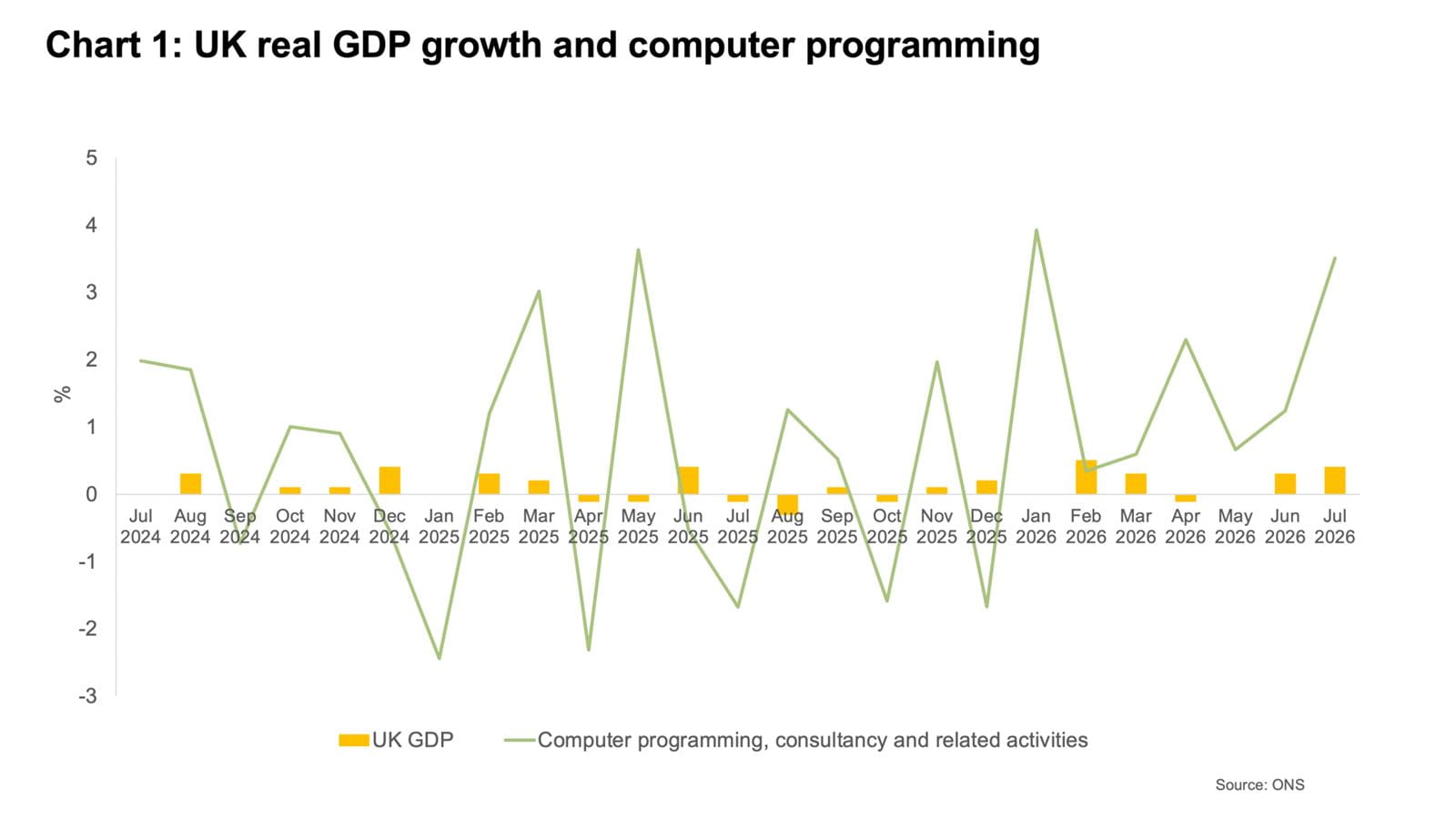
- UK Q3 economic growth: GDP grew by 0.4% in July, up from 0.3% in June. The computer programming and consultancy sectors, and related activities, grew fastest, at 3.5% growth.
- UK CPI inflation: inflation increased to 3.1% in September 2026, with indications that it may hit 4% by the end of the year.
- Bank of England interest rates: interest rates have been held at 3.75%, but the Bank of England Monetary Policy Committee left the door open for future rises.
AI investment helps deliver strong July GDP growth
The UK economy grew by 0.4% in July, up from 0.3% in June. This increase largely reflected a 0.4% jump in service sector output with administrative services, and computer programming and consulting doing particularly well.
Computer programming, consultancy and related activities grew by 3.5% in July (see Chart 1), with many firms reporting the strongest turnover growth involved in artificial intelligence and cloud computing.
Outside of the service sector, industrial production output grew by 0.2%, and construction grew by 0.1%. July's strong performance is likely to represent the high-water mark for economic growth in Q3, with higher energy bills and pre-Budget tax uncertainty expected to weigh on household spending and economic activity through August and September.
UK inflation on the road to 4%
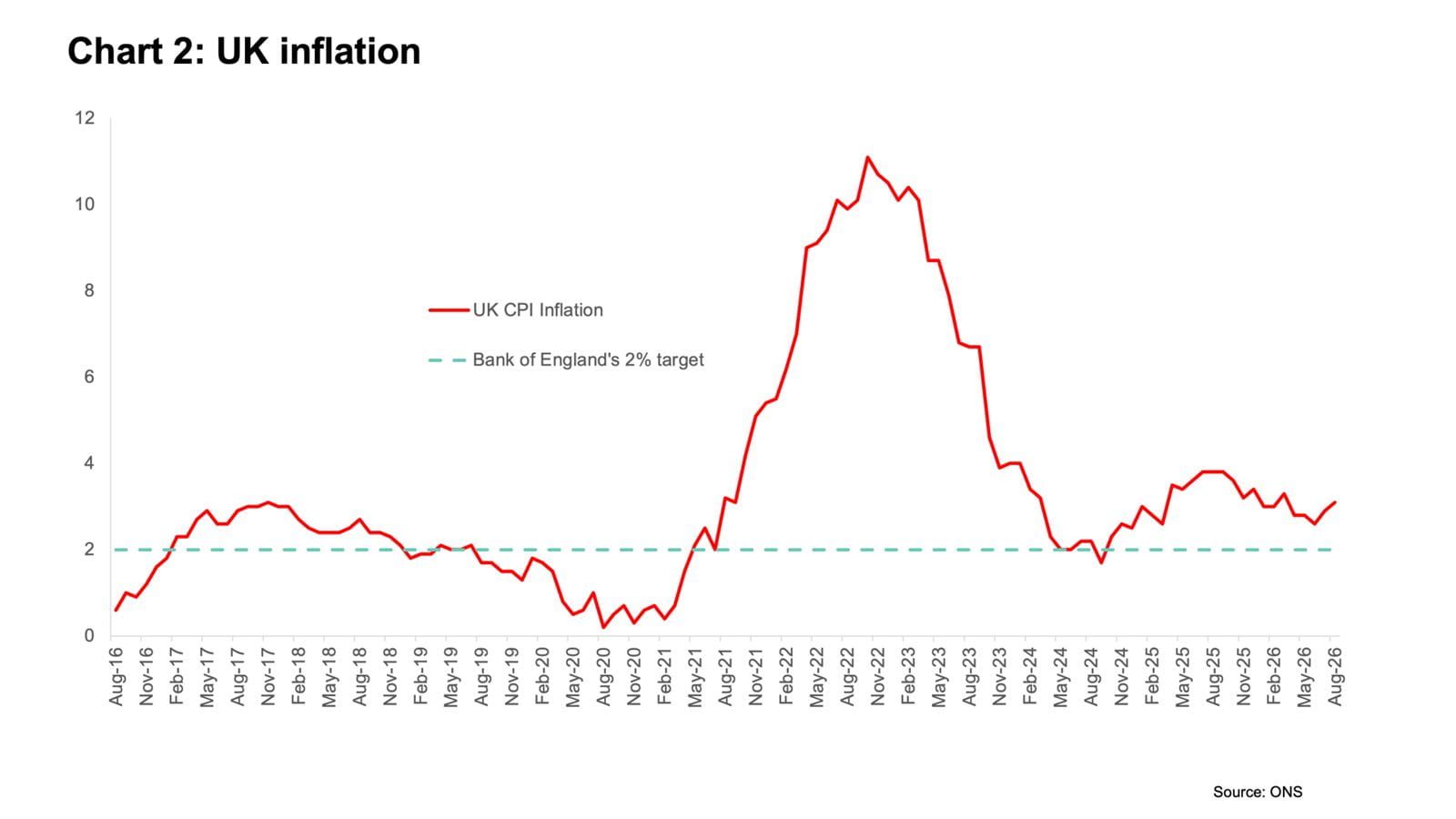
UK inflation stood at 3.1% in September, its highest rate since March and up from 2.9% in August (see Chart 2). The largest upward pressure on the headline rate came from fuel prices, with motor fuel costs rising by 23% over the 12 months to August. Petrol prices hit their highest level since November 2022.
Higher airfares, particularly for long-haul journeys, also contributed to the increase. Inflation looks set to keep rising. Food and fuel prices and higher energy bills from October set the stage for inflation to reach 4% later this year, despite next month’s VAT cut on electricity bills.
UK labour market weakens further
The number of employees on company payrolls fell by 26,000 in August – a decrease of 145,000 compared with August 2025. Total job vacancies, a good indicator of demand for labour, fell by 8,000 to 702,000 in the three months to August 2026. This is 16,000 lower than at the start of the year.
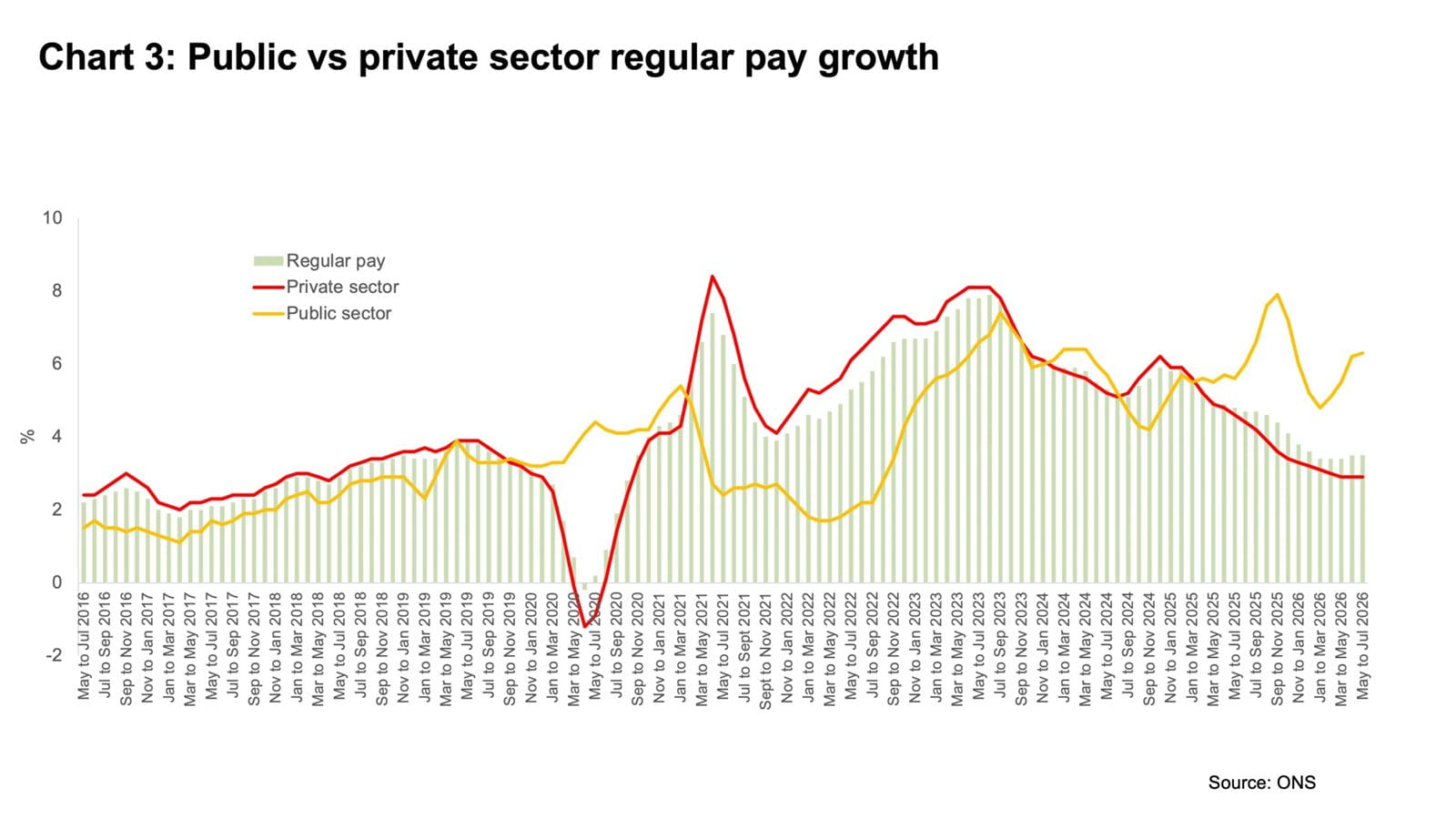
UK regular pay growth (excluding bonuses) was unchanged at 3.5% in the three months to July 2026. Private sector pay growth eased to 2.9%, while public sector pay grew by 6.3% (see Chart 3), partly reflecting the NHS pay awards this year.
The UK labour market could be heading for a rockier autumn, as rising energy bills and pre-budget tax uncertainty increasingly curb hiring intentions, resulting in moderately higher unemployment and lower pay growth.
November rate rise shifts from ‘possible to probable’
The Bank of England kept interest rates on hold at 3.75% in September. The Monetary Policy Committee voted 6-3 in favour of this decision, with the three dissenting members voting for a 0.25% rate rise.
While the vote split was unchanged, the tone of the meeting minutes points to a hardening sentiment within the committee amid mounting inflation concerns. This keeps the door wide open to a November rate rise. With continuing US-Iran hostilities and inflation concerns mounting, the likelihood of a further rate increase has shifted from possible to probable.
The Bank of England also decided to effectively pause government bond sales, known as Quantitative Tightening . The decision should help ease some of the pressure on the government from the UK bond market in the lead up to October’s budget.
Uncertainty and energy costs most common challenge impacting turnover
Official data revealed that economic uncertainty remained the most commonly reported challenge affecting turnover among trading businesses in early September 2026 (cited by 29% of respondents). This was broadly unchanged from August 2026 and September 2025.
For businesses with 10 or more employees, labour costs remained the most frequently cited challenge, reported by 37% of firms and broadly unchanged over the same periods.
Energy concerns also intensified. Nearly two-thirds (64%) of businesses reported some degree of concern about energy prices, up five percentage points from late August. Many cited the conflict in the Middle East as a contributing factor, while concern was particularly acute in the accommodation and food services sector, where nine in 10 businesses expressed worry about energy costs.
Implications for accountants, business owners and the economy
Overall, these figures suggest that the UK economy may be entering a more subdued period, with higher energy bills and pre-budget tax uncertainty likely to weigh on household spending and business activity through the remainder of the year.
If growth does begin to falter, the Chancellor could face a budget headache as weaker economic activity and rising borrowing costs erode fiscal headroom, increasing the likelihood of further tax rises.
What to watch for next month:
- ICAEW's Business Confidence Monitor, one of the UK's largest and most comprehensive quarterly surveys of business performance, covering the third quarter of 2026, will be published on 7 October.
- Monthly GDP data, due on 15 October, is expected to show that economic growth slowed sharply in August after July's stronger performance.
- Inflation figures for September, due on 21 October, could show a further increase in the headline rate, reinforcing expectations that inflation will continue to rise in the months ahead.
Join your peers...
ICAEW's Annual Conference 2026 is themed "Turning business complexity and change into value" and offers practical support to help you respond to economic, political and technological disruption.

Further support
Resources

Economy
Expert analysis on the latest national and international economic issues and trends, and interviews with prominent voices across the finance industry alongside data on the state of economy.
Visit the hubStay up to date

Subscribe to ICAEW podcasts
ICAEW podcasts help you to dissect the latest headlines and offer expert analysis on the key issues from across the world of business, finance and accountancy.
ICAEW support

Training and events
Browse upcoming and on-demand ICAEW events and webinars looking at the global economy and trade.
Events and webinars A-Z of CPD Courses