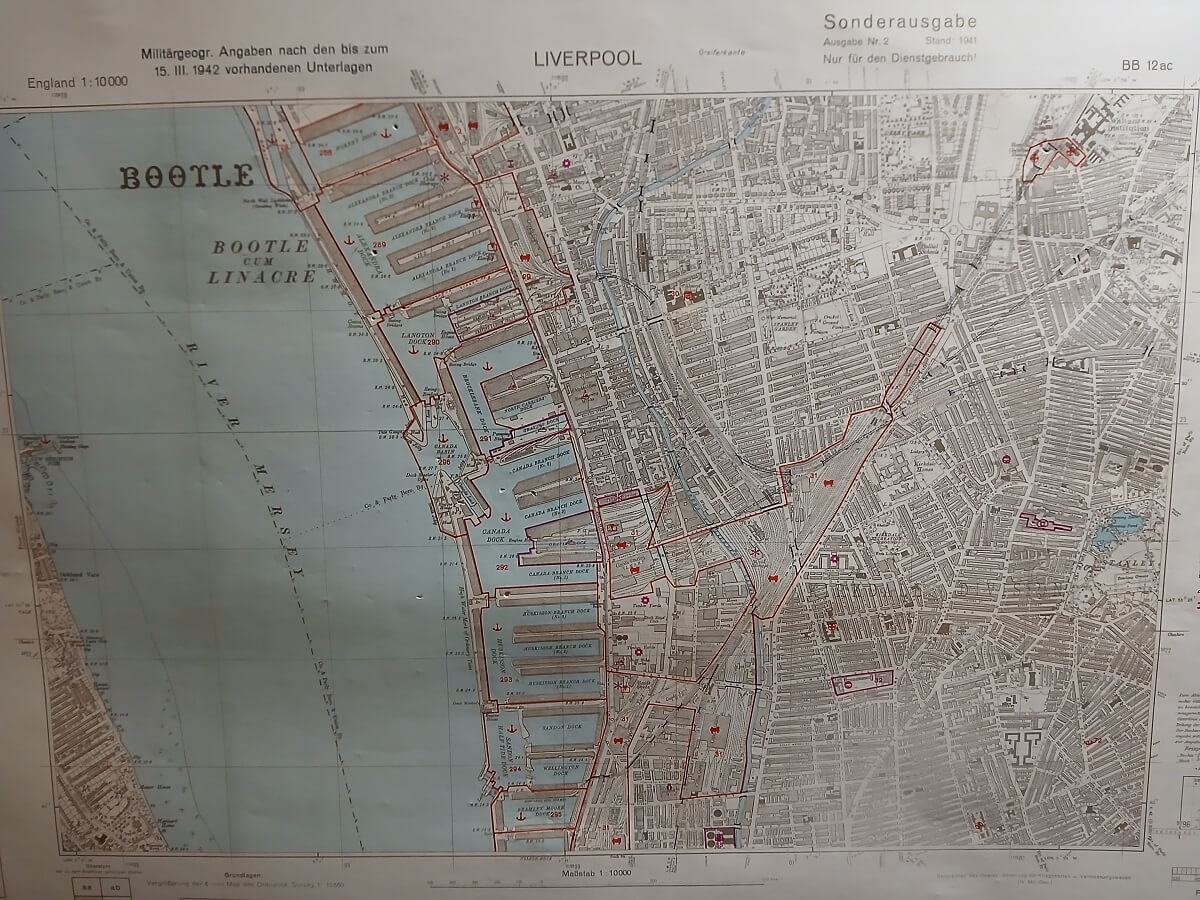
Liverpool was the most heavily bombed area in the country outside of London, due to its importance in receiving convoys from North America and being the headquarters of the Western Approaches Command during the Battle of the Atlantic.
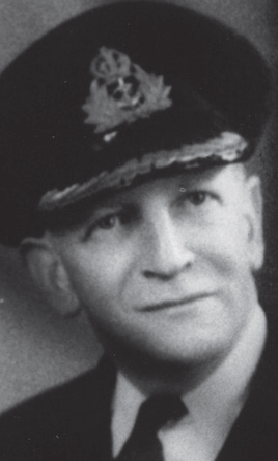
Lieutenant Geoffrey Gledhill Turner GC GM
Imagine having to delicately remove the fuse from an unexploded, one-ton German bomb that is barely suspended from wreckage by its parachute in a busy city. Now, imagine having successfully done so, only to have to immediately attend yet another unexploded bomb – this one badly damaged – somewhere nearby.
On 21 December 1940, they were the tasks facing RNVR Lieutenant Geoffrey Gledhill Turner. The locations: Great Howard Street, Liverpool and Cambridge Street, Seaforth. The second incident came with a cruel sting. As the bomb was so battered, only half of its fuse – and none of its clockwork – could be pulled from the housing. When Turner reached for the remainder of its mechanism, the bomb started ticking, so he withdrew – fast. After a five-minute wait, he returned – and the bomb promptly exploded, wounding him.
The KING has been graciously pleased to approve the Award of the GEORGE CROSS for great gallantry and undaunted devotion to duty, to:– Lieutenant Geoffrey Gledhill Turner, R.N.V.R.
The Yorkshireman received a George Cross (GC) for his endeavours that day in December. Over two days in January 1943, Turner was in Hastings to coordinate the recovery of another unexploded bomb from a crashed German plane. That May, he received a George Medal (GM) for the operation – becoming one of only eight men ever to be awarded both the GC and GM. Turner was additionally awarded the King’s Commendation for Bravery.
Turner then joined the Frogmen’s branch of the Navy under Commander Lionel ‘Buster’ Crabbe, but for medical reasons transferred to the Royal Marine Commando for the invasion of Normandy, an arrived on disembarked on D-Day+1. He finished the war as a Lieutenant Commander in charge of HMS Mount Stewart in Teignmouth.
After the War, Turner formed the company Powell & Turner in Oldham, Lancashire. In 1954 the company, involved in the manufacture of pharmaceuticals, moved to Long Medford in Suffolk and he lived in nearby Stambourne with his second wife Margaret, who had worked at Bletchley Park. He died in 1959.
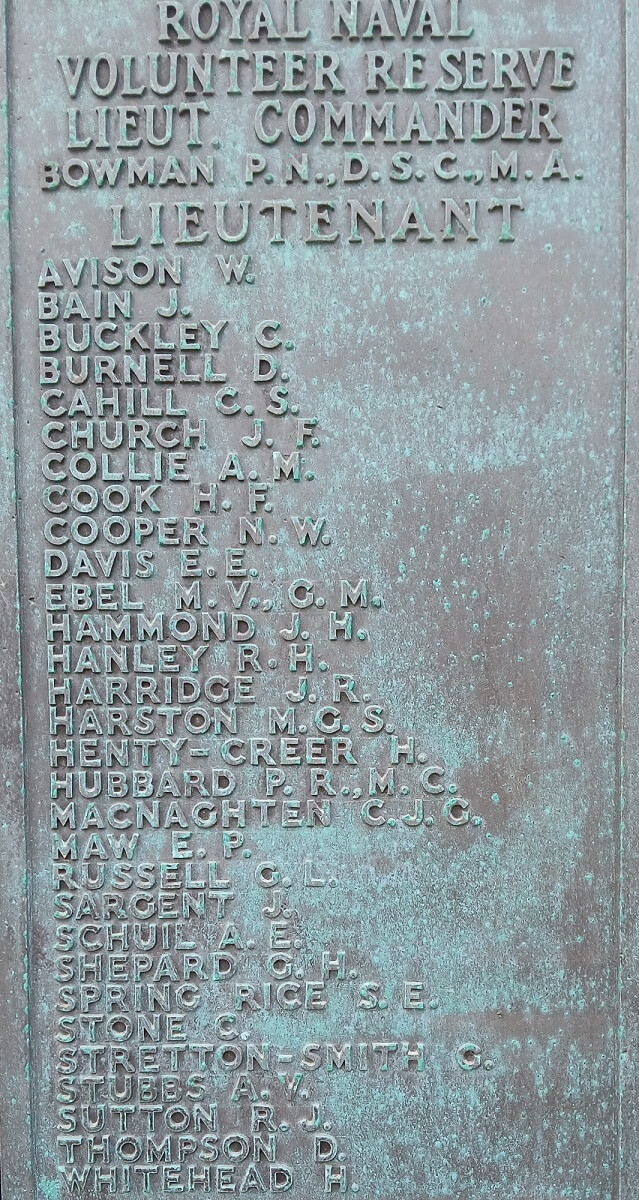
Lieutenant Mark Vincent Ebel GM
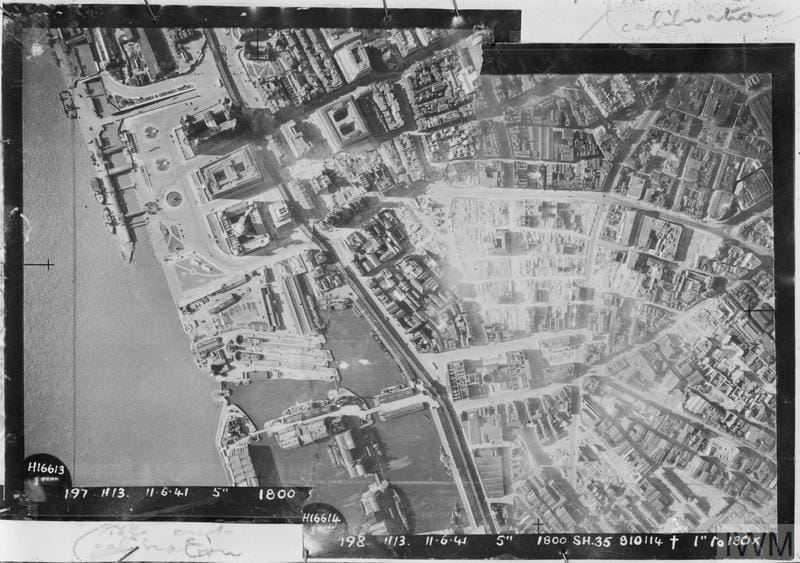
In May 1941, refrigerated cargo ship SS Elstree Grange had just discharged a consignment of beef, from Buenos Aires, at Liverpool’s Canada Dock when it was struck by a German parachute mine. The powerful midsection hit destroyed the ship’s ammunition store. Present at the scene, 21-year-old Temporary Sub-lieutenant Mark Vincent Ebel – an Articled Clerk in civilian life – helped to rescue two wounded men from the burning ship. That November, King George VI awarded Ebel a George Medal (GM) for “bravery and resource in rescuing two men from a burning ship”.
A member of the Elstree Grange’s crew, Able seaman George Wheeler, was also awarded a George Medal for his part in the rescue and police constables, Harry Ganway and Sidney Gardler were awarded British Empire Medals. Police Inspector Thomas Skelton received a bar to his existing B.E.M.
The mens’ report on the incident stated that “during the whole of these operations, enemy aircraft passed overhead and dropped many high explosive and incendiary bombs and some parachute mines and some parachute mines in the near vicinity. The ship’s ammunition exploded continuously.”
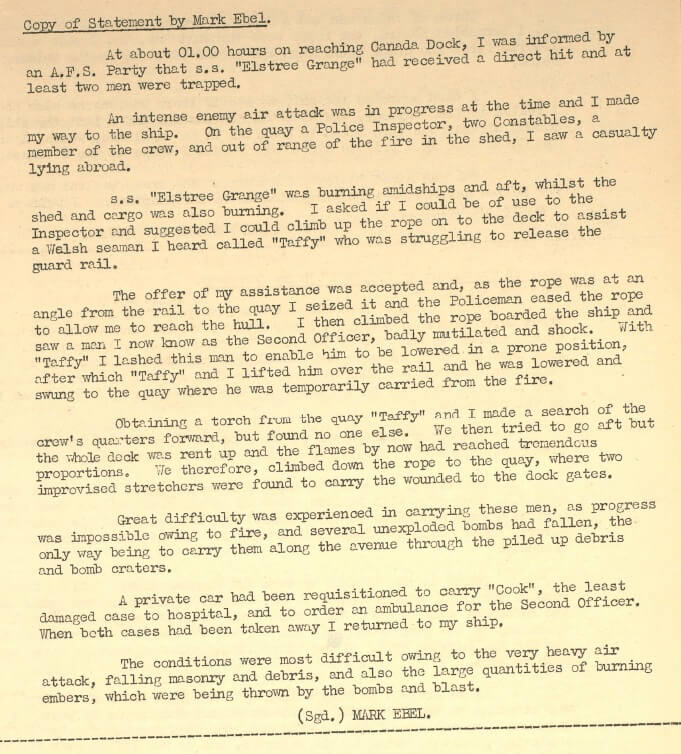
The conditions were most difficult owing to the very heavy air attack, falling masonry and debris, and also the large quantity of burning embers, which were being thrown up by the bombs and blast.
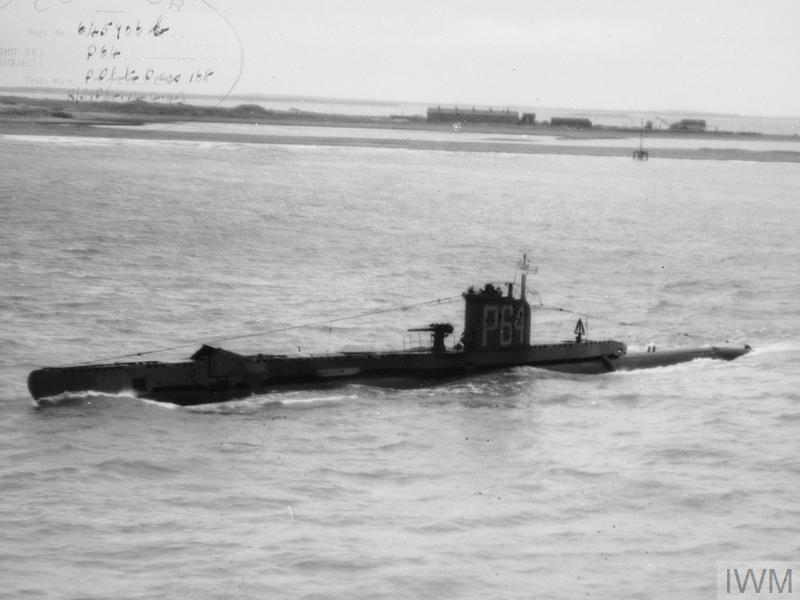
Ebel‘s ship at the time of his award, the destroyer HMS Belmont, was sunk with all hands in January 1942. By this time Ebel had transferred to the Submarine service and was promoted to Temporary Lieutenant in October 1942. He joined the crew of the submarine HMS Vandal. However, on 24 February 1943 – just four days after it was commissioned – the Vandal sank in mysterious circumstances in the Firth of Clyde.
Vandal not rediscovered until 1994. The reason for her sinking still remains unknown.
Making up a trio of George medal winners was SIAA associate, Acting Captain Francis Vittery Platel of the Royal Army Ordnance Corps, who led a party of men in a rescue and fire fighting mission when a cave full of ammunition exploded at a storage depot in France, January 1941.
"They entered the cave, fought the fire and broke down stacks of ammunition whilst cartridges were still igniting and exploding. The action was carried out under extremely difficult conditions owing to the fumes which filled the gallery; there was constant danger of the fire spreading beyond control, and it was largely due to their gallant efforts that the explosive fire was isolated and extinguished."
Platel was captured in Greece, three months after these events and died in a German Prisoner of War camp in 1944.
About the decorations
The George Cross is the premier award given for non-operational gallantry or gallantry not in the presence of an enemy. This is awarded for acts of the greatest heroism or of the most conspicuous courage in circumstances of extreme danger. It is equal in stature to the Victoria Cross.
The George Medal is awarded for conspicuous gallantry not in the presence of the enemy.
The King’s Commendation for Bravery is awarded for an act (or acts) of bravery not in the presence of the enemy. This award is denoted by a silver spray of laurel leaves on the ribbon of an appropriate campaign medal, in the same manner as the oak leaf device for being mentioned in despatches.