Here, we explore how his work at Chartered Accountants’ Hall fits within his wider oeuvre, and how it reflects his artistic philosophy.
Early life and training — a family of sculptors
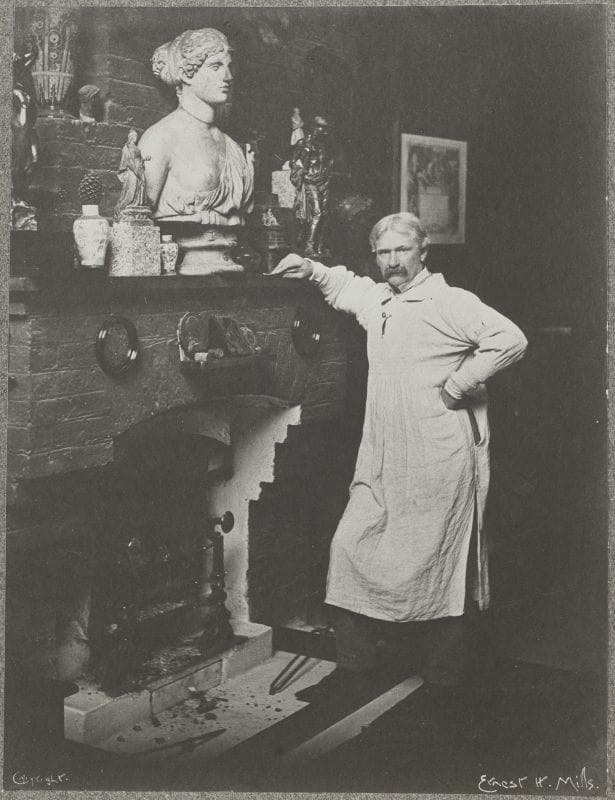
Born in London in 1850, Thornycroft belonged to an unusually accomplished artistic family. Both his parents, Thomas and Mary Thornycroft, were sculptors, as was his maternal grandfather, John Francis.
His father initially intended him for engineering. Drawn instead to sculpture, Thornycroft secretly studied Greek works at the British Museum and modelled a portrait of his sister. He entered the Royal Academy Schools in 1869, combining formal study with practical experience assisting his parents.
A journey through France and Italy in 1871 introduced him to contemporary French sculpture and Renaissance masters including Donatello. His developing style also owed much to one of his teachers, the well-known artist Frederic Leighton, whose work combined idealised figures with poetic suggestion.
These influences helped shape A Warrior Bearing a Wounded Youth from the Field of Battle, which won the Royal Academy Schools’ gold medal for sculpture in 1875.

Teucer and the New Sculpture — bringing classical figures to life
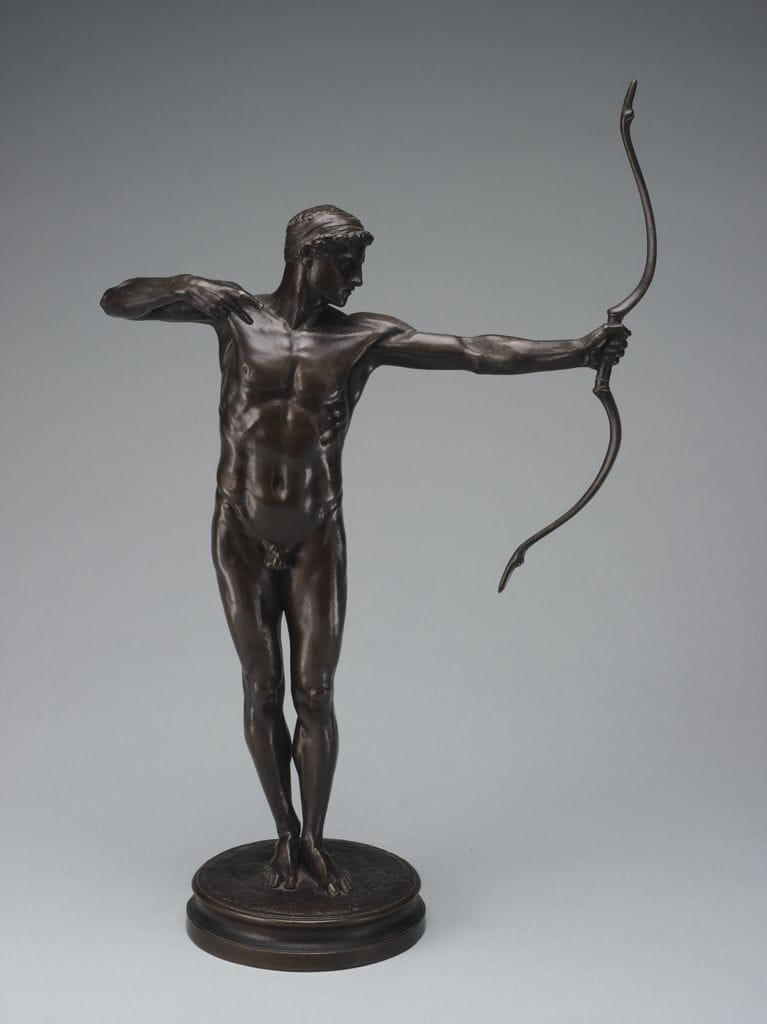
Following this early success, Thornycroft furthered his reputation with works including Artemis and her Hound, exhibited in plaster in 1880, and Teucer, first shown in plaster the following year.
These helped establish him within a movement later known as the New Sculpture, which sought greater vitality and a closer engagement with life whilst retaining much of sculpture’s classical inheritance.
Teucer depicts the archer from Homer’s Iliad immediately after releasing an arrow. His outstretched arm creates a strong horizontal line, whilst the tension in his wrist and the carefully modelled contours of his ribcage make the action physically convincing. Through these closely observed details, Thornycroft gives the classical hero the bodily specificity of a living model.
The Mower — finding dignity in everyday work
Thornycroft took a more radical step with The Mower, first exhibited in plaster in 1884 and later reproduced in bronze. Here, he brought the dignity traditionally accorded to gods and heroes to the figure of an ordinary working man.
Described by National Museums Liverpool as “probably the first important life-size statue of a manual labourer ever produced in Britain”, it combines close observation with deliberate idealisation. Whilst the figures’ trousers, boots and scythe identify his occupation, his bare torso and gracefully balanced stance recall classical sculpture and Renaissance works – particularly Donatello’s David.
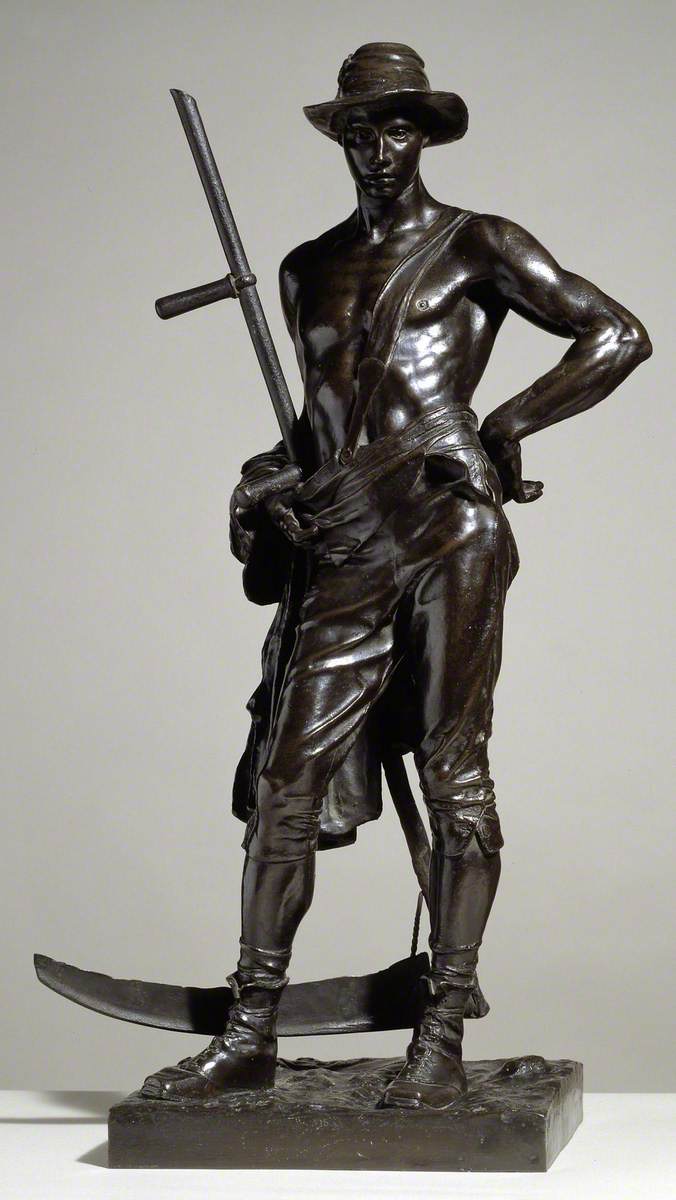
This familiar artistic language likely helped to make the unfamiliar subject more palatable to his intended audience. Yet the radicalism of the piece remained – placing a working man in a pose associated with heroes asserted his claim to their dignity.
Contemporary responses to the piece reveal the boundaries it tested: although admiring its execution, the journal The Builder questioned whether such a subject deserved treatment at life size, declaring that it “hardly seems worthy of the dignity of art”. John Addington Symonds, conversely, welcomed its promise of a more democratic sculpture.
Viewed in this context, ICAEW’s decision to commission Thornycroft to produce a sculpted frieze for the exterior of Chartered Accountants’ Hall is revealed to have been an adventurous artistic choice.
General Gordon — portraiture and the language of allegory
As he became increasingly acclaimed and well-known, Thornycroft began to take commissions for major works of public portraiture.
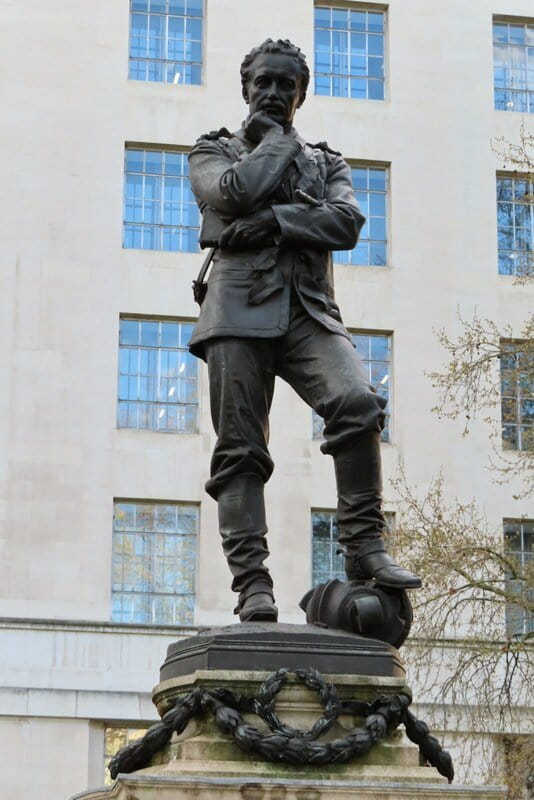
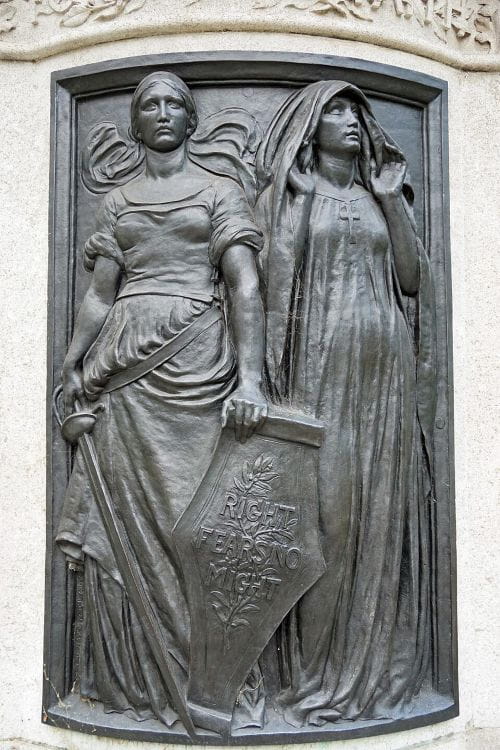
The first of these was his memorial to General Charles Gordon, commissioned in 1885 and unveiled in Trafalgar Square in 1888.
Concerned with getting the details right, Thornycroft conducted careful preparatory research, consulting biographies, photographs and people who had known Gordon. Notably, the general’s brother supplied details of his clothing.
The resulting statue presents Gordon absorbed in thought, with one hand supporting his chin and the other holding a Bible. Observers are left with the impression that its subject was a man of strong moral resolve: the broken cannon beneath his foot was intended to convey an aversion to bloodshed.

Chartered Accountants’ Hall — modern life and ancient ideals
Between 1889 and 1893, Thornycroft worked on perhaps his most remarkable commission: the frieze for ICAEW’s new headquarters at Chartered Accountants’ Hall.
The building, designed by John Belcher, was intended to realise the Art Workers’ Guild’s creed of ‘unity of the arts’. Belcher, who had chaired the Guild’s first meeting in 1884, thus considered Thornycroft’s frieze an integral part of its design.
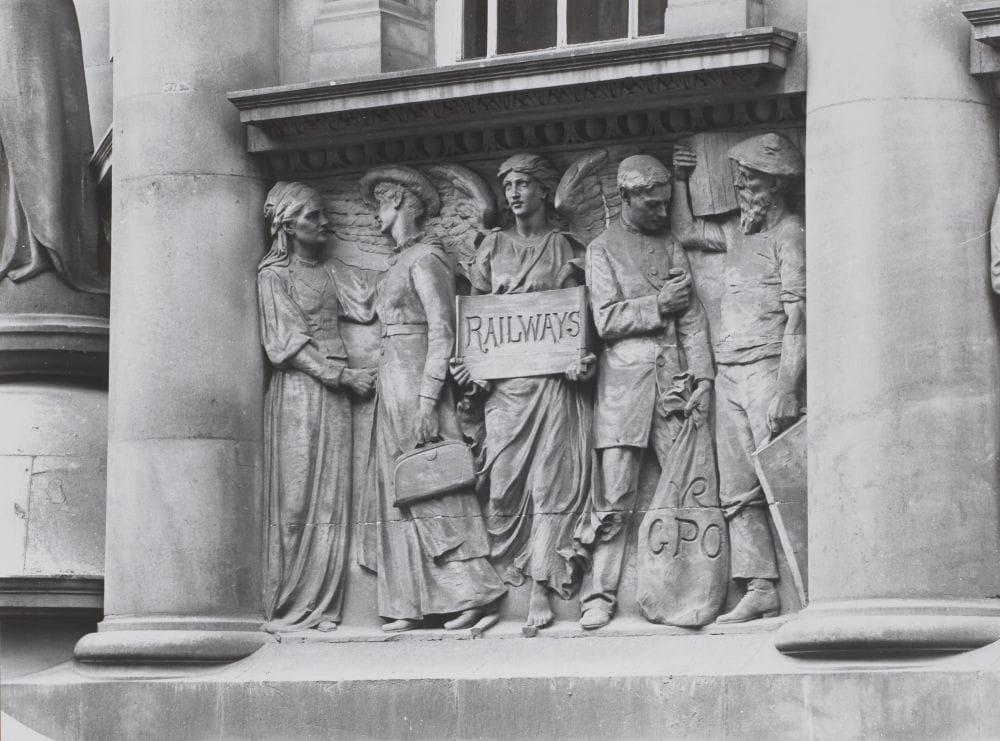
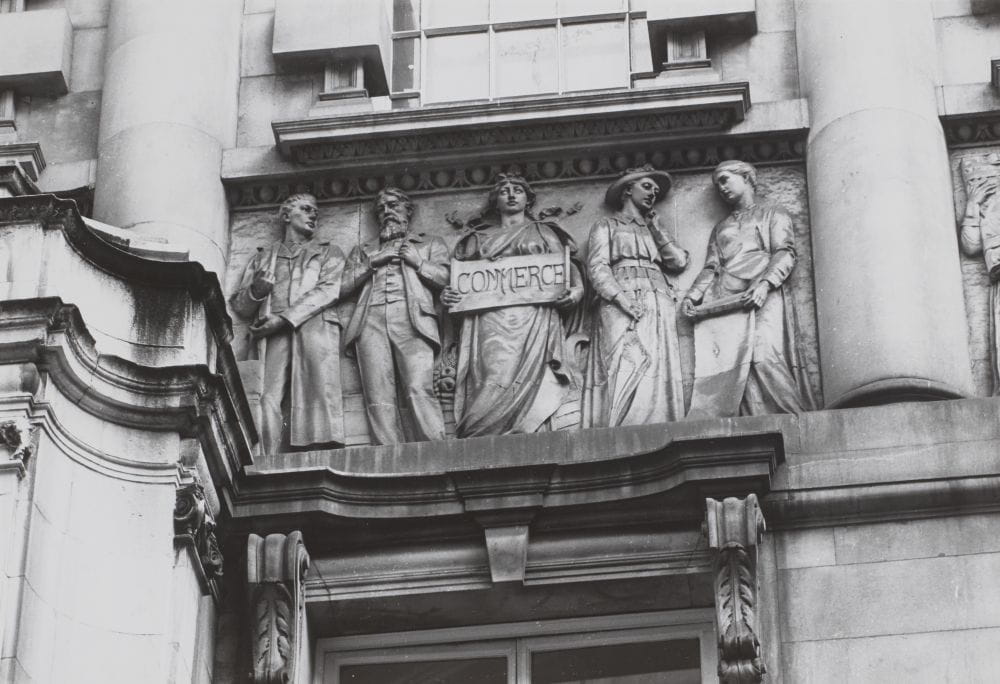
Across twelve panels, the frieze depicts a varied range of disciplines, vocations and industries which “look to the Chartered Accountants for financial guidance and order”. It shows idealised figures in classical costume standing side-by-side with figures in contemporary dress – several of whom were based on real-life individuals.
In the Railways panel, for example, Thornycroft’s mother is depicted to the left of the central allegorical figure – she is meeting a younger woman, probably his older sister Alyce.
Perhaps most notably, the concluding Building panel (which is considerably longer than the others) celebrates those involved in the construction of the building, including depictions of Belcher as architect and Thornycroft himself as sculptor.
In continuity with The Mower, various manual labourers are depicted – a bricklayer, a hodman, a carpenter, and so on. Actual craftsmen employed on the building – such as the carver George Hardie – are said to have served as models.
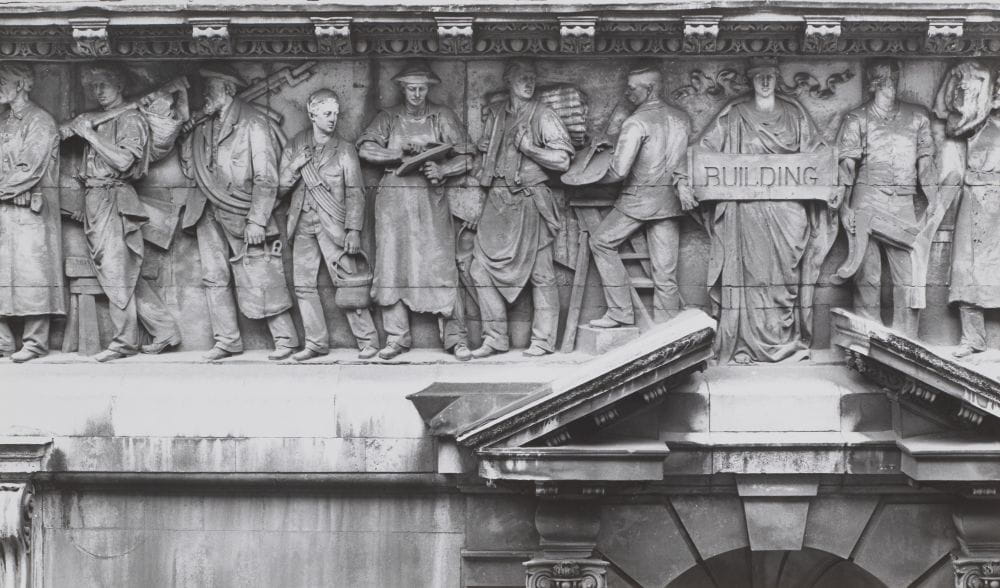
Just as much as Thornycroft’s standalone statues, the frieze may be viewed as an accomplished exercise in the synthesis of observed life and ideal (classical) form.
Analogously, it hints towards a desire on the part of the fledgling ICAEW to engage boldly with the modern world, whilst grounding that engagement in enduring virtues, principles and ideals.
Cromwell, Alfred and Gladstone — shaping public memory
In the years following his completion of the Chartered Accountants’ Hall commission, Thornycroft produced several more statues commemorating well-known figures from British history.
For his Oliver Cromwell, installed outside Westminster Hall in 1899, he studied letters, portraits and death masks. The resulting figure holds a sword and Bible, bringing military authority and religious conviction together in a thoughtful, downward-looking pose.
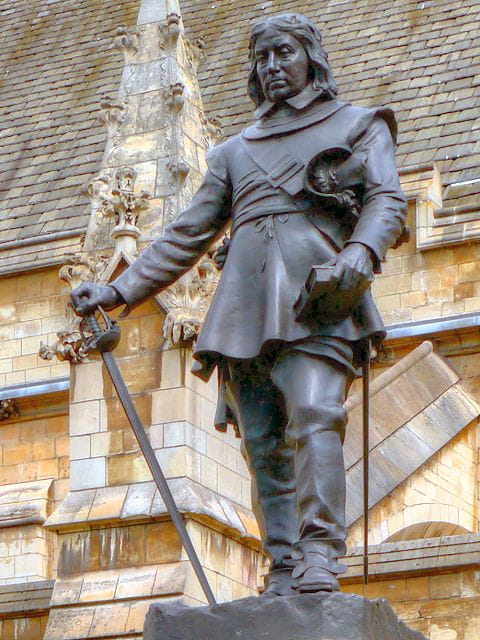
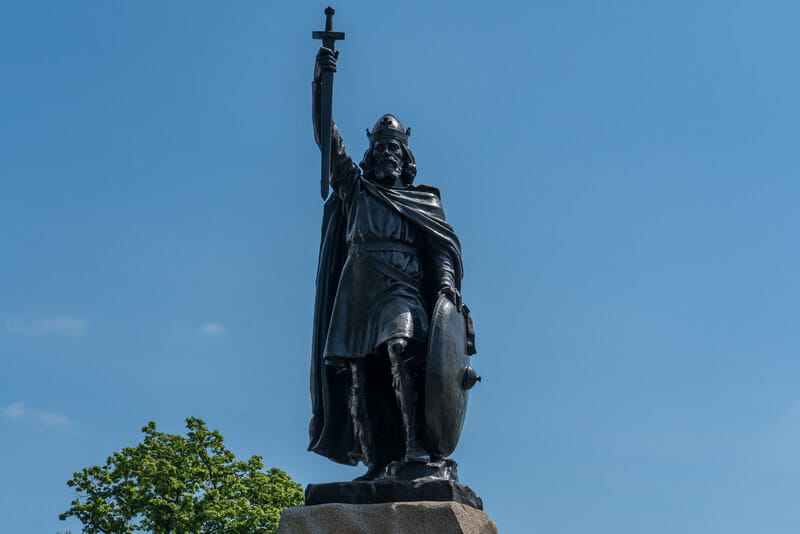
Such images did not necessarily express a universally agreed-upon national memory: the decision to erect a statue to Cromwell was challenged in the House of Commons by the Irish nationalist MP William Redmond, and contemporary commentators even questioned Alfred’s beard, noting his beardless appearance on ninth-century coins.
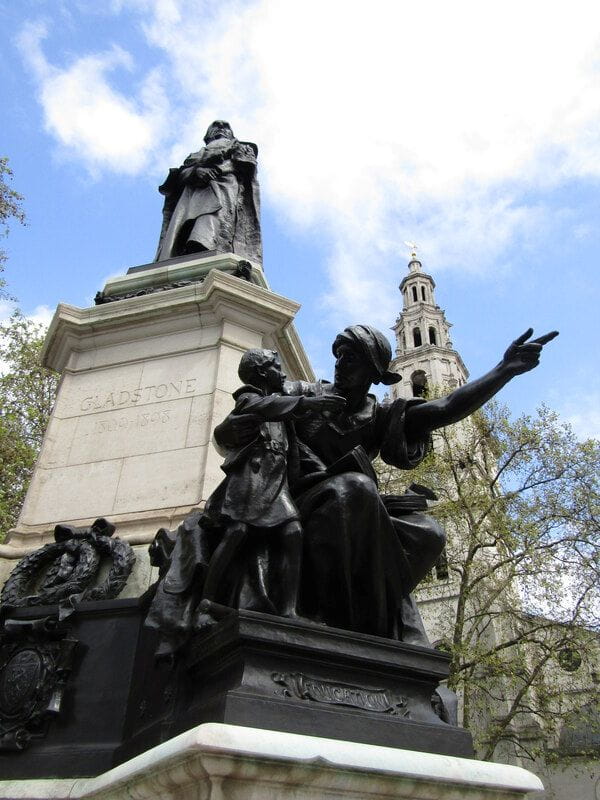
Thornycroft’s Gladstone memorial on the Strand, completed in 1905, returns to the relationship between portrait and allegory explored in the Gordon monument. Here, Gladstone stands in the robes of the Chancellor of the Exchequer, above groups representing Education, Brotherhood, Aspiration and Courage.
Later work and legacy — balancing the real and the ideal
Thornycroft’s largest single work, his memorial to Lord Curzon, was unveiled in Calcutta in 1913. Clearly intended to present a romanticised view of imperial government, its layout was similar to that of the Gladstone memorial: a standing figure in the centre, surrounded by four allegorical groups.
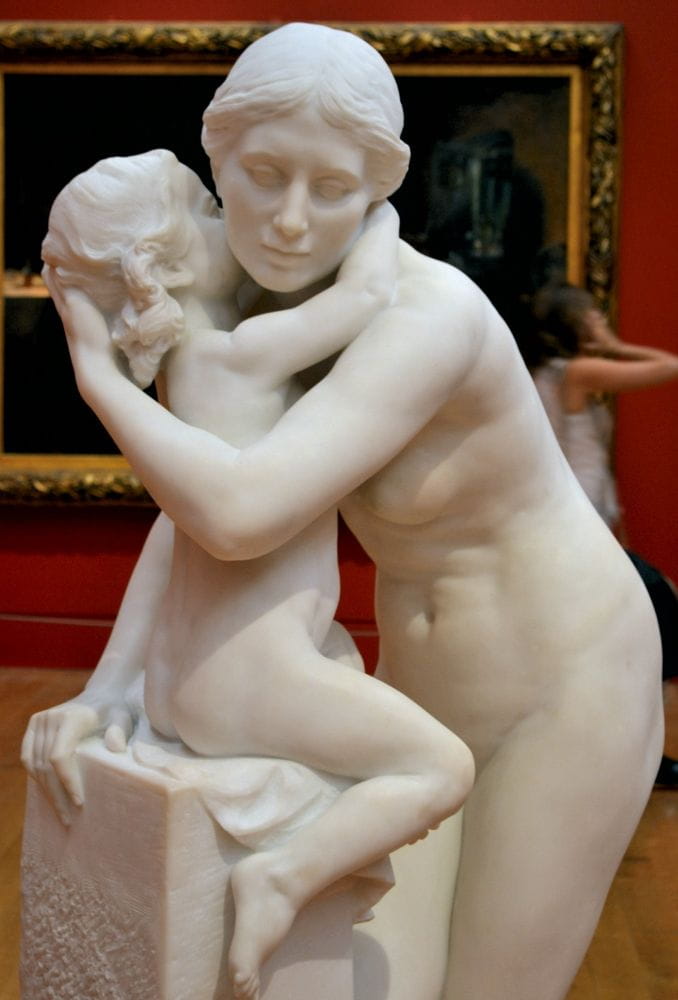
The most notable work of his later career, however, was not a public memorial, but rather an imaginative work exploring more intimate subjects. His marble group The Kiss, exhibited in 1916, depicts affection between a mother and child. It was highly acclaimed when displayed at the Royal Academy, and was bought for the Chantrey Collection.
_%E2%80%93_The_Kiss_(1916),_mother%27s_front_left_above_knees,_Tate_Britain,_June_2012.png)
From this work it can be seen that Thornycroft never abandoned the idealising impulse, as some of his successors were to do. Rather, he strove – as Jane Thomas has argued – to “balance the desire to idealize with the imperatives of the real”.
Having been knighted in 1917, Thornycroft died on 18 December 1925. He is remembered for having expanded sculpture’s subjects and renewed its relationship with contemporary life, whilst producing works which stayed true to enduring ideals of beauty, restraint and completeness.
Can't find what you're looking for?
The ICAEW Library can give you the right information from trustworthy, professional sources that aren't freely available online. Contact us for expert help with your enquiries and research.
ICAEW accepts no responsibility for the content on any site to which a hypertext link from this site exists. The links are provided ‘as is’ with no warranty, express or implied, for the information provided within them. Please see the full copyright and disclaimer notice.
Learn more about Chartered Accountants’ Hall
The Library team has produced a history and overview of Chartered Accountants' Hall, home to ICAEW since 1893.
Browse resources