ICAEW’s Sole Practitioners and Small Firms in Focus research finds growth prospects are mixed, with small firms generally more optimistic than sole practitioners. Across all firm sizes, increasing regulatory volume and complexity, alongside government policy decisions, are significant constraints on future growth.
ICAEW’s Sole Practitioners and Small Firms in Focus 2026 research draws on fieldwork conducted in August 2026 and explores the opportunities and challenges facing ICAEW firms with less than 11 principals.
Key takeaways:
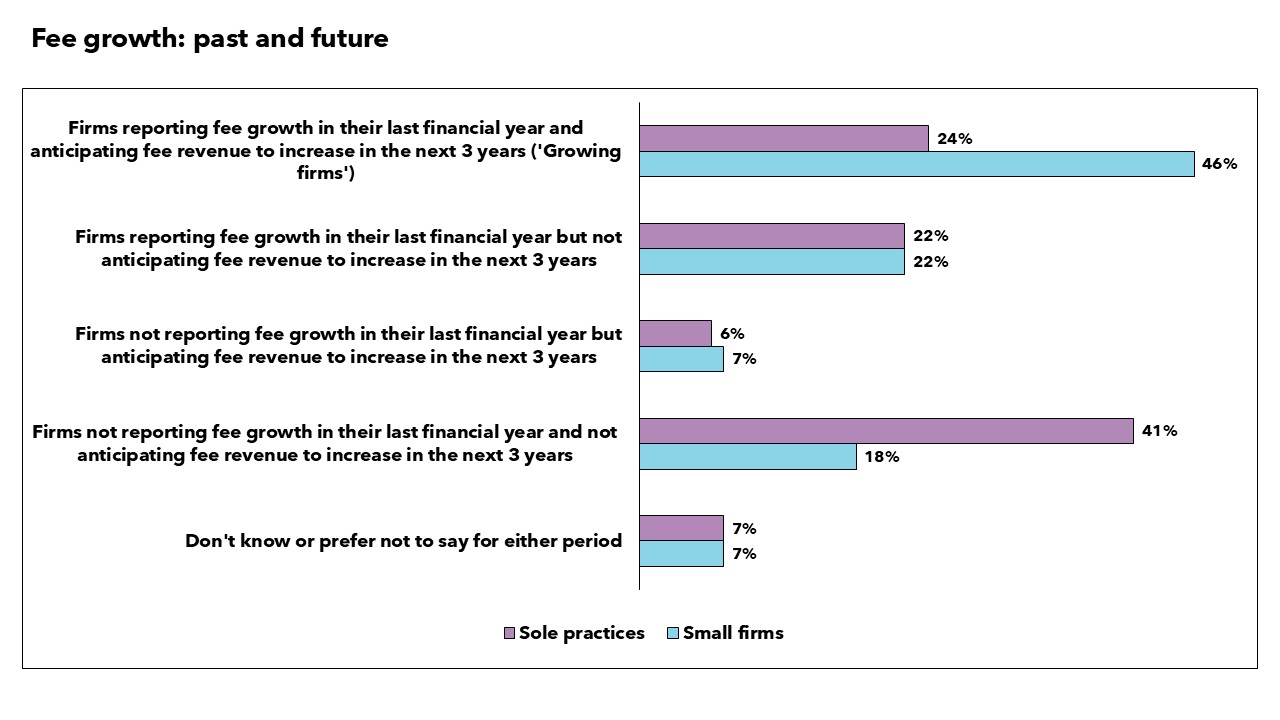
- Growth prospects vary by firm size with small firms more optimistic: 46% of small firms and 24% of sole practitioners report fee growth in the last financial year and expect an increase in fee revenue over the next three years.
- New clients are the main driver of fee growth: Client acquisition is the leading reason for fee growth, followed by higher charge-out rates and greater spending from existing clients.
- Regulation and government policy are the biggest barriers to fee growth: While specific pressures vary according to firm size and operating model, increasing regulatory demands and policy decisions are constraining firm growth.
Growth and the future outlook
The outlook for sole practitioners and small firms is mixed. 24% of sole practitioners and 46% of small firms are growing, defined here as those reporting fee growth in the last financial year and expecting an increase in fee revenue over the next three years. Conversely, 41% of sole practitioners and 18% of small firms reported no fee growth in the last year and do not anticipate an increase in fee revenue over the coming three years.
Drivers of fee growth
For both sole practitioners and small firms who experienced fee growth in their last financial year, new client acquisition was the leading driver, cited by 47%. The next biggest contributors were increased charge-out rates (31%) and greater spending from existing clients (17%).
For growing firms (those that experienced fee growth in the last year and expect fee revenues to increase over the next three years), new clients were even more important, cited by 55%, followed by increased charge-out rates (28%) and greater spending from existing clients (12%).
Growing firms are reshaping operating models
Operating models are expected to remain broadly stable, with most firms anticipating little change in staffing and trainee levels or in their use of outsourcing and offshoring.
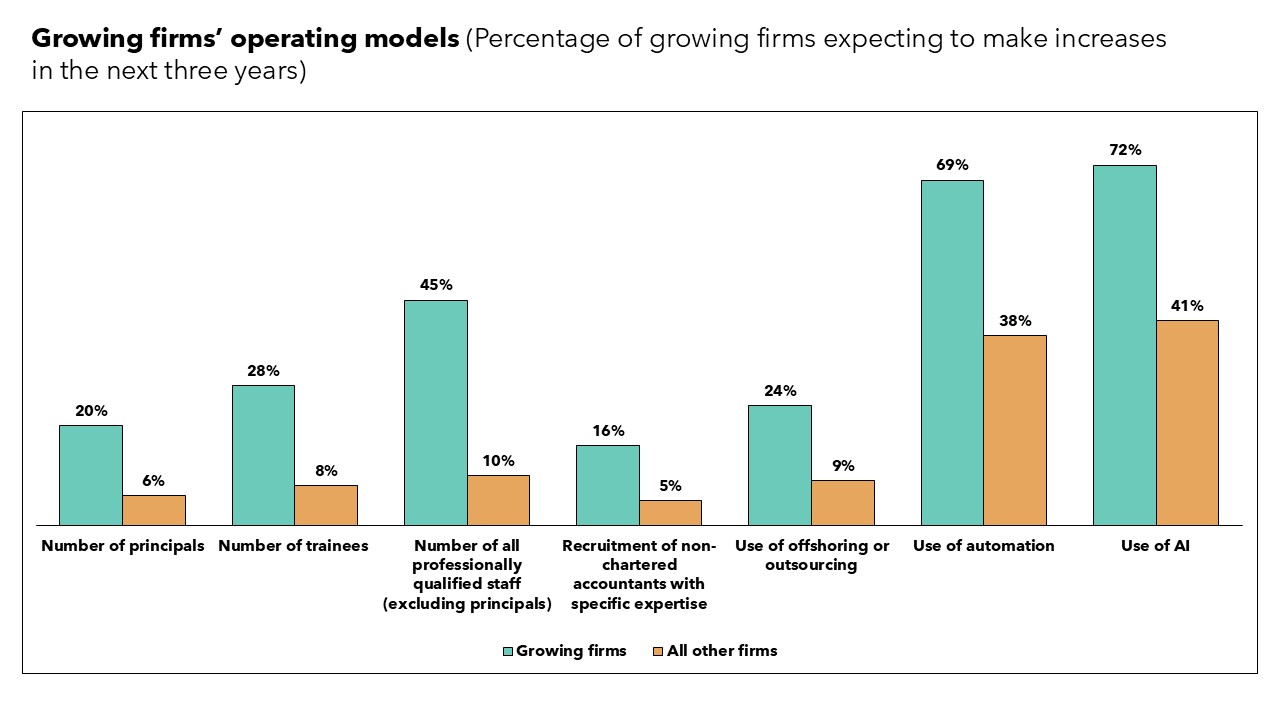
Growing firms (those that experienced fee growth in the last year and expect revenues to increase over the next three years) are the exception. Their ambitions are influencing how they expect to operate in the future, with a higher proportion planning to increase staff and trainee numbers, and to make greater use of specialist expertise.
Growing firms are also more likely to expand their use of automation and AI. However, with 32% of growing firms currently describing their adoption of AI as late-majority (those who adopt a technology after the initial hype has subsided) or laggard (the last group to adopt new technologies), many may need to accelerate uptake to realise their ambitions.
Firms not anticipating fee revenue increases
When looking at the next three years, 36% of sole practitioners expect fee revenue to remain static and 29% expect it to decrease. These firms cited the volume and complexity of regulation relating to firm compliance (49%) and to service delivery (54%), in addition to government policy decisions (49%) as the main factors driving these expectations.
For small firms, 31% expect fee revenue to remain static and 10% anticipate a decrease. As with sole practitioners, regulation and government policy decisions feature prominently in their growth expectations. The volume and complexity of regulation relating to firm compliance (61%) and service delivery (51%) were the two most cited factors negatively affecting fee growth, while government policy decisions were cited by 49%. Small firms also face resistance from clients to fee increases (50%) and rising staff costs (46%), reflecting their employment of more staff.
Regulations and government policies
A common theme across respondents is the impact of regulatory and compliance change. This was identified as the most significant macro trend affecting the profession, with almost a third of respondents (30%) identifying it as their leading trend and two-thirds (66%) ranking it among their top three.
UK economic and public policy factors also feature among the leading macro trends, cited as a top three trend by 44% of respondents.
Together, the findings show that sole practitioners and small firms are feeling the weight of external pressures that sit largely beyond their immediate control. However, the extent to which government policy is seen as a constraint on growth varies across respondents.
Sole practitioners and small firms with up to four principals report being more constrained by day-to-day compliance obligations, such as Making Tax Digital and AML requirements.
Among small firms with five or more principals, the pressure shifts towards government policies with broader workforce implications, particularly employer National Insurance increases and apprenticeship funding. A lack of proportionality on audit standards is also cited by these firms. This suggests that the challenges firms face evolve alongside growth and increasing operational scale.
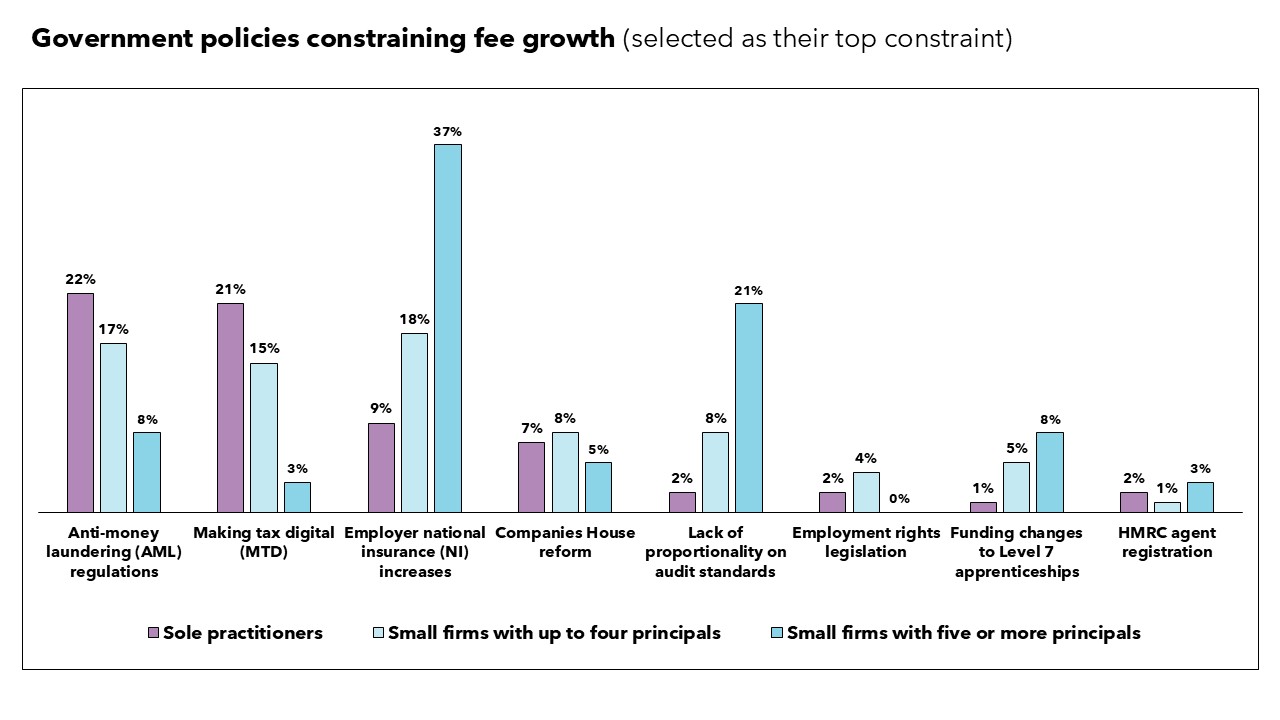
A wider picture emerges when respondents' top three constraints are considered. Companies House reform becomes more prominent, being cited by 31% of sole practitioners, 27% of small firms with up to four principals, and 18% of those with five or more principals. This indicates that Companies House reform may not be firms' foremost growth constraint, but it is nevertheless a concern shared by a substantial proportion of respondents.
The small firm sector is under increasing pressure as costs and compliance demands escalate. The workload is rising at a disproportionate rate against reward. More time is being spent doing basic compliance and not advisory/reporting and Management Information.
One of the strongest messages from this research is that regulation and public policy are the biggest forces shaping strategic decisions and growth prospects within firms. Practitioners recognise the importance of maintaining high standards, but many are questioning how growing compliance demands affect their ability to invest in growth, innovation and client service.
Explore the findings

More information
PDF (374kb)
You can download all of the charts generated by the research and watch our webinar discussing the findings in full.
DownloadWatch our webinar