Holding your nerve requires a lot of patience. As any kind of lender, a disciplined approach is critical to being able to navigate your way through these chaotic times.
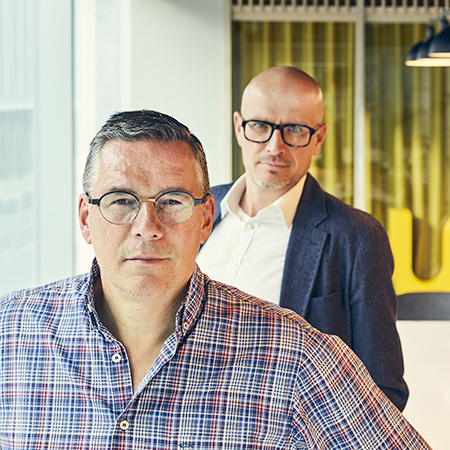
John Onslow, chief executive of Independent Growth Finance (IGF), who led a buy-out of the firm in 2016, says: “In four years, we’ve grown our asset book several times over, but probably what I’m most pleased about is how we kept our head in what has been a very toppy market,” says Onslow. “Having that discipline during the period leading up to the pandemic proved very, very important when COVID-19 started. It has stood us in good stead.”
That has been borne out by the performance of IGF’s loan book since the first UK lockdown started in March, he adds. “Of course, we are nowhere near the end of this, and in some ways we’re only just getting into it.”
IGF backs UK businesses with turnover between £1m and £100m annually. To provide national coverage, the asset-based lender has offices in London, Birmingham and Manchester alongside its head office in Redhill, Surrey. It supports its clients with what it describes as flexible, event-driven funding to support M&A, management buy-outs, management buy-ins, buy-and-build strategies, growth and expansion, restructuring and turnarounds.
IGF is ‘fairly sector-agnostic’ but is able to unlock the most value from asset-rich businesses. Having a receivable at the core of the business is imperative, and then other assets such as property, plant and machinery or inventory against which lending can be introduced as required.
Growing the book
Key to deal flow, IGF works closely with corporate financiers, private equity houses, national and regional accountancy firms, and turnaround practitioners. To grow the business, management has focused on speedy decision-making and short lines of communication. Because the senior team assesses every opportunity, funding decisions are generally made inside 48 hours. To extend its reach, IGF joined the Corporate Finance Faculty a year ago.
In 2016, family office Spring Ventures backed a buy-in management buy-out (BIMBO) of IGF from Greater London Enterprise (GLE), led by Onslow. Its initial investment (for a majority stake) was £9m, which included some capital for growth. It committed a further £23m over several subsequent funding rounds to fund the company’s entrepreneurial approach to growth.
Spring Ventures was no doubt attracted to the buy-out because Onslow and his team had previously grown and successfully sold two asset-based lending (ABL) businesses: Centric Commercial Finance to Shawbrook in 2014, and Heller Finance to GE in October 2003.
At the time of the buy-out, IGF was lending up to £500,000, had a portfolio of about 200 clients and a loan book of £20m. In 2019, the firm provided more than £1bn of new funding.
“The IGF experience has been very different to the Centric one,” explains Onslow. “We started Centric at the end of 2007, when we were just about to enter the global financial crisis – what a time to start a business that was.” From 2008, Centric had very little competition. Banks were not lending and were trying to reduce their exposure. Alternative lenders were not in the market to the extent that they are now.
“When we bought into IGF in 2016, it was probably the complete opposite,” adds Onslow. “Debt was relatively easy but it was a very toppy market.” In 2016, the average IGF ticket size was about £75,000, he says. It now has an average deal size of £1.2m. “So you can see the direction of travel.”
2021 and beyond
So what is on the horizon for UK SMEs? What does the crystal ball suggest for ABL and IGF?
Saying that there is uncertainty is maybe stating the obvious, Onslow explains. He points to the changes in Crown preference that came into force at the start of December. HMRC will have priority over floating charge assets. “Certainly we will need to be quicker to react,” he adds.
IGF competes with all the big banks, and Onslow expects to see them continue to move on some of their loan book, with more migration to alternatives. “The opportunity will be like 2008/2009 but on steroids.”
The distressed loan markets will be busy as the economy struggles after COVID-19. An increasing number of direct funds are likely to be active in distressed situations, he says.
Matt Shepherd, IGF’s commercial director, says IGF has always been open to work with private equity firms that back ‘distressed’ companies: “I would imagine those firms are going to be incredibly busy, and we’re already looking at a number that do deals in that area. They move quickly by necessity, which plays well to what we do – namely, short lines of communication, rapid decision-making and certainty, which is what they need.”
Shepherd predicts that we will only really begin to see the full longer-term impact of the crisis “once the seatbelts are off and payment holidays end. Bounce Back Loans and Coronavirus Business Interruption Loan Scheme will all need working through. When we get to do some acquisition work, then we’ll see just how restructuring of government guaranteed loans plays through. We’ll have to cross that bridge when we come to it – but that may be a little while yet.”
‘Traditional’ M&A coming back is crucial, says Shepherd. He is confident it will. “We are certainly starting to see more transactions coming through. There are green shoots. Given where we were in June, momentum seems to be picking back up. We see an opportunity to have a big impact in funding these types of transactions in the next 12 months.”
Shepherd says he expects that carve-outs from corporates will provide M&A deal flow, which they will be able to provide funding for. “Plcs will be divesting non-core businesses, and IGF is uniquely placed to support this activity. That also plays very well to what we do.”
He also says business owners will be looking at equity release, in part because of what they will have experienced through COVID-19.
“I suspect there are quite a few individuals and families who wish they had taken money off the table before this crisis happened,” he says. “We’ve got a couple of deals already whereby the owner is wanting to take some money off the table but wants to stay involved to an extent. And I think we will see quite a few more of those.”
No matter what the future holds, the discipline that in four short years has taken IGF to where it is today will stay at the heart of how it does business.
“I’m never happy walking away from deals,” says Onslow. “But if they are not right for us because of risk or price, we simply won’t do it.”
About the article
This is extracted from the full article in the Corporate Financier December 2020 /January 2021 edition - exclusively for Corporate Finance Faculty & Faculties Online members - who can access our award winning magazine in its originally designed form, and our extensive archive brought to you by the ICAEW Corporate Finance Faculty
