
Key tax commentators discuss what can be learnt from the past and look ahead at the hot topics of digitalisation, AI, regulation and technology to predict how the tax adviser role could evolve in the future.
The responsibilities of the tax adviser have developed over the years and will continue to adapt in response to emerging opportunities and challenges. Anticipated future developments include the ongoing digitalisation of tax systems, heightened integration of artificial intelligence, and the potential of increased regulation within the tax profession.
On 29 September 2025, ICAEW hosted a symposium on the future role of the tax adviser, chaired by Paul Harrison, Deputy Chair, ICAEW Tax Faculty. The panellists were selected to represent a broad range of perspectives, from in-house tax departments to general practitioners, and to provide context in the form of government policy and international developments. Each panellist delivered a short presentation before questions were taken from the floor.
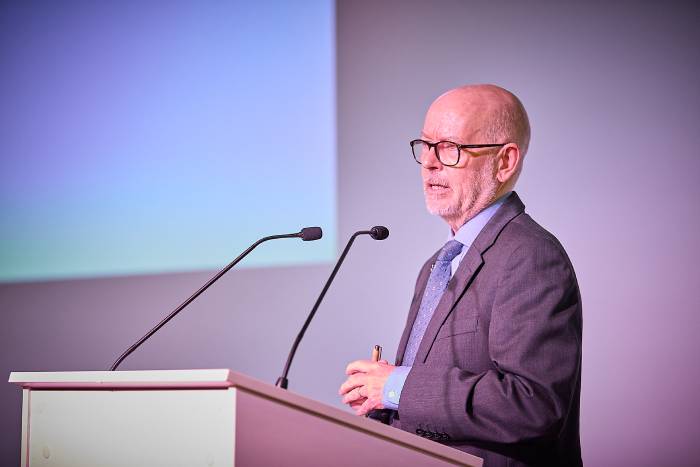
Paul Harrison, Deputy Chair, ICAEW Tax Faculty
International context and developments
Chris Sanger, EY's Global Government and UK Tax Policy Leader (and former ICAEW tax faculty chair), began his talk by recalling a 2013 prediction that 99% of tax preparers' work was susceptible to computerisation. He then highlighted a chilling prediction from a recent report from Indeed, which said that 75% of accountants’ skills may soon be handled or replaced by GenAI.
However, Sanger soon struck a more positive note, reminding us that history shows that accountants are able to adapt to where their skills are needed. Take spreadsheets, for example. The development of spreadsheet tools was as many predicted, “the death knell for the laborious work of manually reworking numbers”, but it also “provided many more opportunities to interpret those numbers and to scenario plan”, said Sanger.Sanger went on to argue that accountants can adapt to take on more of the roles within the tax delivery system. “It takes a village to deliver a functioning tax system”, said Sanger, with the tax authority, the taxpayer, the tax adviser and others all having a part to play in making the tax system work. As technology develops, roles in the village will change and accountants can adapt to take on more of those roles, including moving “upstream”, applying “the core skills of understanding the tax system … not to data but to systems”.
Sanger gave the example of an idea proposed in Australia that tax officials would treat tax returns differently depending on the role played by the tax agent. If the tax agent performed additional work, say by reviewing the underlying numbers for the taxpayer, the return would be treated as lower risk by tax officials. Sanger said he “liked this idea in concept” and saw it as something that “allows the government to outsource at least some of the checking process”.
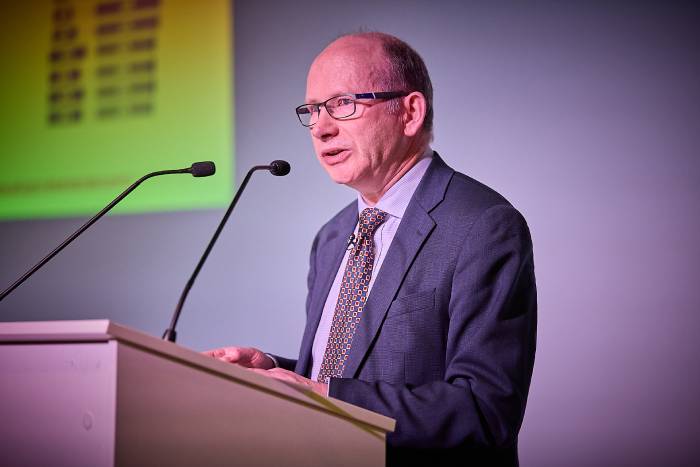
Chris Sanger, EY's Global Government and UK Tax Policy Leader
Professional bodies/SME perspective
Like Sanger, Paul Aplin, Deputy President of the Chartered Institute of Taxation and former president of ICAEW, also looked to the past for clues to the future, referring to the introduction of tax software and the move to self assessment, which he said had encouraged the profession to be more proactive. This trend would continue, he said, as technology improves and compliance moves further upstream.
Aplin is confident that the skills needed to be a tax professional in 1880 when ICAEW was founded – technical knowledge, use of judgement, professional scepticism – will be the same skills needed in the future, and that the tax profession shouldn’t overlook the role played by staff at an early stage in their career. It is important that the tax managers, senior managers and partners of today invest time and money in training new entrants to the profession as they are the tax managers, senior managers, and partners of tomorrow.

Paul Aplin, Deputy President of CIOT
International firm/network perspective
Jane McCormick, former global head of tax at KPMG and a member of the ICAEW Tax Faculty Board, said that there was “no doubt that the future of the tax profession will depend on technology” but, quoting Bill Gates, agreed we are simultaneously under- and over-estimating the impact technology will have, and missing an opportunity.
Beginning with how we underestimate the use of technology, McCormick repeated her prediction from the February 2021 Hardman lecture that tax agents will become auditors, in what would be a significant change for the profession. McCormick argued that although it is “relatively easy to automate the production of a tax return”, someone will need to “check the numbers” to ensure that the process is working correctly.
McCormick said we overestimate when it comes to AI. Although AI is good in “very simple situations”, it will be “a long time before it can give a reliable answer in a complex situation.” An adviser has to consider a number of factors – law, regulation, accounting – and help their client make the right ethical judgements.
For McCormick, we are missing an opportunity when it comes to tax policy. “Tax works best when it collects money from those who can afford to pay in the easiest possible way”, she said. McCormick believes our focus should be “on simplification and on taxes and benefits that can be automated”.

Jane McCormick, former global head of tax at KPMG
Multinational business perspective
For Chelsea Aldridge, Manager, Tax Planning and Netherlands Compliance at Mondelez International, “the future is, in many ways, already here”. With the use of technology tools and generative AI now widespread, explained Aldridge, in-house tax departments must “reconsider how we put together both current and future roles”, focusing heavily on skills development.
Aldridge went on to highlight three key areas for businesses:
- ensuring an awareness of, and the ability to cope with increased tax transparency and global and regional tax collaboration efforts;
- rethinking succession planning by ensuring development plans are focused on helping each individual to grow, and ensuring that equal attention is given to all team members and that robust learning and development structures are in place; and
- developing each team member’s skills, and in particular their digital and “power skills”, including resilience, flexibility, critical thinking and effective communication.

Chelsea Aldridge, Manager, Tax Planning and Netherlands Compliance at Mondelez International
It’s better to invest in staff and lose them rather than not invest in staff and retain them
HMRC perspective
Jonathan Athow, Director General Customer Strategy and Tax Design at HMRC, began his presentation by talking about agent registration and the regulation of the tax profession. Athow said that tax advisers, and in particular members of professional bodies, have an important role to play in helping their clients pay the correct amount of tax, but that there is more to do to drive up standards. He drew the distinction between registration, where HMRC sees the need for mandatory agent registration from April 2026 – an area where ICAEW has raised concerns – and regulation, which can be considered over a longer timescale.
Looking further ahead, Athow agreed that the roles in the tax system will change, and that the current “neat boundaries will start to blur”, as more use is made of digital solutions and processes change. For Athow, a tax adviser will be like “the conductor of an orchestra”, orchestrating the use of, and troubleshooting, new technologies and systems, such as Making Tax Digital and e-invoicing. Athow said that new groups of intermediaries would emerge – for example, software vendors, and payment providers – and that tax advisers will need to forge relationships with them. He sees HMRC as the “steward”, setting the framework and rules.
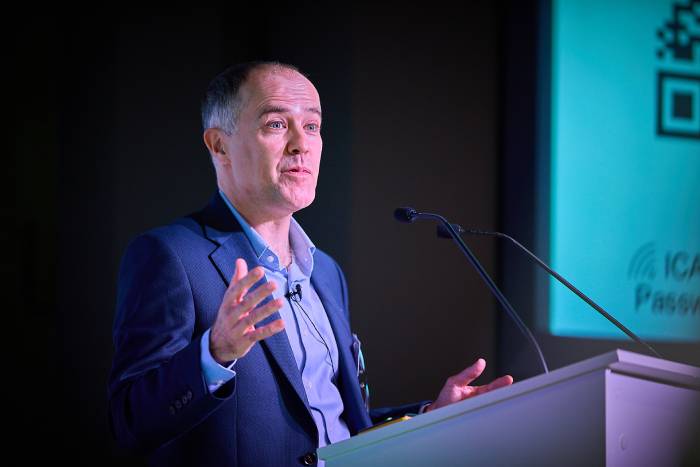
Jonathan Athow, Director General Customer Strategy and Tax Design at HMRC
The future is in our hands
Drawing the evening to a close, Harrison said that history has shown us that tax professionals are good at reacting to change and that they will need to draw on those skills again.
We must design the future for ourselves, as if we don’t do it, it will be done for us. This is the start of the conversation – not the end of it
