
ICAEW’s Tax Faculty considers the extent to which changes in the annual exempt amount (AEA) announced in 2022 have contributed to the record amount of capital gains tax (CGT) paid for 2024/25.
At the Autumn Statement 2022, former Chancellor Jeremy Hunt announced two significant changes to the AEA (the tax-free CGT allowance):
- first, the AEA was cut from £12,300 for 2022/23 to £6,000 for 2023/24 and to £3,000 for 2024/25; and
- second, the statutory obligation for the AEA to increase each year with inflation was abolished, with the result that the AEA has remained at £3,000 since April 2024.
A lower AEA applies for most trustees.
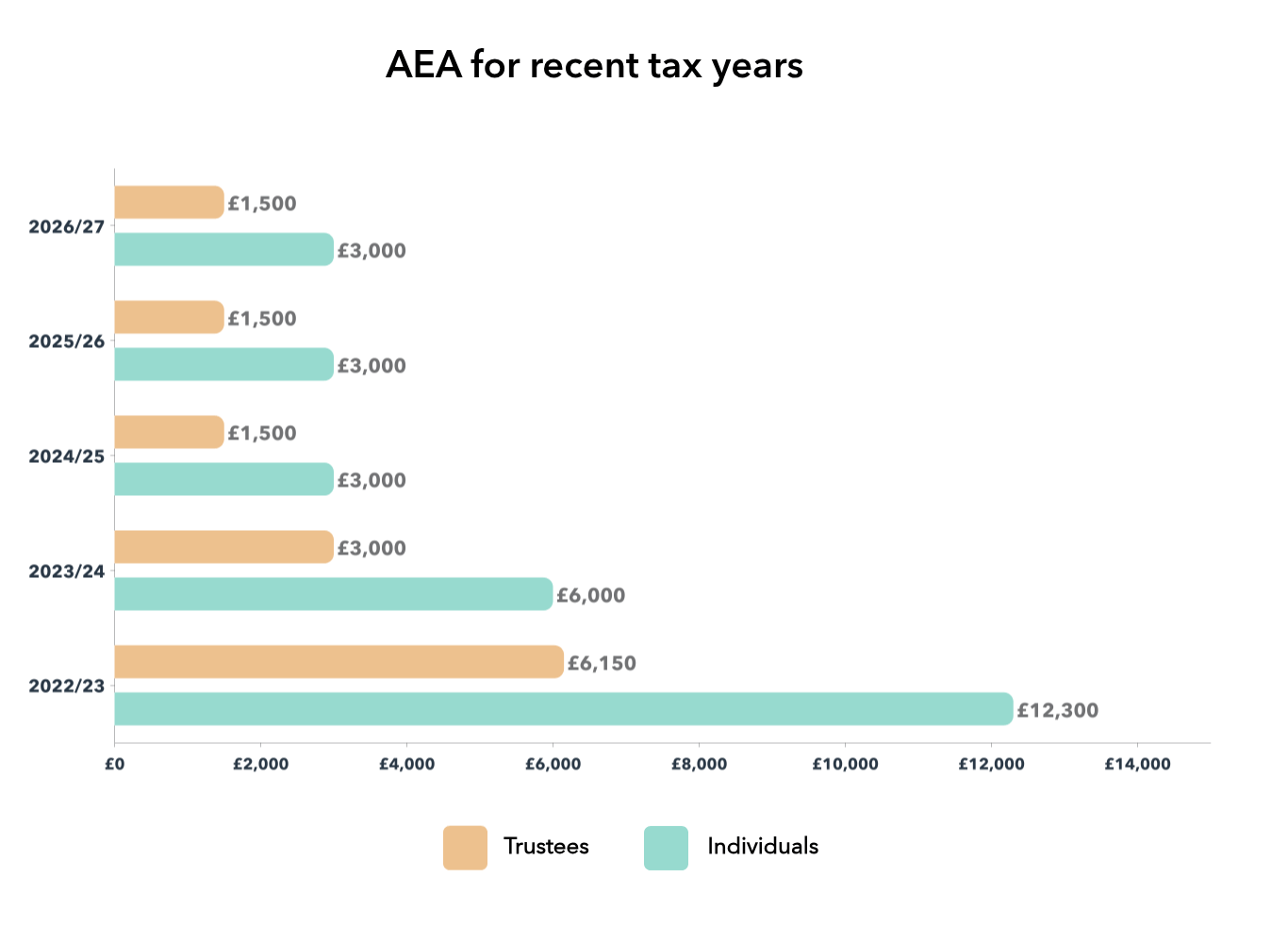
The policy paper published alongside the announcement explained that this would increase CGT receipts, as more taxpayers would be brought within the scope of CGT and as all taxpayers with CGT liabilities would be required to pay more. It was estimated at the time that, as a result of the measure, CGT receipts would increase by £275m for 2024/25, rising to £440m for 2027/28.
HMRC’s latest CGT statistics now include 2024/25. However, policy changes announced at fiscal events in 2023 and later – including changes to CGT rates (see table below) – make it difficult to assess the accuracy of the estimates made in 2022.
Rates of CGT for recent tax years
| Main rates* | Residential property rates* | Business asset disposal relief (BADR) | |
| 6 April 2022 to 5 April 2023 | 10%/20% | 18%/28% | 10% |
| 6 April 2023 to 5 April 2024 | 10%/20% | 18%/28% | 10% |
| 6 April 2024 to 29 October 2024 | 10%/20% | 18%/24% | 10% |
| 30 October 2024 to 5 April 2025 | 18%/24% | 18%/24% | 10% |
| 6 April 2025 to 5 April 2026 | 18%/24% | 18%/24% | 14% |
| 6 April 2026 to 5 April 2027 | 18%/24% | 18%/24% | 18% |
* Lower and higher rates of CGT apply. The lower rate is payable on so much of the gain as falls within the individual’s remaining income tax basic rate band. The higher rate is payable on any part of the gain that is not taxed at the lower rate. See HMRC’s guidance for further details.
That said, it is clear from HMRC’s figures that there has been both a significant increase in CGT liabilities and in the number of taxpayers paying CGT, due at least in part to the changes to the AEA.
For 2024/25:
- CGT liabilities totalled a record £24.2bn, an increase of £7.1bn (29.5%) on 2021/22;
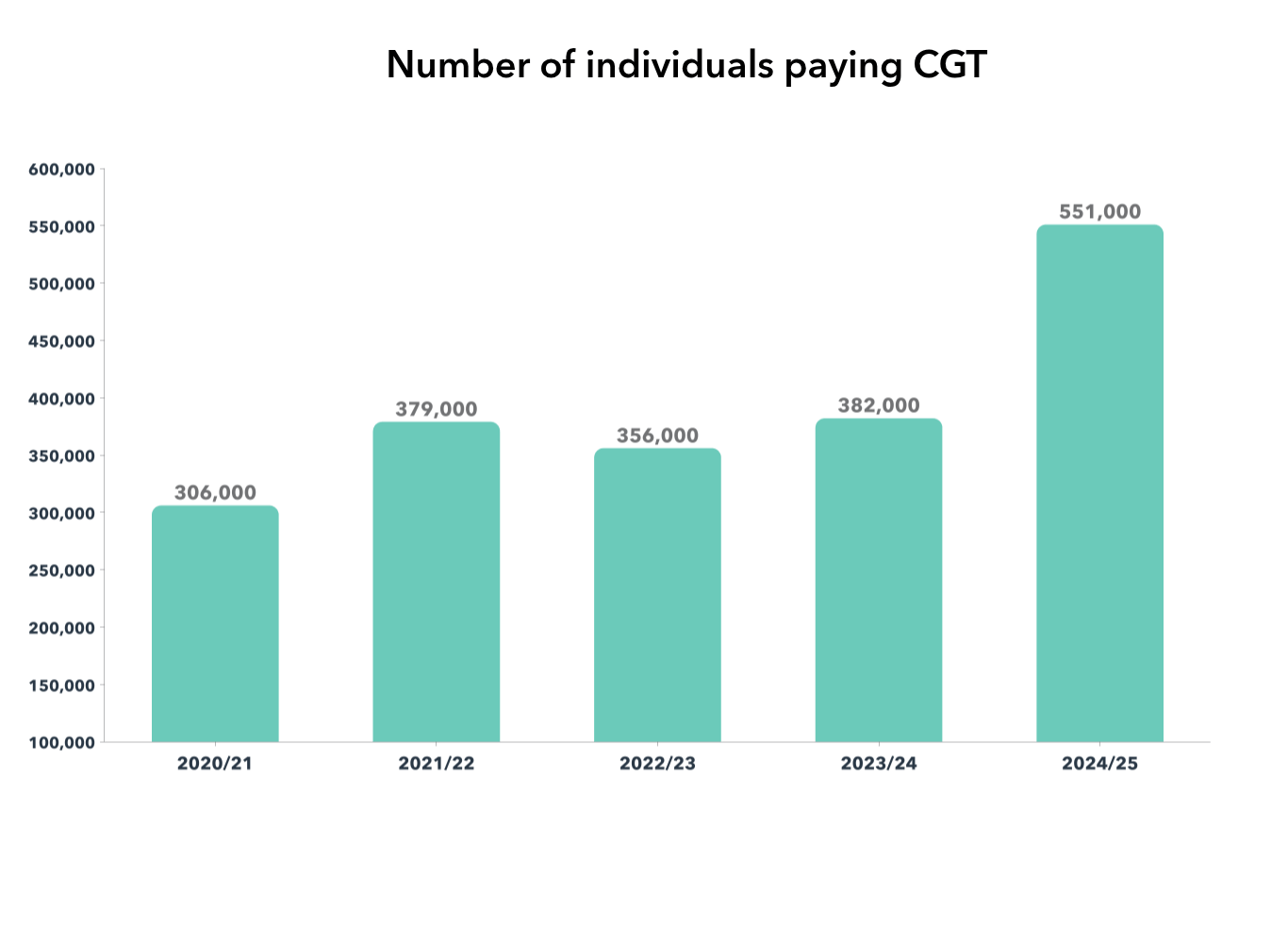
- 551,000 individuals paid CGT, an increase of 172,000 (56%) on 2021/22; and
- up to 163,000 taxpayers were brought into the scope of CGT by the consecutive reductions in the AEA effective from 6 April 2023 and 6 April 2024.
A further increase in total CGT receipts seems likely for 2025/26 due to the rate changes that took effect from 30 October 2024. At the time the changes were announced, the government estimated that CGT receipts would increase by £1.4bn for 2025/26. It is interesting to note that the government estimated just £90m of additional receipts for 2024/25.
Cryptoassets
As a result of the addition of new boxes for cryptoassets to the self assessment tax return for 2024/25, HMRC’s statistics now extend to CGT on cryptoassets. The data reveals that 17,600 taxpayers (excluding trusts) reported cryptoasset disposals in 2024/25, with gains totalling £1.38 bn.
Residential property
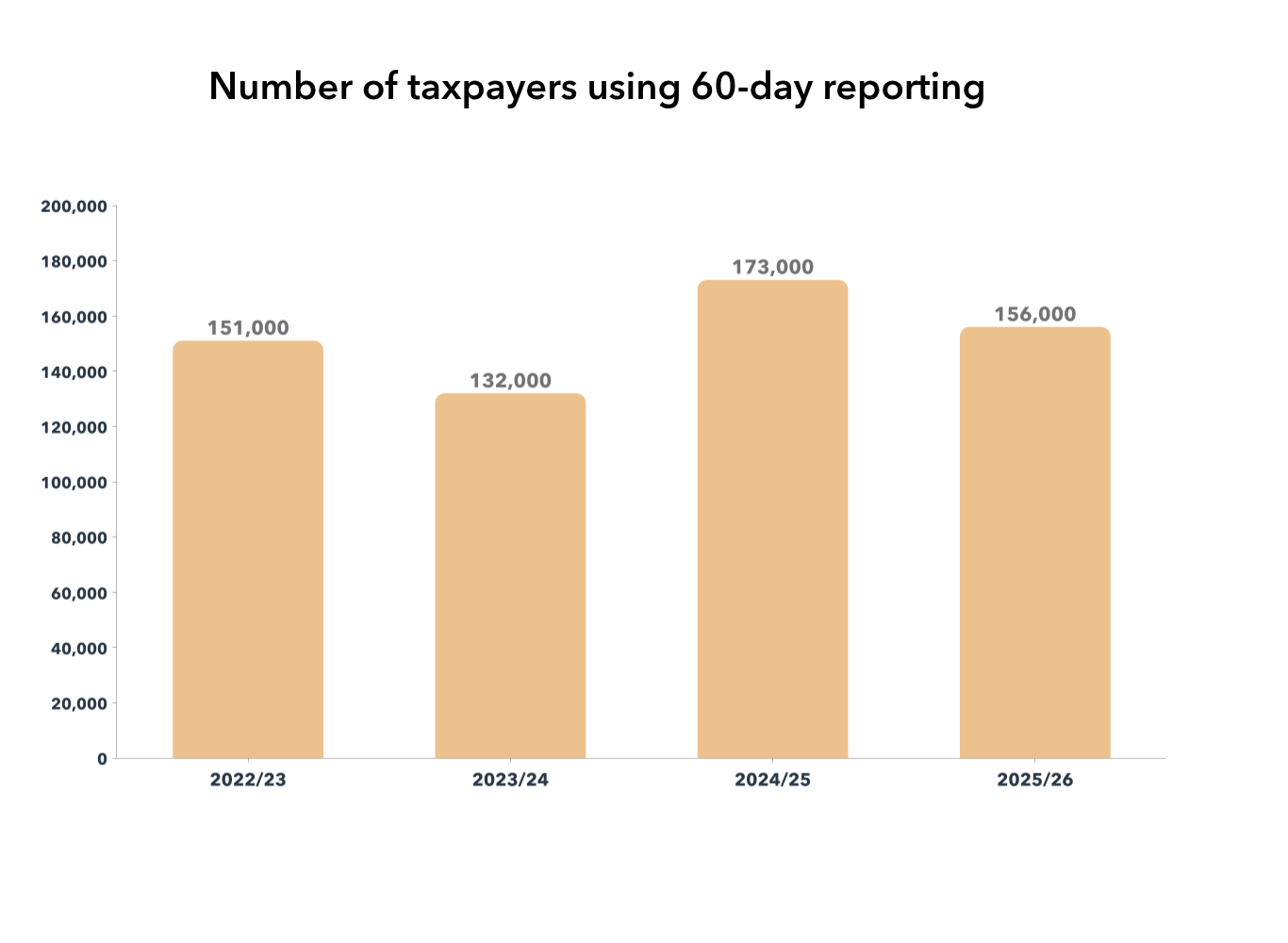
The statistics also showed that 173,000 taxpayers reported disposals of 195,000 residential properties through the CGT on UK property service (also referred to as 60-day reporting) for 2024/25, the latest year for which HMRC has complete information. The total gains were £10.9 bn, generating CGT receipts of £2.4 bn.
The initial figures for 2025/26 are that 156,000 taxpayers reported 173,000 disposals. HMRC says that some additional disposals are likely to be reported for 2025/26 in the future through late filing and amendments.
Other points to note
HMRC’s figures show that, for 2024/25:
- 3,890 individuals reported £5.4 bn of carried interest gains, resulting in tax liabilities of £1.4 bn. From 6 April 2025, the rate of CGT on carried interest increased from 18% (lower rate) and 28% (higher rate) to a flat rate of 32%, and from 6 April 2026 carried interest is subject to income tax, not CGT.
- Business asset disposal relief (BADR) was claimed by 61,000 taxpayers on £18.5 bn of gains, resulting in CGT liabilities of £1.8 bn. As shown in the rates table Rates of CGT for recent tax years, above, the rate of CGT on BADR gains increased from 10% to 14% from April 2025, and to 18% from April 2026.
