About the work
Originally five wall hangings were specially commissioned in 1988 to represent the founding Societies of London, Liverpool, Manchester and Sheffield and also Wales. These were unveiled in April 1991 by ICAEW President Michael Lipkiss.
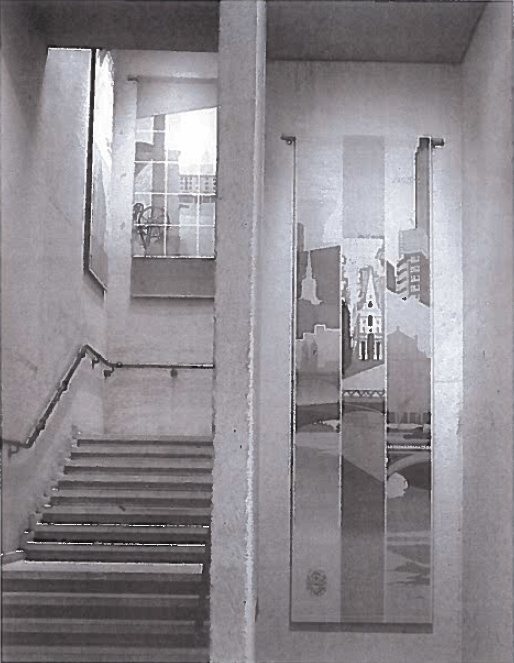
In summer 1993, further wall hangings of Birmingham and Newcastle were added to the collection, which is housed in the main staircase from the Copthall entrance foyer that leads to the Great Hall.
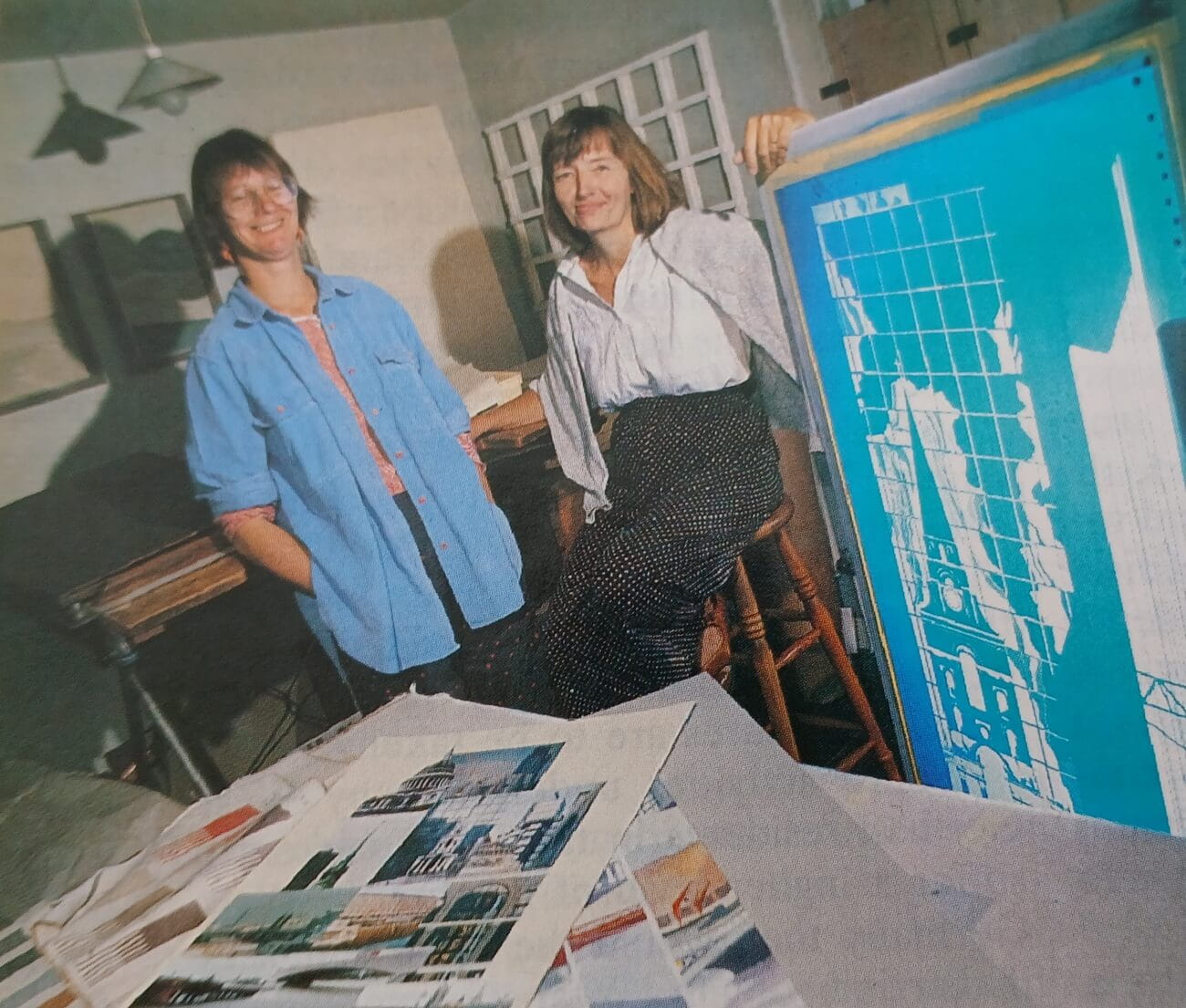
The tapestries were designed by artists Penny Roberts and Julia Crallan (1944-2019), who specialised in screen printing on textiles. They had met at Dartington College, where Penny was Julia's art teacher. The pair had originally come to the attention of ICAEW in 1984, when a competition was run to decorate the north wall of the Great Hall. Their idea of printed silk pennants was not taken up, mainly due to concerns about the durability of silk and Charles Normandale's steel work won the day.
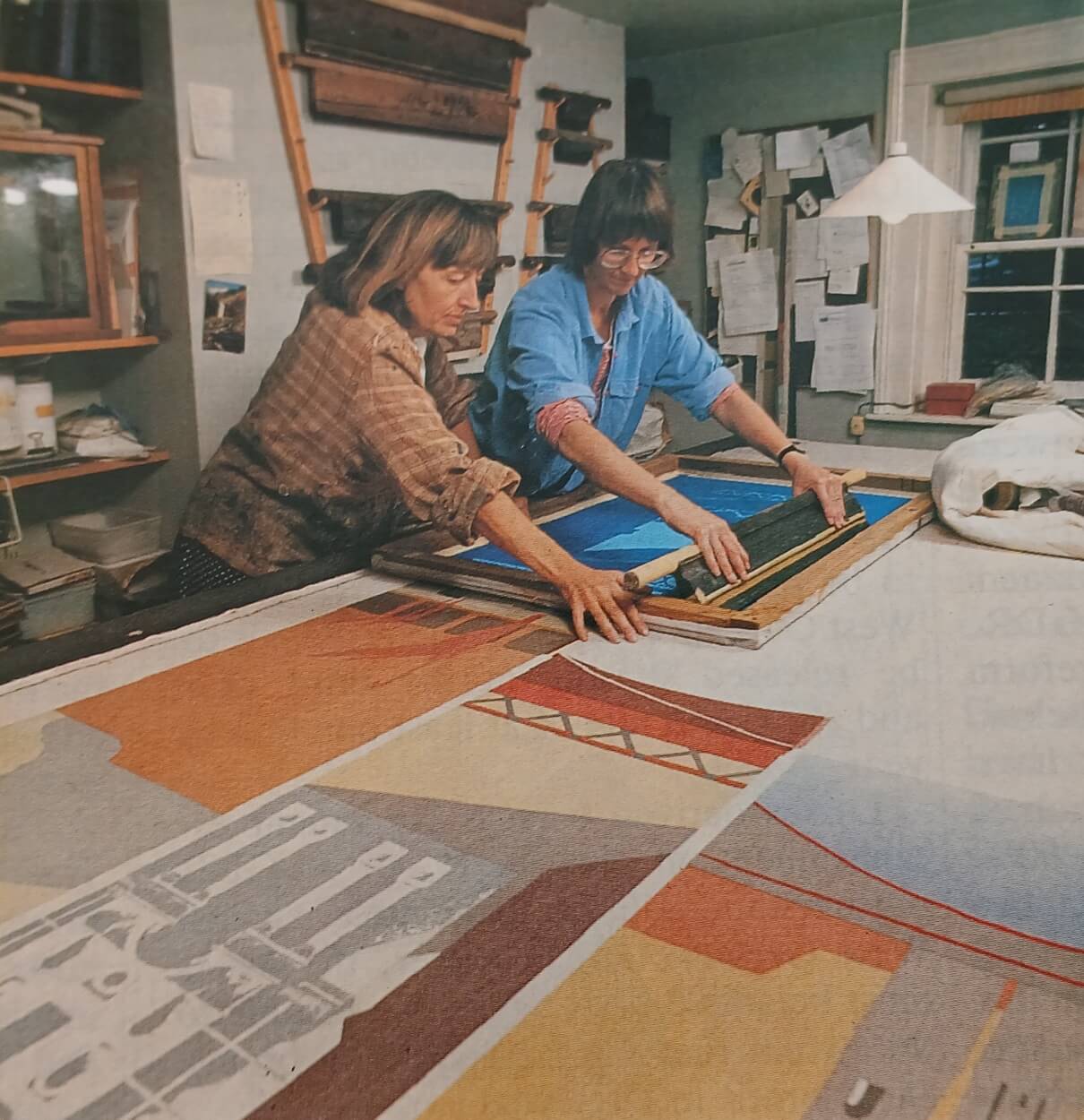
A chance remark on a guided tour of Chartered Accounts' Hall that the Copthall Avenue stairs looked a bit bare, lead to their commissioning for the the original 5 wall hangings. They spent three months visiting individual sites and taking photographs, which were used to create photographic collages of the original design. Those in turn were translated into print on huge linen canvesses, which were stretched over boards for hanging. The entire process took over 2 years.
In their designs Roberts and Crallan tried to bring out the scenes of contrast, change and regeneration, after rejecting an earlier idea about featuring water in all the designs. Their studio was in the basement of Julia's house in Stockwell, South London.
We thought about a theme of water in all five, but it didn't work. That was when we came up with the idea of using old and new regeneration.
Other commissions Roberts and Crallan undertook were for the British Embassy in Seoul, and to illustrate the history of the Territorial Army (1994).
- Read Julia Crallan's obituary in The Times (subscription required)
The individual wall hangings
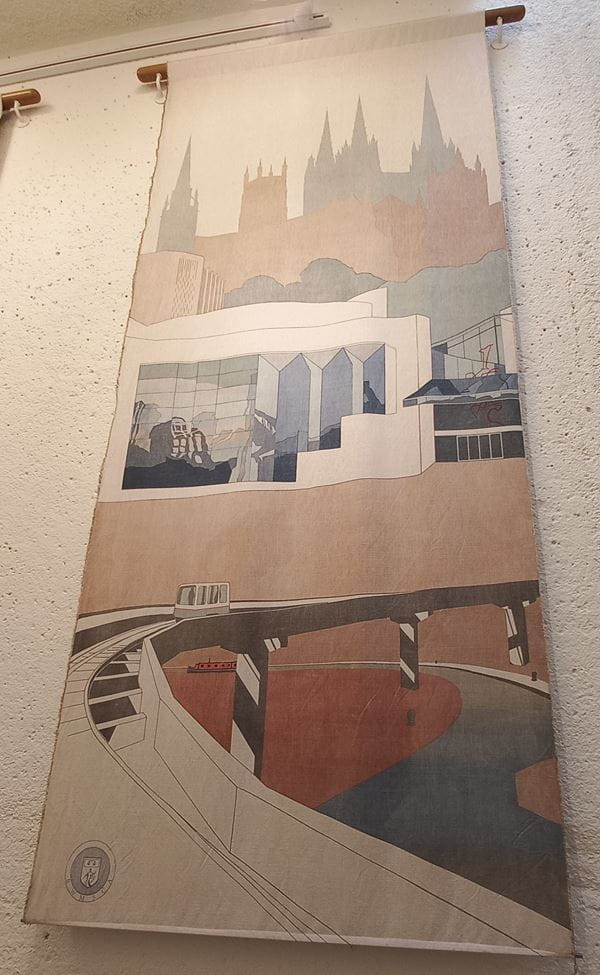
The Birmingham & West Midlands wall hanging shows the Birmingham International Airport 'Maglev' (opened in 1984), as well as a barge on one of the West Midland's many canals and the four of the regions cathedrals: Coventry, Worcester, Lichfield and Hereford.
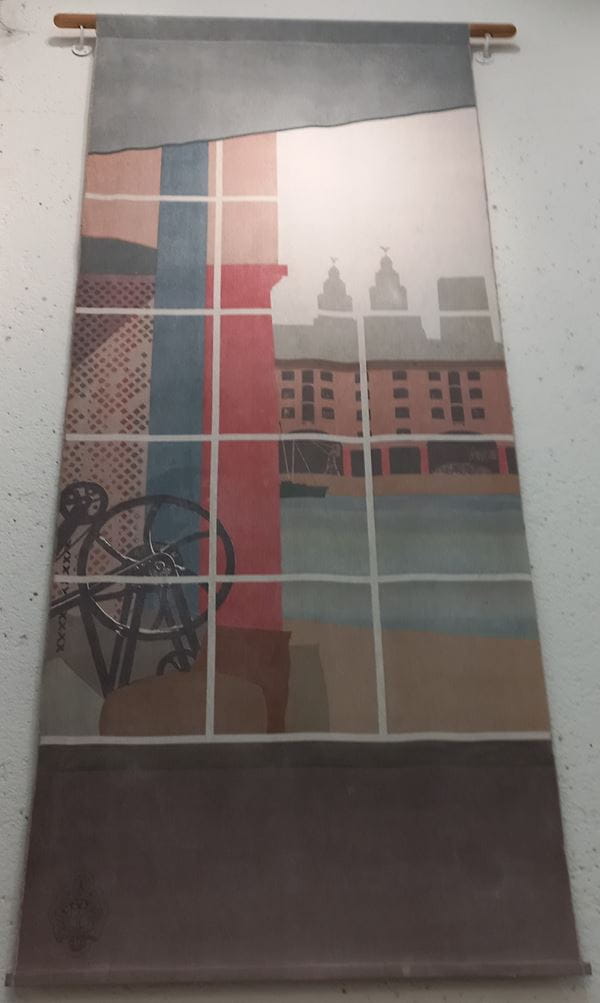
Liverpool's wall hanging shows the iconic Liver Building, the Mersey tunnel ventilation shaft and the Albert Dock (which had reopened in 1984).
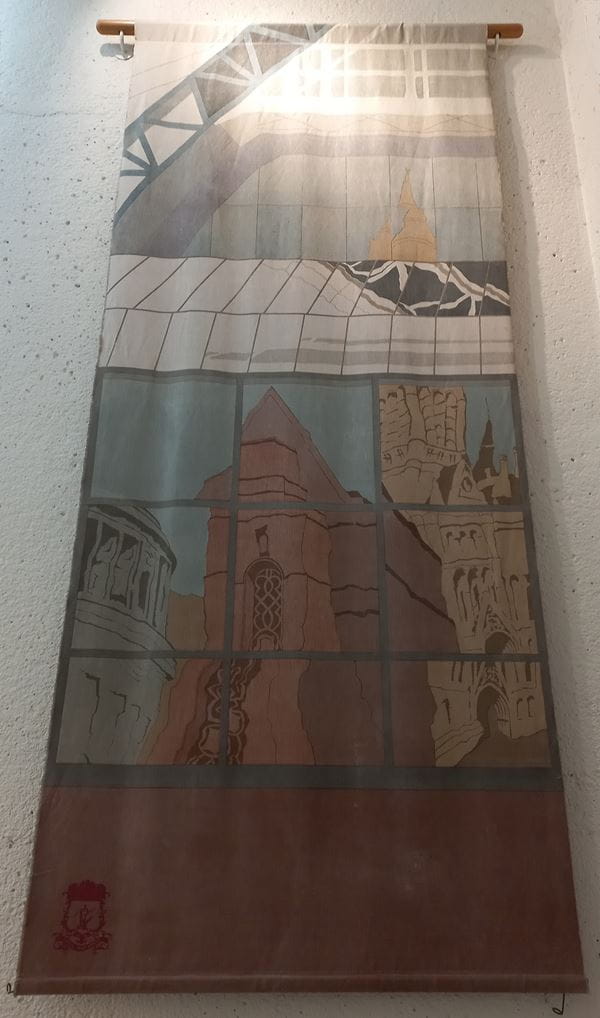
The Manchester tapestry shows Manchester Central Library and Manchester Town hall (and extension) below the former Manchester Central Station which reopened as the G-Mex exhibition centre in 1986.
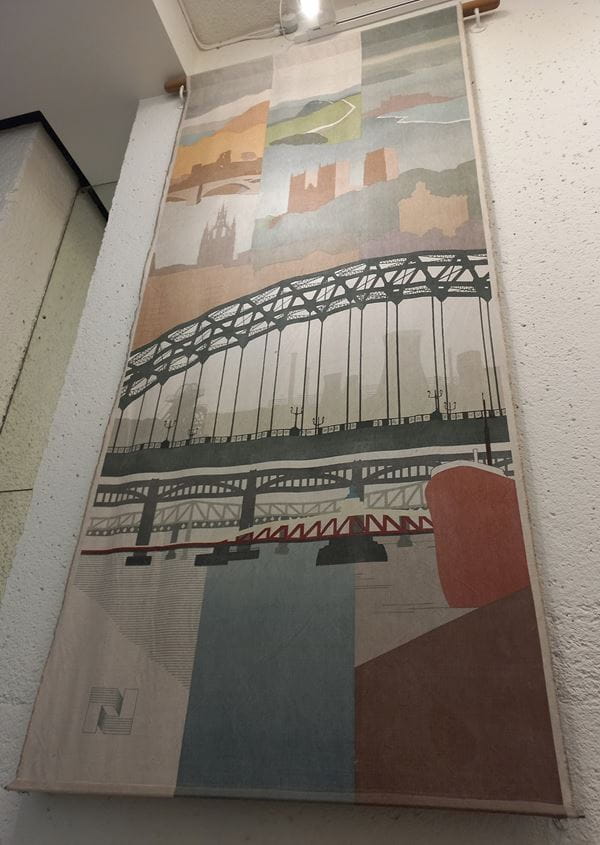
The wall hanging for Newcastle shows the famous Tyne Bridge and Swing Bridge with the silhouettes of a coal mine and power station in the background. Also depicted are Durham Cathedral, Newcastle Cathedral, Bamburgh Castle, Newcastle Castle, Hadrian's Wall and the bridge and castle in Barnard Castle, County Durham.
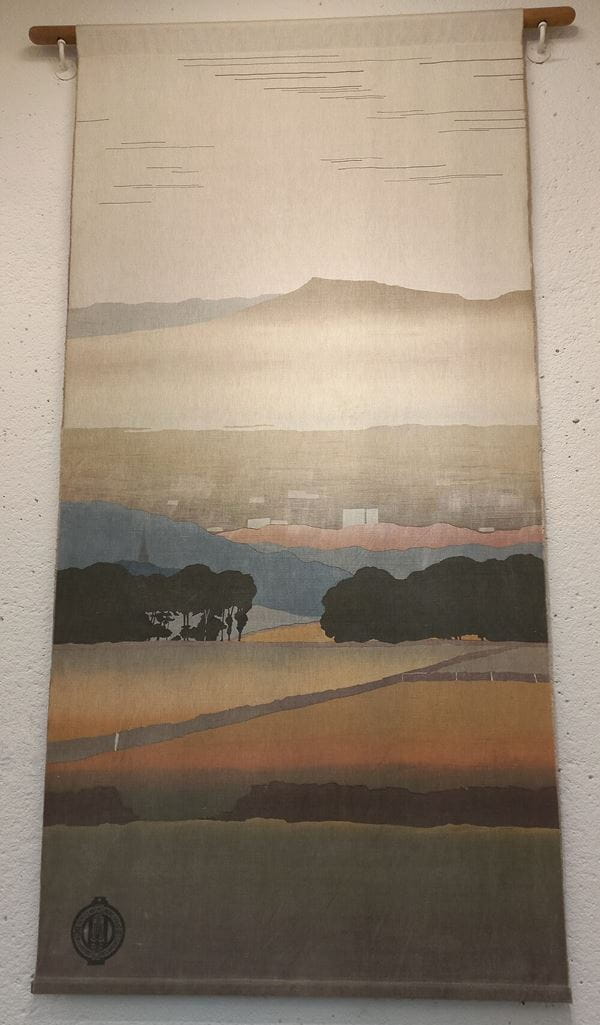
Sheffield's depiction is of the city in the Don Valley beyond countryside with hills of the Peak District in the distance.
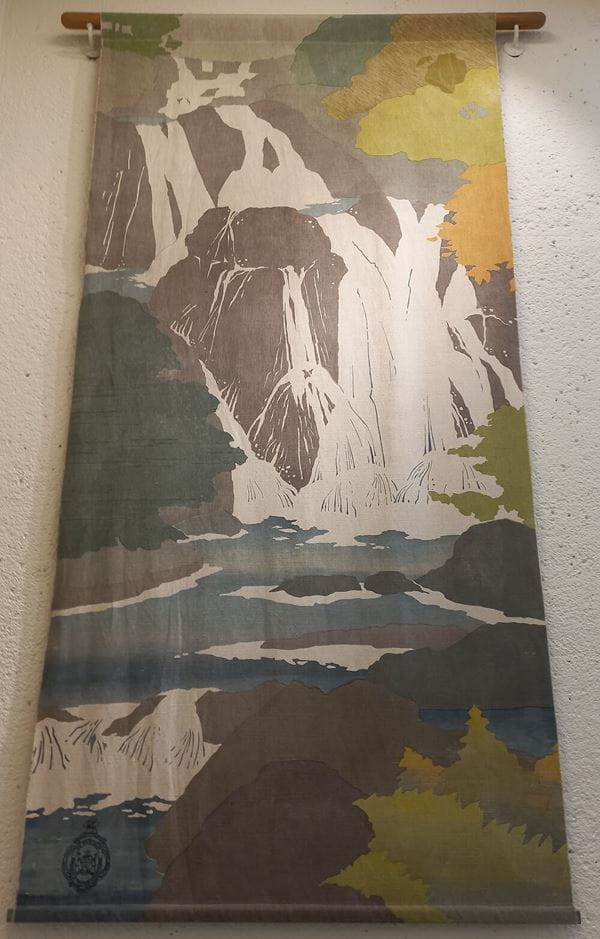
Wales is a depiction of a water fall on the Taf Fechan, 'where the Welsh miners used to spend their bank holidays'.
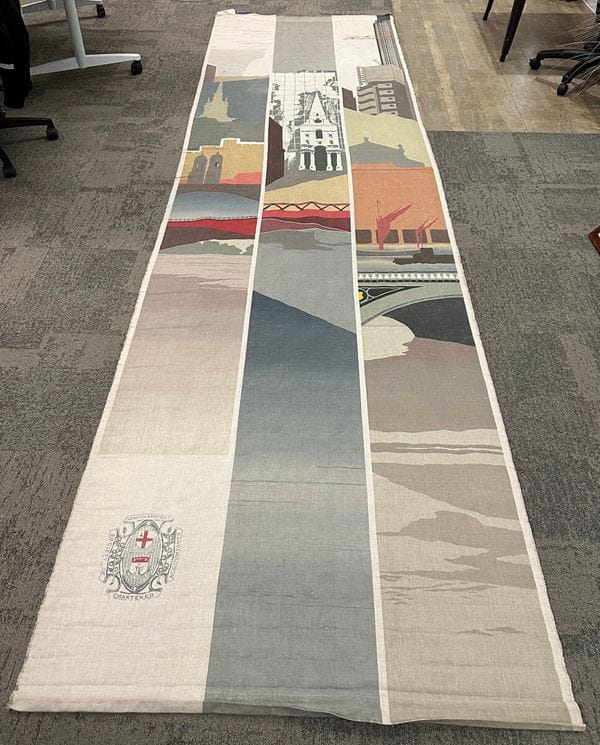
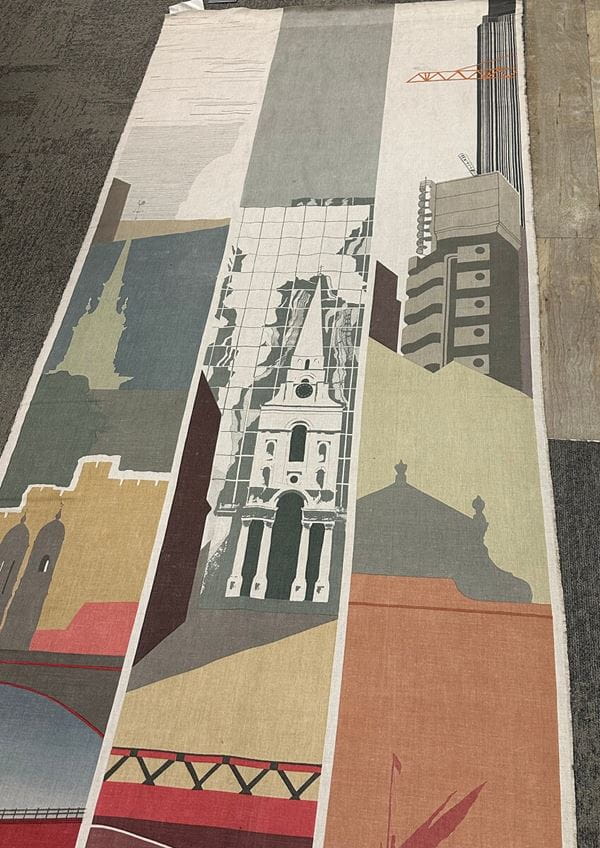
At 14ft long, the London Society wall hanging is the longest. It is not on public display, but in early 2025 we were able to take it out of storage and take some photographs. It depicts several London churches (All Hallows by the Tower, Christ Church Spitalfields) and the Thames and its bridges (including Tower Bridge) complete with a barge and a tug, the towers of Cannon Street Station, The London Wall, as well as more modern buildings such as the Lloyds Building (completed 1986) and the NatWest Tower (or Tower 42 as it is now known, completed in 1980). You can see in the image above where this was originally hung.
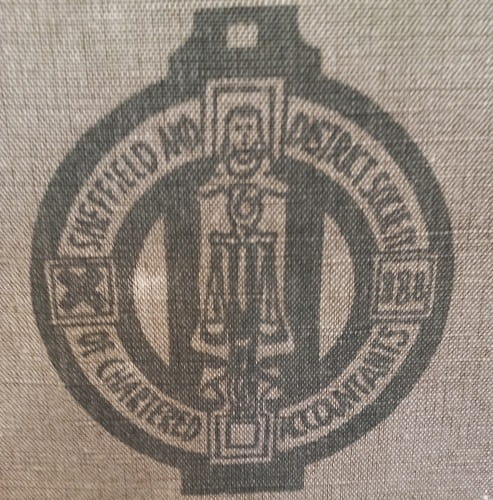
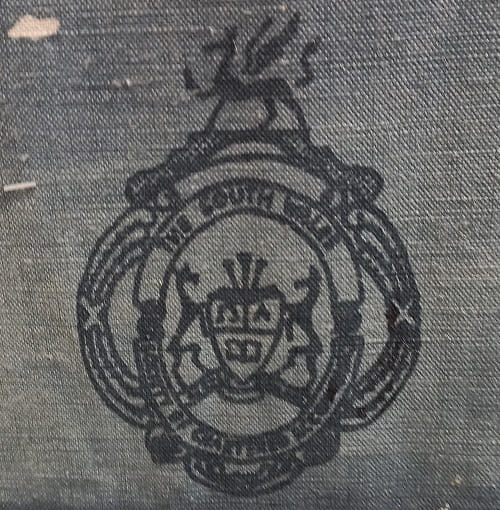
District society badges
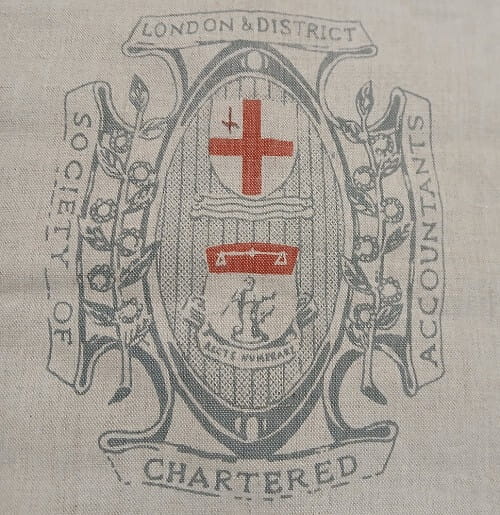
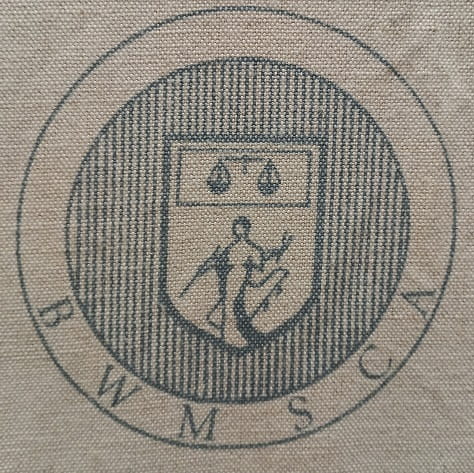
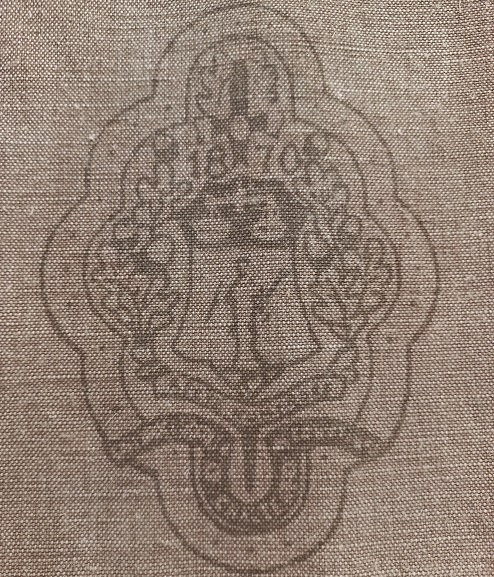
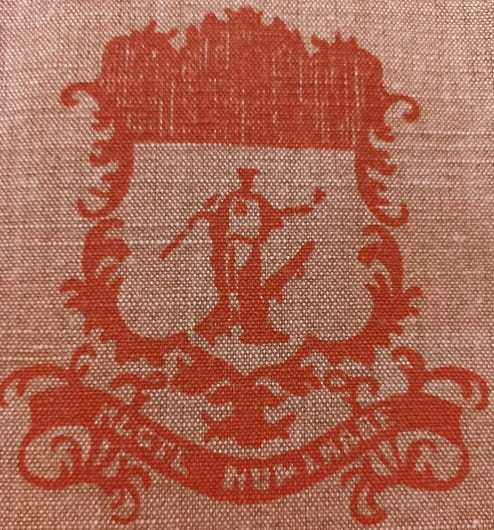
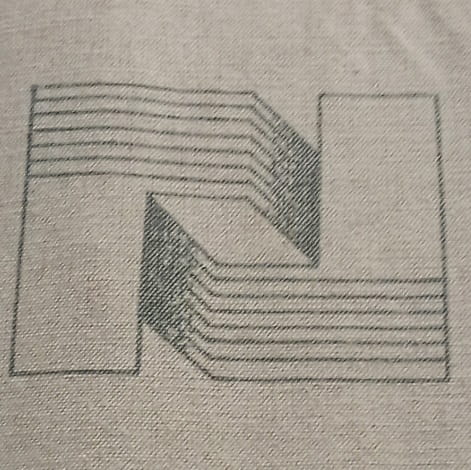
All the wall hangings have the relevant Society's badge in the bottom left hand corner
Photograph credits
Some of the photographs on this page come from The Accountant or Accountancy which did not give photographic credits. We have assumed the copyright of these pictures is the ICAEW's but please contact us if you believe this is not the case