
Helen Pierpoint reflects on observing the IAASB’s quarterly board meeting in Germany, what it revealed about international standard setting in practice, and why it matters for UK auditors.
Auditors in the UK and worldwide are familiar with the standards, guidance and methodologies that underpin their daily work. What is less likely to cross their minds when they think about the international auditing standards is the extensive process of research, outreach, discussion, debate and compromise that lies behind each new or revised standard.
In June 2026, I had the opportunity to observe the International Auditing and Assurance Standards Board’s (IAASB’s) meeting in Germany. Over four action-packed days, I gained insights into the rigorous process of international auditing standard setting, and the work that goes into the development of a standard before it reaches the point of publication.
Why the IAASB matters
The IAASB is the body responsible for setting international standards for auditing, quality management, review and other assurance and related services. Its standards have been adopted by over 140 jurisdictions worldwide, including the UK, where the Financial Reporting Council (FRC) supplements them with UK-specific requirements and material where required.
Global consistency matters. It ensures that audit and assurance engagements are performed on a broadly comparable basis across borders, supporting confidence in financial reporting and capital markets worldwide. Standards intended for global use must be applicable across different economies, regulatory systems, business environments and audit markets.
The IAASB’s global role is reflected in the composition of the board, which has 16 members. Chaired by Tom Seidenstein from the US, it includes members from a wide range of jurisdictions and professional backgrounds, including the UK. Anyone with appropriate experience can apply to become a board member through a transparent, public process managed by the Public Interest Oversight Board (PIOB). In the UK, the FRC routinely identifies candidates for the board and supports them through the application process.
The PIOB seeks to achieve diversity of all kinds when appointing members to the IAASB. Importantly, members are appointed in their individual capacities, not as representatives of their employers or jurisdictions, although board members’ firms, professional bodies or organisations that support them, as applicable, often pay their expenses. Board members are not remunerated for their work on the board, other than the chair, which is a full-time role that also serves as Co-CEO of the International Foundation for Ethics and Audit.
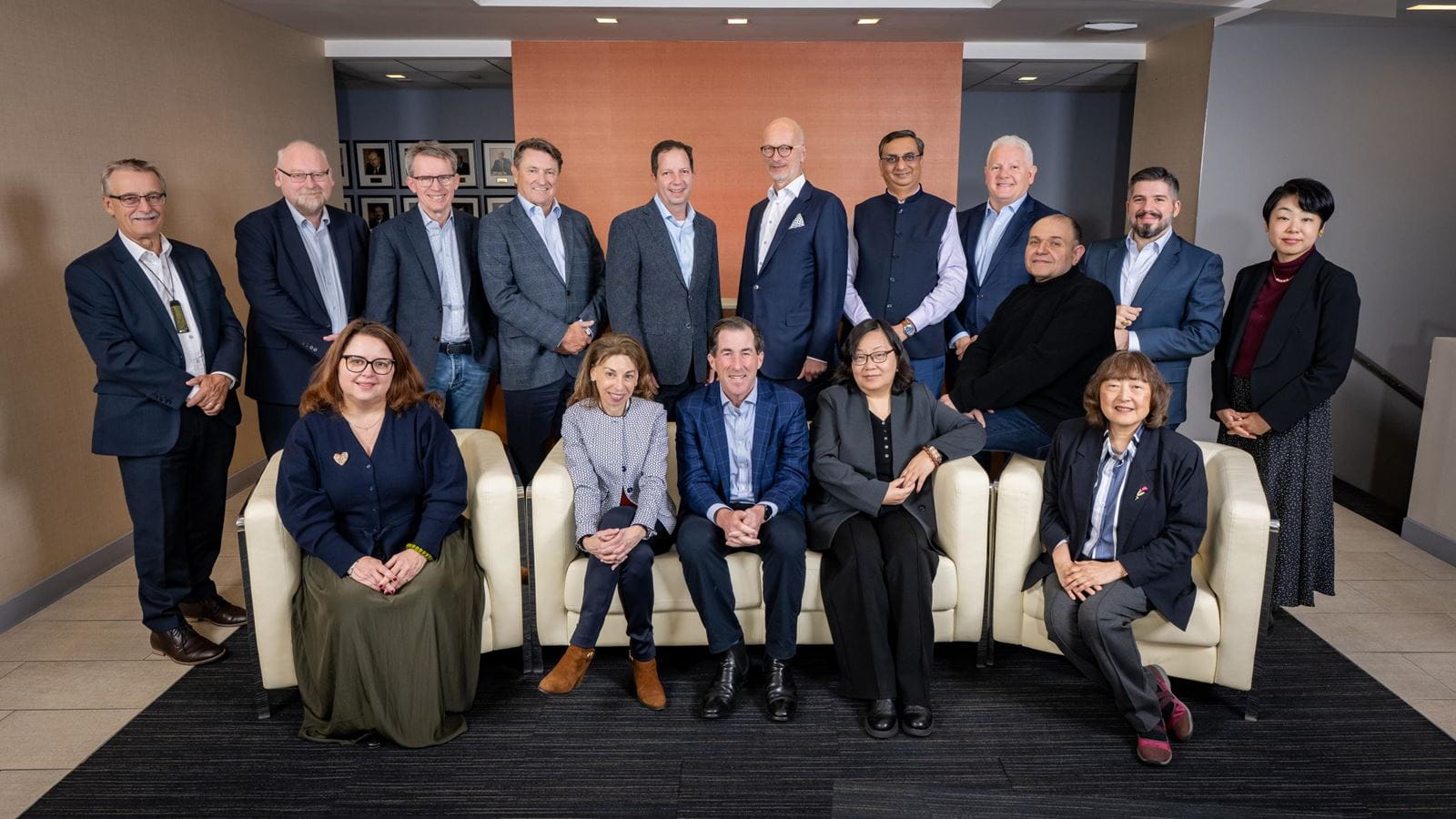
The IAASB does not work in isolation. In its oversight role, the PIOB ensures that the board’s activities serve the public interest and follow due process. Board members are supported by technical advisers, and the board as a whole is supported by a technical staff team who undertake most of the detailed project work, including outreach, analysis of stakeholder feedback and drafting of board papers, exposure drafts, standards and non-authoritative materials.
ICAEW’s Audit and Assurance Faculty monitors IAASB developments closely through its International Standards on Auditing (ISA) Panel and other standing committees and responds to IAASB public consultations. We also regularly engage with board members and staff to help ensure that the perspectives of ICAEW members are heard by the board.
Observing the process in practice
The quarterly IAASB meetings are open to the public and livestreamed. ICAEW does not generally send staff to attend in person, not least because most meetings take place in New York.
The June 2026 meeting took place in Mainz, hosted jointly with the Institut der Wirtschaftsprüfer (IDW), Germany’s principal professional body for auditors and auditing and assurance standard-setter. This provided a valuable opportunity to observe the board’s work directly and strengthen connections between ICAEW and the IAASB.
The board had a substantial agenda to cover in just four days. A major focus of the first day was the Audit Evidence and Risk Response (AERR) project, involving proposed revisions to ISA 330, The Auditor’s Responses to Assessed Risks; ISA 500, Audit Evidence; and ISA 520, Analytical Procedures. The project contemplates revisions to the in-scope ISAs in response to rapidly evolving business environments and audit practices, including the impact of emerging technologies. During the June meeting, members considered updated proposals based on input provided at the IAASB’s March 2026 meeting and additional outreach undertaken during Q2 2026.
What stood out most was the level of scrutiny and challenge applied to the drafting. The board examined and discussed each proposed standard, section-by-section, requirement-by-requirement, and word-by-word. Not only was the technical accuracy of the proposed content challenged, but also whether it could be applied consistently across a range of audits in different jurisdictions and translated into other languages. For example, seemingly innocuous differences between terms such as ‘consider’ and ‘take into account’ prompted debate about the implications of their use for auditor work effort and interpretation.
The key issues discussed included proposals to clarify that the auditor is, in certain circumstances, able to respond to assessed risks of material misstatement at the assertion level through tests of controls alone, the precision expected when performing substantive analytical procedures and, of course, the impact of emerging technologies on how the auditor assesses the reliability of information to be used as audit evidence.
Technology was a significant theme across all four days. There were discussions about proposals to revise standards related to inventory (ISA 501) and external confirmations (ISA 505). The board is keenly aware of how emerging technologies are transforming the ways in which auditors obtain audit evidence, including the use of drones in inventory count attendance, the rise of remote count attendance more widely, and the increasing use of online platforms that provide confirmation services.
The board also discussed a series of planned guides exploring the lifecycle of a Gen AI-enabled tool, in the context of a firm’s system of quality management. The IAASB’s Technology Quality Management Expert Group, established to help develop these guides, has an ambitious timeline, with the first guides due to be approved in 2026.
The ISA for Less Complex Entities (LCE) was also discussed at the meeting. The landmark ISA for LCE was published in December 2023 as a standalone global standard specifically designed for audits of less complex entities. The board’s deliberations in June focused on proposed updates to reflect recent revisions to the international standards on fraud and going concern.
One particularly interesting aspect of the discussion was the issue of global adoption, and the potential reasons why standard-setters in some jurisdictions – including the UK – have not adopted the ISA for LCE. The issues are not straightforward. Some jurisdictions already have their own local standards for smaller audits; in others, many smaller entities are exempt from statutory audits altogether; and some stakeholders have concerns that the application of different auditing standards for different types of entities might lead to a two-tier audit system. The board agreed that further outreach would be important to better understand these issues.
From board debate to public consultation
The final day of the meeting focused on whether the exposure drafts for the Audit Evidence and Risk Response project and the ISA for LCE revisions should be approved for public consultation. By that point, the respective project teams had worked tirelessly to make sure that the board’s latest directions were factored into the final iterations of the proposed standards.
All were unanimously approved, and the board took the opportunity to congratulate and thank the project teams for their hard work. Standard setting requires not only technical expertise, but persistence, careful direction and the ability to translate extensive stakeholder feedback into workable requirements and application material.
Why it’s important to contribute
My time in Mainz underlined the continuing importance of ICAEW’s engagement with standard setting at an international level. The IAASB’s discussions covered issues that are directly relevant to UK audits: audit evidence and responding to risks of material misstatement in the modern world, how to scale the ISAs appropriately to LCEs, and the impact of technology on the audit approach.
Stakeholder input is at the heart of what the board does. The meeting showed that auditing standards are not developed in isolation. The board’s work is shaped by extensive debate, careful crafting, consultation responses, outreach and ongoing engagement with firms, professional bodies, regulators and many others. ICAEW and its members are a highly valued source of expertise for the international standard-setter, and we will continue to engage with the IAASB extensively. Seeing the process unfold in person was a valuable reminder of the importance of contributing to it.
Helen Pierpoint, Technical Manager, Audit and Assurance Faculty, ICAEW
Join your peers...
ICAEW's Annual Conference 2026 is themed "Turning business complexity and change into value" and offers practical support to help you respond to economic, political and technological disruption.

