What is the tax gap?
The tax gap is the difference between the amount of tax HMRC expects to collect and what it actually receives.
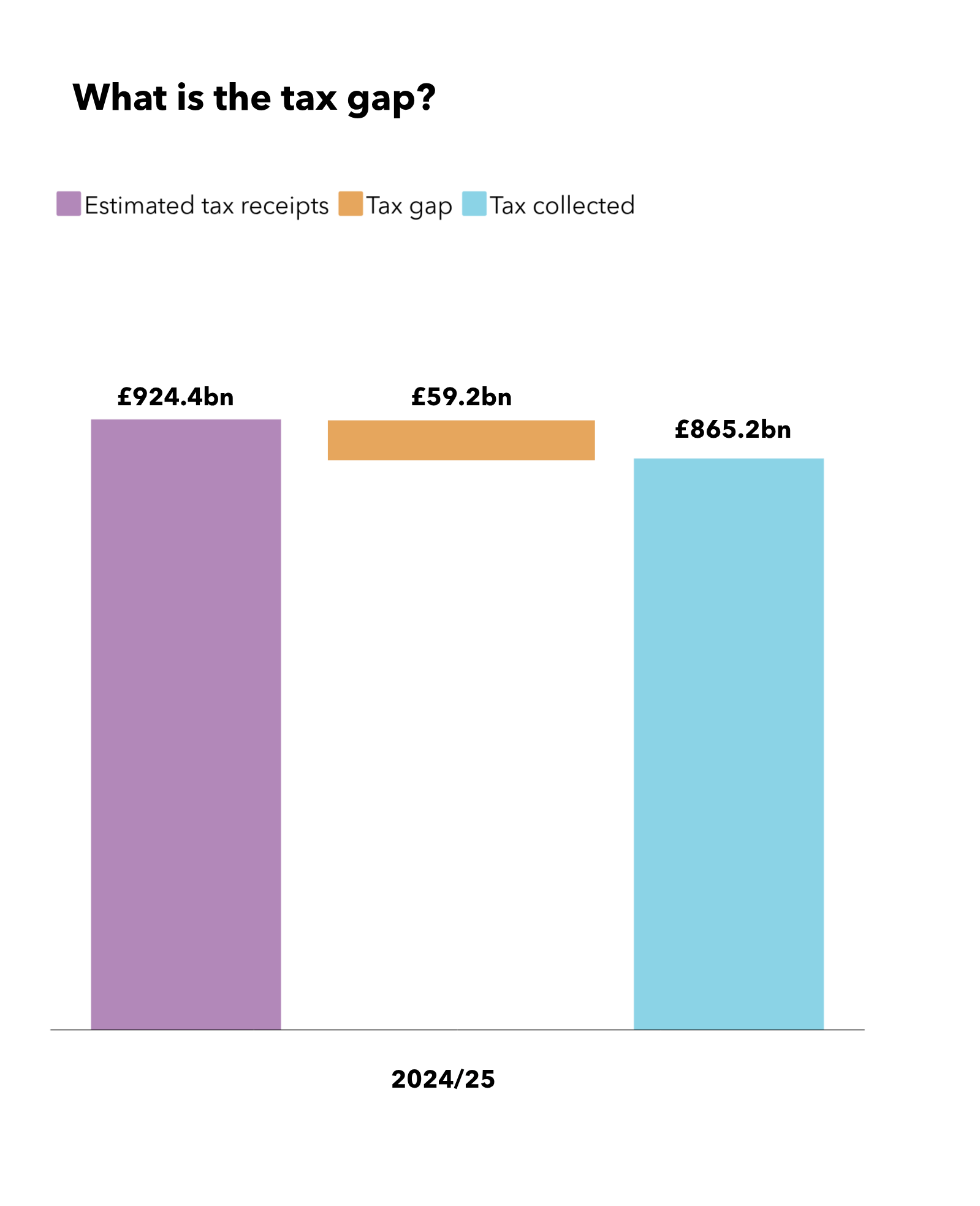
HMRC calculates the tax gap for each tax year. The latest year for which figures are available is 2024/25. Estimated tax receipts were £924.4bn and the amount HMRC collected was £865.2bn. Therefore, the tax gap was £59.2bn. This was equal to 6.4 % of the total amount that HMRC expected to receive.
What causes the tax gap?
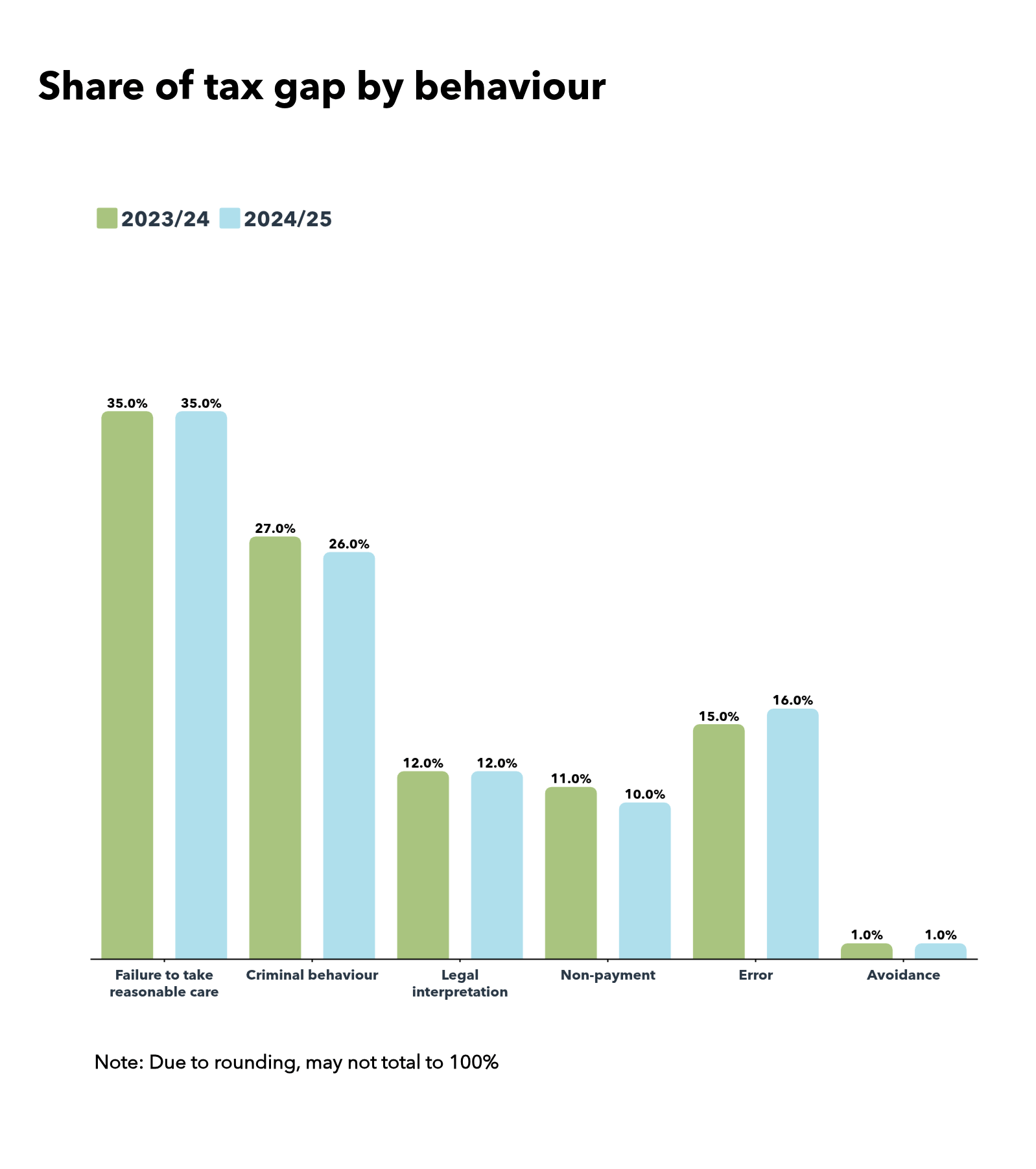
The two main causes of the tax gap are criminal behaviour and failing to take reasonable care. Together they amount to approximately 61% of the tax gap.
Criminal behaviour includes evasion, criminal attacks and the hidden economy.
Other causes are:
- error (16%),
- differences in legal interpretation (12%);
- non-payment (10%); and
- avoidance (1%).
Is the tax gap getting bigger?
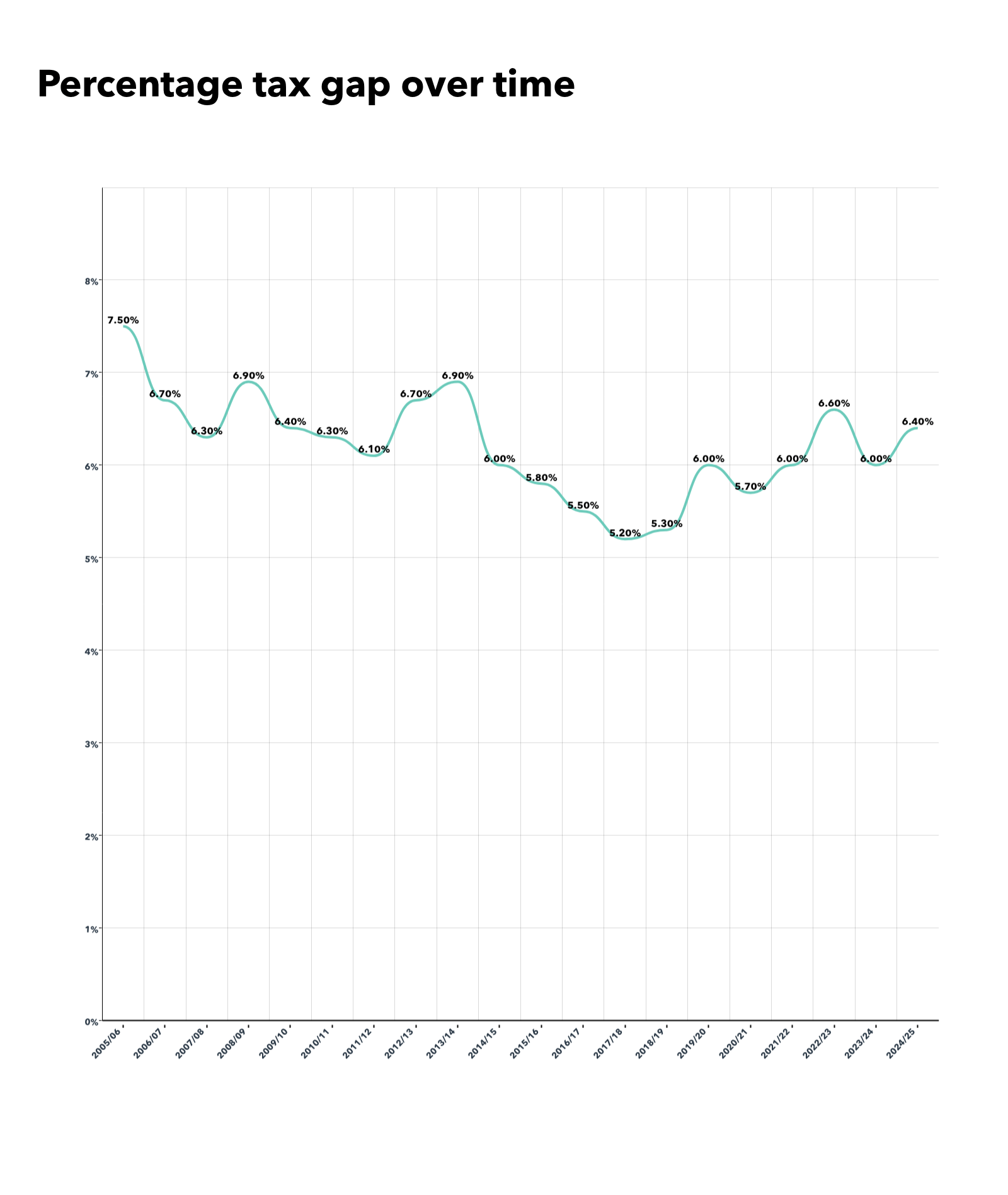
The tax gap has come down in percentage terms: it was 7.5% for 2005/06, compared to 6.4% for 2024/25.
However, it was lower than its current level before the COVID-19 pandemic (5.3% in 2018/19). HMRC suggests that it is best to focus on the trend in the percentage tax gap rather than the absolute numbers.
How accurate is the tax gap?
HMRC calculates the tax gap in accordance with the UK Statistics Authority’s code of practice. Its work on calculating the tax gap has been praised in the past, including by the International Monetary Fund.
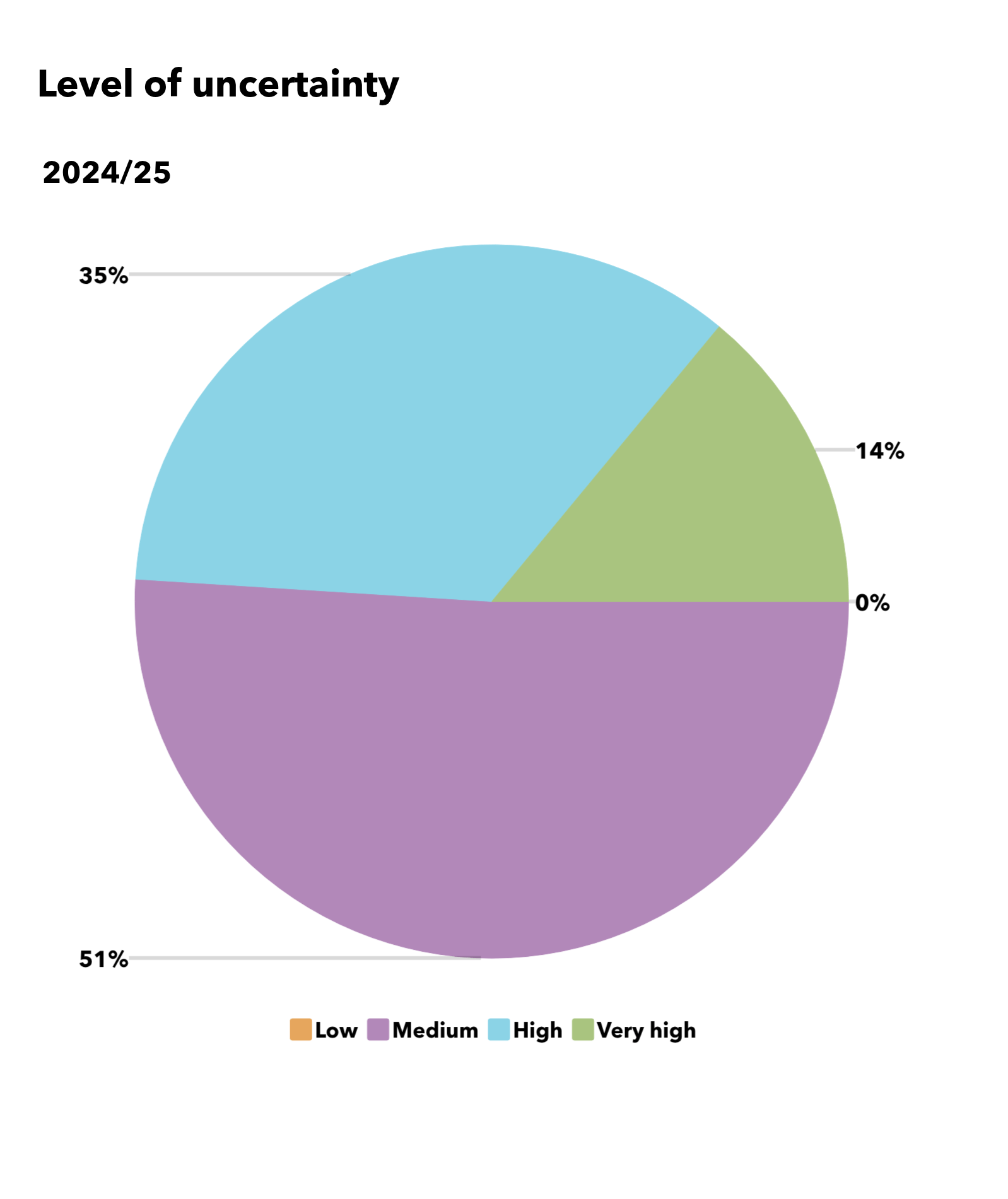
However, it should be remembered that the tax gap figure is HMRC’s best estimate based on the information available to it. HMRC gives each component of the tax gap an uncertainty rating. For 2024/25, approximately 49% had a 'high' or 'very high' level of uncertainty.
How to build better tax system
ICAEW outlines the five institutional pillars needed to ensure the proper functioning of the UK tax system.

Further support
Resources

Tax
Information and guidance on technical and practical tax matters. Browse helpsheets, webinars and articles covering the latest developments.
Find out moreResources
Economy
Expert analysis on the latest national and international economic issues and trends, and interviews with prominent voices across the finance industry alongside data on the state of economy.
Visit the hubMore support

Business resources
The most up-to-date thought leadership, technical resources and professional guidance from ICAEW to support members working in business.
