According to the latest release from the Office for National Statistics (ONS), consumer prices (excluding housing) in the UK rose by 2.6% over the course of the 12 months to June 2026.
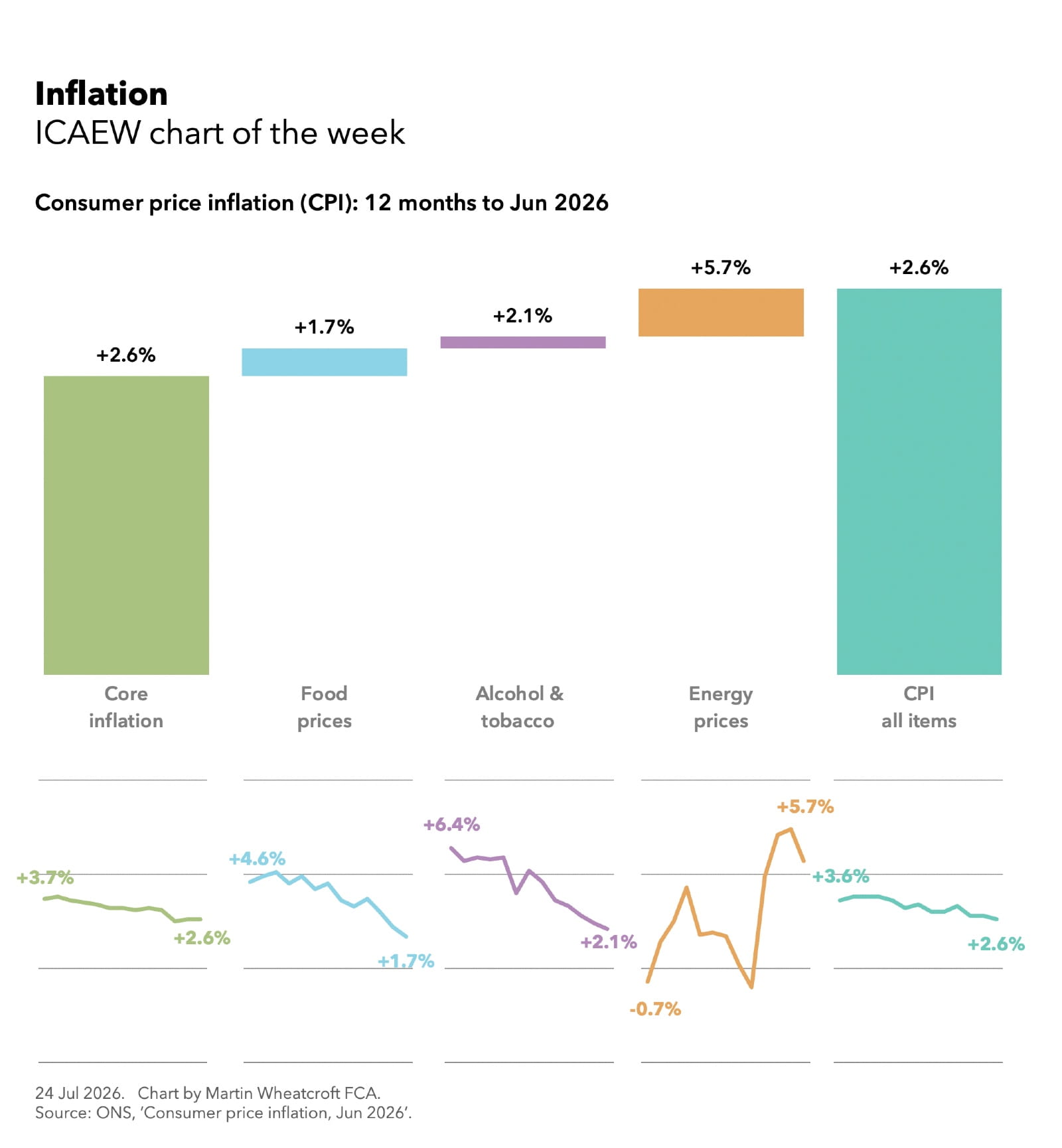
Our chart this week analyses the increase in the consumer price inflation (CPI) all items index by splitting it into core inflation and the rises in food, alcohol and tobacco, and energy prices over the past year.
Core inflation, being the annual rate of increase in the prices of consumer products and services excluding food, alcohol, tobacco and energy compared with a year previously, was 2.6%. Food (and non-alcoholic beverage) prices were 1.7% higher, alcohol and tobacco prices were 2.1% higher, and energy prices were 5.7% higher than in June 2025.
Based on average weightings of approximately 79%, 11%, 4% and 6% respectively, these four components contributed 2.0%, 0.2%, 0.1% and 0.3% to the 2.6% rise in the CPI index over the year to June 2026.
Inflation trends
Our chart also shows how each component of inflation has changed over the past year.
Core inflation fell from an annual rate of 3.7% in June 2025 to 2.6% in the year to June 2026, while food price inflation fell from 4.6% to 1.7%, and alcohol and tobacco inflation fell from 6.4% to 2.1%.
Meanwhile, the annual rate of change in energy prices went from -0.7% in the year to June 2025 to a peak of 7.4% in the year to May 2026 (not labelled on the chart) before slowing to 5.7% in the year to June 2026.
In effect, the faster rate of energy price inflation over the past year has broadly offset the slowing in the rates of increase in food prices and alcohol and tobacco prices, resulting in CPI slowing from 3.6% a year ago to 2.6% in June 2026, broadly in line with core inflation.
While the rate remains above the 2% Bank of England benchmark, it is within the 1% to 3% range where the Governor of the Bank of England does not need to send a letter to the Chancellor to explain why inflation is off target.
Inflation expected to speed up again
June’s slowdown in inflation is expected to be the lowest rate for some time as higher domestic energy bills following Ofgem’s energy price cap rise in July are expected to lift inflation above 3%, according to ICAEW’s Chief Economist Suren Thiru.
Thiru commented: “Renewed US–Iran hostilities have reignited inflation fears, with rising oil prices and supply chain pressures putting the prospect of inflation touching 4% later this year back on the table, despite October’s VAT cut on electricity bills.”
He continued: “Elevated inflation will likely become a more notable economic headache for the new Chancellor in the coming months by deepening the cost of living crunch, while also squeezing his fiscal headroom, raising borrowing costs, and increasing financial market volatility. These benign figures quash any lingering prospect of a July rate rise, particularly as rate-setters may want to assess the impact of any measures announced by the new Prime Minister before deciding whether to tighten policy again.”
How long Bank of England Governor Andrew Bailey will need to write letters to new Chancellor John Healey for remains uncertain.
Latest charts
More on the economy
View ICAEW reports, publications, analysis and supporting media on the economy. Featuring expert analysis on the latest national and international economic issues and trends, and interviews with prominent voices across the finance industry.

Stay up to date
You can receive regular email updates from ICAEW insights, including weekly or monthly enewsletters. Subscribe to whichever works for you.
Sign upFurther resources
ICAEW Community

Public Sector Community
The go-to place for guidance on issues affecting finance professionals working in and with the public sector. With a range of dynamic services, ICAEW provides valuable tools, resources and support tailored to the public sector.
Resources

Economy explainers
ICAEW experts offer simple guides to help understand the technical, economic jargon that is discussed when talking about public finances and the economy.
Find out moreICAEW support

Training and events
Browse upcoming and on-demand ICAEW events and webinars offering support on technical areas, such as assurance, reporting and tax, as well as personal development.
Events and webinars A-Z of courses