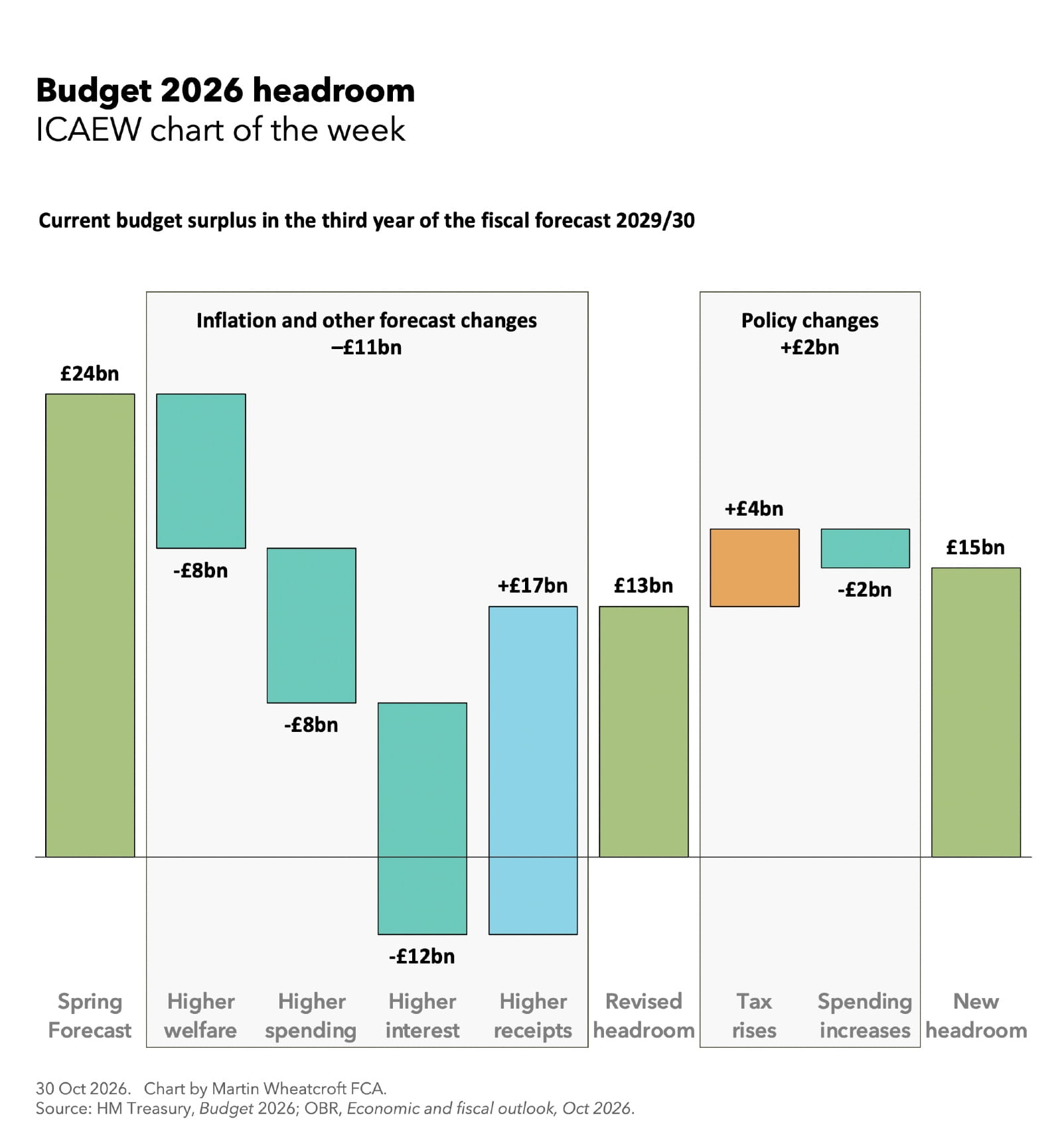
Our chart this week shows how the projected current budget surplus of £24bn in 2029/30 in the Office for Budget Responsibility (OBR)’s spring forecast 2026 back in March was reduced by £9bn to £15bn in the OBR forecast accompanying budget 2026.
This comprises a reduction of £11bn from forecast revisions, principally driven by higher inflation, partially offset by £2bn from tax and spending policy decisions.
The projection for 2029/30 gives the headroom under the government’s ‘stability’ fiscal rule. Last year this was to have a current budget surplus in the fourth year of the forecast period, being 2029/30, based on a forecast period from 2026/27 to 2030/31. This year it is to have a current budget balance or surplus in the third year of the forecast period, also 2029/30, based on a forecast period from 2027/28 to 2031/32.
The government has now clarified that a ‘current budget balance’ is the same as a ‘current budget surplus’ for the purposes of the stability rule, with the Chancellor not taking advantage of the original definition of plus or minus 0.5% of GDP set out by former chancellor Rachel Reeves in 2024. Using the original definition would have provided an additional £18bn of headroom.
The Chancellor’s secondary fiscal rule – for public sector net financial liabilities (PSNFL) as a share of GDP to fall between the second and third years of the forecast – had headroom of £24bn.
Forecast revisions
Our chart analyses the effect of changes in the OBR’s fiscal outlook on the projected current budget surplus in 2029/30 as follows:
- -£8bn from a higher welfare bill in three years’ time, driven by higher than previously forecast inflation.
- -£8bn from higher spending on public services, again because of higher inflation.
- -£12bn from higher debt interest, from a combination of higher interest rates and the effect of higher inflation on inflation-linked debt.
- +£17bn from higher receipts, principally driven by inflation as extra tax receipts per taxpayer from higher productivity growth were broadly offset by fewer taxpayers as net inward migration has fallen.
Policy changes
Policy decisions by the Chancellor were primarily focused on this winter and the next two financial years, so their impact on the last three years of the forecast period is relatively modest. In 2029/30, these decisions increase tax receipts by £4bn and day-to-day public spending by £2bn, resulting in a £2bn increase in the current budget surplus.
The £4bn increase in tax receipts comprises £6bn in net tax rises offset by a £2bn reduction from indirect effects (being behavioural changes and economic consequences of the policy decisions made).
The net tax rises of £6bn affecting 2029/30 include:
- £1.4bn from accelerating self-assessment tax receipts.
- £1.0bn from lower writing down allowances.
- £1.0bn from better tax administration and debt collection.
- £0.9bn from a higher rate of income tax on savings and property income.
- £0.8bn from reclassifying some capital gains as dividends.
- £0.7bn from removing tax reliefs from sovereign wealth funds and overseas public pension funds.
The Chancellor also announced approximately £1bn in tax cuts, principally new capital gains tax reliefs and the freezing of fuel duties for a further year, but these are offset by a series of small tax rises not included in the list above.
On spending, there was £1bn extra to fund the defence investment plan in 2029/30 (out of £2bn in total once capital investment is included) and a net £1bn from other spending decisions.
Decisions deferred
The Chancellor chose to allow headroom to fall under the stability fiscal rule rather than identify tax rises or spending cuts to restore that headroom. This reduces the cushion he has against economic shocks.
He also decided to put off some major spending decisions until next year’s spending review or possibly until the budget next October.
These include finding money to fund defence and security to deliver on the government’s commitment to raise this to 3.0% of GDP by 2030 or to cover the effect of inflation on departmental budgets from 2028/29 onwards, in addition to dealing with many other demands facing the public finances.
On the other hand, he did not recognise any benefit from anticipated changes to welfare eligibility that are expected to be announced with the Milburn Review into young people not in employment, education or training.
There may be more clarity in the government’s 10-year plan when that is published towards the end of the year, but the likelihood is that we won’t know the full details of how the Chancellor plans to tackle these challenges until later in 2027.
In the meantime, our budget 2026 hub explains the tax and spending decisions announced in this budget.
ICAEW on the budget

Latest charts
Stay up to date
You can receive regular email updates from ICAEW insights, including weekly or monthly enewsletters. Subscribe to whichever works for you.
Sign upFurther resources
ICAEW Community

Public Sector Community
The go-to place for guidance on issues affecting finance professionals working in and with the public sector. With a range of dynamic services, ICAEW provides valuable tools, resources and support tailored to the public sector.
Resources

Economy explainers
ICAEW experts offer simple guides to help understand the technical, economic jargon that is discussed when talking about public finances and the economy.
Find out moreICAEW support

Training and events
Browse upcoming and on-demand ICAEW events and webinars offering support on technical areas, such as assurance, reporting and tax, as well as personal development.
Events and webinars A-Z of courses