In a display case made of coffee-coloured wood in the Members’ Room of Chartered Accountants Hall lies a book inscribed in the early 1950s by calligrapher Dorothy L Mahoney (1902-1984). The book’s vellum pages contain a Roll of Honour of 202 Institute members and 273 articled clerks who gave their lives in service in the Second World War.
It is a poignant reminder of the sacrifices that accountants made during the war. While accountancy was a reserved occupation, callups above the reservation age and volunteering ensured that around a quarter of the Institute of Chartered Accountants’ members served with the armed forces – either in support roles, or direct combat. By the end of the war, around 2,800 members were still engaged in national service.
The Roll of Honour was not the only acknowledgement of professionals’ valour in the war. During and after the conflict, members and articled clerks from both the Institute and the Society of Incorporated Accountants & Auditors – which merged in 1957 – received more than 600 personal decorations from the Crown. Among those awards were two Victoria Crosses, a George Cross, three George Medals, 23 Distinguished Service Orders, 26 Distinguished Service Crosses and 4 Distinguished Service Medals.
Here are the stories of three individuals from ICAEW’s records whose service in the Second World War merited significant recognition.
2nd Lieutenant George Ward Gunn VC MC
In May 1941, George Ward Gunn received a Military Cross (MC) for his gallantry, and ability to remain calm during fighting of the previous January at Tobruk.
He was articled to S.H. Bersey in Liverpool and became an ACA in 1938. Gunn worked as a Chartered Accountant at Messrs Sissons & Co of London when he volunteered to enlist upon the outbreak of the war and soon became a Gunner in the Royal Horse Artillery. Following officers’ training, he was commissioned in August 1940.
Six months after receiving his MC, Gunn was in command of A Troop, J Battery, amid a fierce counterattack of 60 German tanks at Libya’s Sidi Rezegh airfield. Seizing control of an enemy gun, he crippled two of the tanks before he was killed. Gunn is buried at the Knightsbrige War Cemetery at Acroma, Libya.

Gunn’s subsequent Victoria Cross (VC) citation hailed the second lieutenant’s “most conspicuous courage” in facing so many tanks at once and stated that his “utter disregard” for extreme danger” inspired all who witnessed it. “But for this very gallant action,” it added, “the enemy tanks would undoubtedly have over-run our position.”
Second-Lieutenant Gunn showed the most conspicuous courage in attacking this large number of enemy tanks with a single unarmoured gun, and his utter disregard for extreme danger was an example which inspired all who saw it. He remained undismayed by intense fire and over-whelming odds, and his gallant resistance only ceased with his death.

Born in Muggleswick, County Durham in 1912, Ward moved to Neston when his father, an Austrialian-born doctor, moved his practice there around 1913. Gunn was educated at Mostyn House in nearby Parkgate, and Sedbergh School in Cumbria. He is honoured in both his schools and Gunn Grove in Neston is named after him. There is also a memorial plaque in the parish church of Neston, St Mary & St Helens's.
Major William Philip Sidney VC KG GCMG GCVO KSIJ PC
The only son of William Sidney Sr, 5th Baron De L’Isle and Dudley, ‘Bill’ Sidney was born in 1909 and commissioned into the Grenadier Guards officers’ reserve at the age of 20. Elected to Chelsea Borough Council in 1937, Sidney was also a Chartered Accountant, becoming an ACA in 1934 after being articled with A, Rae Smith. He was working in in the Pall Mall office of Barclays Bank when the war broke out. Joining his regiment he served in the British Expeditionary Force in France - becoming a Dunkirk evacuee in May 1940.

In February 1944, Captain (Acting Major) Sidney wielded a tommy gun at point-blank range to fend off German forces at the Anzio Beach Head. Hurt in an ensuing fightback, he refused to have his wounds tended until the enemy was neutralised. Weak from blood loss, he continued to galvanise his troops – a feat that earned him his VC.
It was of supreme importance that every inch of ground should be consolidated and the enemy was finally driven off. Only then did major Sidney, by that time weak from loss of blood and barely able to walk allow his wounds to be treated.
Just eight months later, Sidney won a byelection to become Conservative Member for Chelsea. As MP, he served as Parliamentary Secretary in Churchill government’s Ministry of Pensions and later as Secretary of State for Air. Entering the House of Lords in June 1945 upon his father’s death, Sidney was eventually made 1st Viscount De L’Isle and took up directorships at major companies such as Schweppes and Lloyds Bank. In 1961, Australian Prime Minister Robert Menzies appointed him as the nation’s Governor-General.
Sidney died aged 81 in April 1991 and is buried in the family vault at St John the Baptist, Penhurst, Kent.
Flight Lieutenant Frank Seymour ‘Bill’ Skelton DSO & Bar, DFC & Bar
Born in Pirbright, Surrey, in 1920, Articled Clerk ‘Bill’ Skelton distinguished himself in RAF 85 Squadron as half of a formidable World War II night-fighting duo.
Working as navigator alongside the renowned pilot Wing Commander Bransome Arthur ‘Branse’ Burbridge, Skelton was responsible for destroying 21 enemy aircrafts. Together, he and Burbridge became known as The Night Hawk Partners.
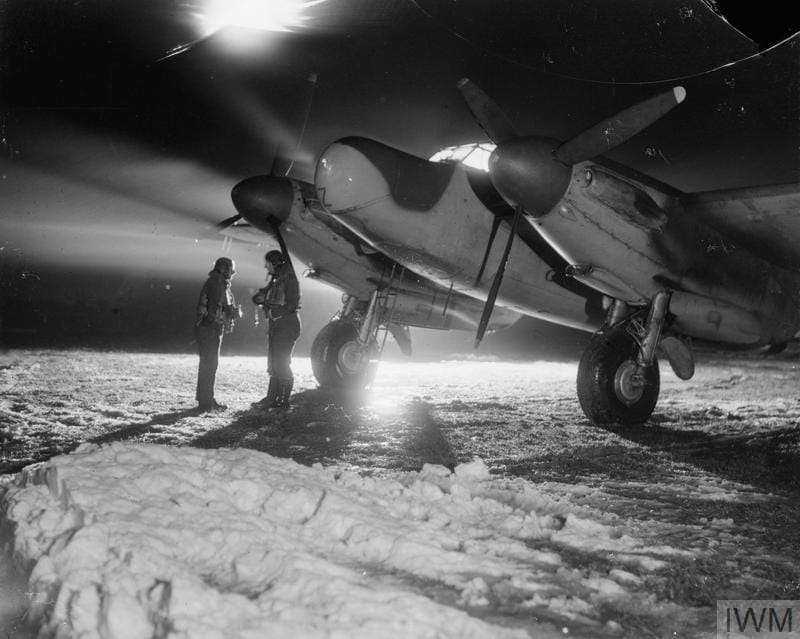
In 1944, Skelton was awarded two Distinguished Flying Crosses and the following year, two Distinguished Service Orders (DSOs). In each year, the second decoration was awarded as a bar across the ribbon of the first – hence his dual ‘& Bar’ titles.
“As pilot and observer respectively, these officers have completed well over a hundred sorties and throughout have set an unsurpassed example of determination and devotion to duty,” read the citation for Skelton’s second DSO. It praised the duo’s destruction of multiple enemy aircraft at night as “a fine tribute to their outstanding skill and courage.”
They have now destroyed 20 aircraft at night, successes which are now a fine tribute to their outstanding skills and courage. On a number of occasions their own aircraft has sustained damage during a fight with the enemy...
Skelton didn’t continue his accountancy training after the war. Instead, he and Burbridge studied theology, Skeleton at Trinity College, Cambridge and Burbridge at Oxford.
Skelton was ordained into the Anglican church and became a curate in Ormskirk Lancashire. He returned to Cambridge as a college chaplain before becoming a rector in Bermondsey.
Following a mental health crisis, he left the direct of the service of the Church and became director of the Lambeth Endowed Charities. He died in 2003 at the age of 82.
Further stories of bravery
Research
The research for this article was undertaken by the ICAEW's Library and Information Service
Further resources

Medals and decorations
Members and Articled Clerks were awarded with hundreds of awards for bravery and service during Word War 2, including 2 Victoria Crosses.
Medals awarded to members Medals awarded to articled clerks
Decorations for military service
A list of all the ICAEW men who were awarded a decoration in WW1
Awards to members Awards to articled clerks
Roll of Honour
Lists of ICAEW Members and Articled Clerks who died in World War 2.
ICAEW members Articled Clerks