
The periodic review amendments to FRS 102 represent one of the most significant changes to UK and Irish GAAP in recent years. What do the key changes mean for auditors, and where are risks likely to emerge, especially in this period of ongoing uncertainty?
For many auditors, the forthcoming amendments to FRS 102, the Financial Reporting Standard applicable in the UK and Republic of Ireland, may appear to be primarily an accounting challenge. However, a practical session at ICAEW’s Audit and Assurance conference highlighted why auditors should be viewing the changes through a wider lens.
While much of the attention has focused on the new requirements for revenue recognition and lease accounting, the practical implications extend well beyond technical accounting. Audit methodologies, risk assessments, training programmes, client readiness and independence considerations may all need to be revisited for firms implementing the changes.
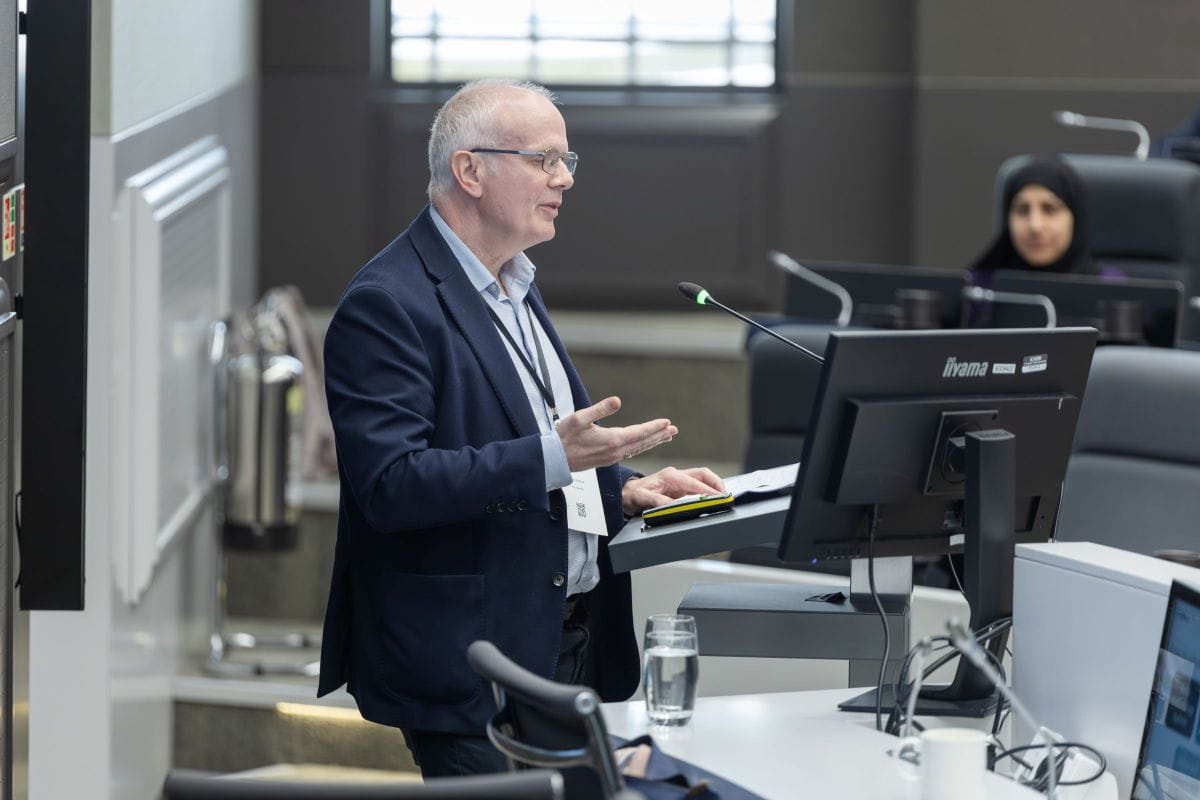
At ICAEW’s conference, Anna Hicks, Partner, Technical and Training at Saffery, and Rhodri Whitlock, Director at HPL Associates, brought together technical and practical perspectives to consider how auditors can navigate the transition while continuing to exercise robust professional judgement in an increasingly uncertain business environment.
Looking beyond the headline changes
The amendments to FRS 102 are often summarised as introducing new approaches to revenue recognition and leases, broadly aligning the standard more closely with IFRS requirements. However, the speakers emphasised that auditors should avoid focusing solely on recognition and measurement issues. For many entities, particularly smaller businesses reporting under Section 1A of FRS 102, additional disclosure requirements may prove just as significant. Areas such as going concern, provisions, taxation and dividends may require greater attention than in previous years.
As a result, auditors will need to consider not only whether balances have been measured correctly, but also whether clients are prepared for the wider reporting consequences of transition.
The discussion highlighted a recurring theme that many firms are already encountering: clients often underestimate the scale of change required. While some organisations have begun assessing contracts and preparing technical accounting papers, others remain at a much earlier stage of readiness. For auditors, that means planning may need to begin well before the first year of implementation.
Revenue: reassessing risk
One of the session’s key messages was that existing audit approaches should not be assumed to remain sufficient under the revised standard. Revenue recognition provides a clear example.
Historically, auditors may have taken some comfort from a stable business model, a well-understood client and a long track record of consistent accounting treatment. Under the revised requirements, however, auditors may need to revisit long-standing assumptions about revenue risks.
The new framework places greater emphasis on understanding contractual arrangements, identifying performance obligations and determining when control transfers to customers. These assessments may require a deeper understanding of commercial arrangements than has previously been necessary.
It is also worth remembering that ISA 240 presumes a risk of fraud in revenue recognition. Auditors should therefore explicitly consider this presumption as part of their fraud risk assessment and document any conclusion that the presumption has been rebutted.
As a result, auditors may need to challenge whether revenue risk assessments remain appropriate and whether audit procedures are sufficiently responsive to the revised accounting requirements.
The session reinforced the importance of stepping back and reconsidering audit planning from first principles rather than simply rolling forward prior-year approaches.
Lease accounting: finding what has been missed
Lease accounting is likely to present an equally significant challenge. A practical theme running throughout the discussion was the danger of relying too heavily on existing lease registers. While these records provide an obvious starting point, they may not identify all arrangements that now fall within the scope of the revised requirements.
Auditors were encouraged to think more broadly about contractual arrangements across the business. Embedded leases within service contracts, technology arrangements and other commercial agreements may require detailed assessment. This may involve looking beyond traditional property leases and considering whether contracts contain identified assets and convey rights of control that meet the definition of a lease.
The implication for auditors is clear: evidence gathering may need to extend beyond familiar sources, requiring a more comprehensive review of contractual arrangements and management’s processes for identifying leases.
The transition exercise itself may also highlight new audit risks where management is compiling lease inventories for the first time.
Client readiness remains a critical challenge
Many organisations are still at an early stage of preparation. In an ideal world, management teams would already have completed contract reviews, identified lease populations, documented accounting conclusions and prepared detailed transition papers. In practice, auditors may find themselves working with clients who have made only limited progress. This creates challenges not only for financial reporting but also for audit timetables, resource planning and risk management.
Hicks and Whitlock emphasised the importance of early engagement with clients. Discussions about readiness, data requirements and expected deliverables should take place well before year-end to avoid implementation becoming an audit bottleneck.
Firms may also need to consider whether existing engagement terms and communications remain appropriate as the nature of audit work evolves during the transition.
Training for practical application
Another key takeaway was the importance of practical training. Many audit teams have been hearing about the FRS 102 amendments for several years. Yet understanding the theory and applying it in practice are not the same thing.
The speakers noted that implementation questions are increasingly emerging from real-world scenarios rather than textbook examples. Issues such as tax impacts, transition adjustments, provisions and interaction between accounting areas often create complexity that is difficult to anticipate through technical briefings alone. As a result, firms are increasingly turning to workshops, case studies and practical exercises to help teams develop confidence in applying the new requirements.
Technical awareness alone will not be sufficient. Audit teams need opportunities to work through realistic scenarios and understand how revised accounting treatments affect risk assessments, audit evidence and documentation.
Judgement in an uncertain environment
Alongside the technical discussion, the session explored the wider challenges of auditing in uncertain times. Economic pressures, inflation, interest rates, supply-chain disruption and technological change continue to affect many businesses.
These factors can impact many aspects of the financial statements in terms of transactions, balances and disclosures, as well as non-financial reporting and narrative reporting. Typical examples are fair values, impairments, the recoverability of debtors and, more pervasively, management’s assessment of the entity’s ability to continue as a going concern. The very nature of the volatility of these changes in uncertain times means that past performance and historic assumptions may no longer be appropriate and can increase the risk of management bias.
For some management teams these may well be complex areas and the auditor may wish to help. However, care needs to be taken not to cross the line and make the assessment for management as this creates a range of ethical threats that can be reputationally damaging and do not ultimately help the client.
Adding to the challenge is that the areas in question relate to estimates and judgements about the impact of possible future events, rather than auditing evidence-based historical facts. This can feel uncomfortable and there is an increased risk of confirmation bias.
To mitigate the challenges of auditing key transactions, balances and disclosures in uncertain times, the speakers emphasised the importance of:
- leveraging the knowledge that should be gained by complying with the requirements of ISA 315;
- performing targeted and sector-relevant research on the industry in which the client operates to develop their own independent expectations;
- joining up the dots with real-world knowledge based on what is in the media and professional guidance;
- engaging early with management to flag the relevant areas and discuss with them what steps management might be able to take, including the possible use of a management’s expert;
- acknowledging that the audit team may also need specialist help through the involvement of an auditor’s expert; and
- remaining professionally sceptical throughout and evidencing reasoning.
The speakers also highlighted efficiency opportunities. Many of the impacted areas are interconnected so there may be efficiencies through the overlapping assurance gained from using the same team to audit areas such as going concern, impairments and fair value. This concentration allows more effective engagement with management and reduces the risk of inconsistencies being missed.
Finally, the speakers noted the importance of ensuring the firm’s system of quality management (SoQM) under the International Standard on Quality Management (ISQM) 1 supported teams by flagging those areas that require consultation or the involvement of specialists.
Maintaining independence during transition
The session concluded with a reminder that implementation support must not compromise auditor independence.
As clients grapple with complex accounting changes, there may be increasing pressure on auditors to provide guidance and practical assistance. While support can often be provided within ethical requirements, firms must remain alert to the risk of advocacy threats in assuming management responsibilities. The distinction between advising and deciding remains critical.
Auditors can help clients understand requirements, challenge assumptions and identify issues. However, responsibility for accounting decisions, estimates and disclosures must remain with management. As organisations work through the transition, maintaining this boundary will be essential to preserving both audit quality and public trust.
The FRS 102 amendments undoubtedly represent a significant change, but the greatest risks may arise not from the technical accounting itself, but from insufficient planning, inadequate training and failure to adapt established audit approaches. For auditors, the transition presents an opportunity to reassess risk, strengthen professional judgement and reinforce the value they bring to the reporting process.
Professional judgement

