
ICAEW’s Audit and Assurance Conference 2026 explored how the auditor’s role is evolving in response to economic uncertainty, technological disruption and changing stakeholder expectations. The conclusion was clear: while technology will transform audit, professional judgement is more important than ever.
The audit profession is no stranger to change. Yet the pace and scale of disruption facing auditors today feels different. Geopolitical tensions, economic volatility, rapid advances in artificial intelligence (AI) and continuing debate over the future of corporate reporting are all reshaping the environment in which auditors operate.
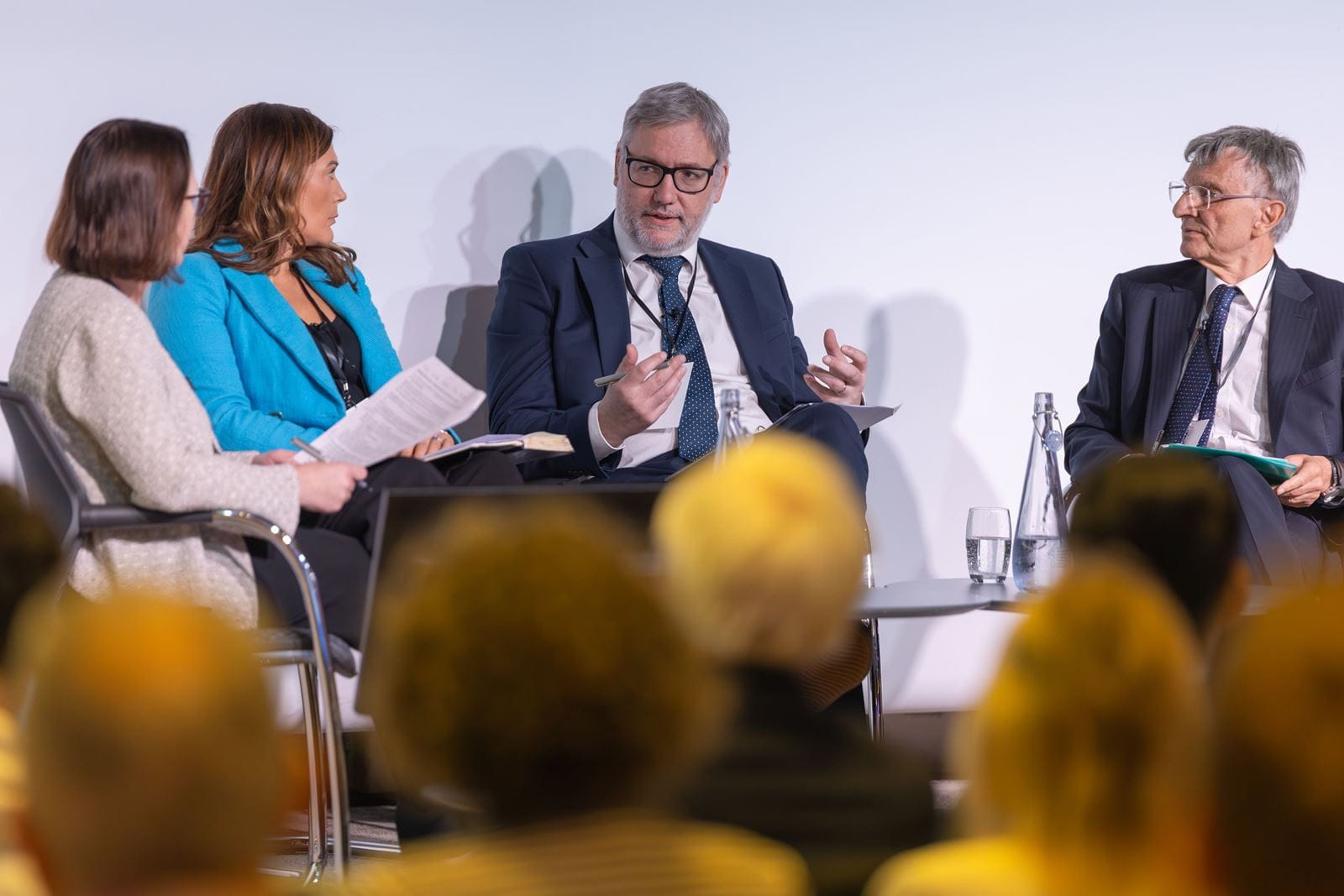
These themes were explored in the conference’s opening panel session, chaired by Jayne Kerr, Director and Audit Public Policy Leader at PwC. Joining her were Sir Andrew Likierman, Professor of Management Practice in Accounting at London Business School; Dean Beale, Executive Director of the Centre for Public Interest Audit (CPIA); and Becky Eagle, Audit Partner at Grant Thornton UK.
Building on Sir Andrew’s keynote address on the continuing importance of professional judgement, the discussion focused on how auditors can continue to deliver high-quality assurance in a world where uncertainty has become the norm rather than the exception.
Uncertainty becomes the new normal
Uncertainty is no longer something auditors encounter periodically. It has become a permanent feature of the business landscape.
Reflecting on her experience in practice, Eagle noted that judgement and uncertainty have always been part of audit, but the nature of that uncertainty has changed. “It used to be quite cyclical,” she said. “I think now it seems to be there every day and everywhere you turn.”
This has significant implications for audit approaches, particularly in areas such as going concern, impairment assessments and other management estimates. Traditional techniques that relied heavily on historical trends and management’s forecasting track record are becoming less reliable in a rapidly changing environment.
“Gone are the days where the prior year was a reliable source,” Eagle observed.
For auditors, this means placing greater emphasis on understanding assumptions, challenging forecasts and exercising professional scepticism in areas where outcomes are increasingly difficult to predict.
A changing policy and reporting landscape
The discussion also highlighted uncertainty beyond the audit file itself. Beale pointed to the shifting policy environment, including the abandonment of the Audit and Corporate Governance Reform Bill and the prospect of further consultation on Modernisation of Corporate Reporting. For organisations involved in audit policy and research, questions remain about the future direction of government priorities and regulatory reform.
At the same time, stakeholder expectations continue to evolve. Investors and other users, including audit committees, increasingly look to auditors for assurance on issues that extend beyond traditional financial reporting risks. This creates a risk that the audit expectation gap could widen further.
“I think there’s a risk that it does,” said Beale, noting that misunderstandings remain around auditors’ responsibilities for areas such as fraud detection and going concern. As reporting expands into areas such as sustainability and cyber resilience, stakeholders may assume these topics naturally fall within the auditor’s remit when the reality is often more nuanced.
AI: opportunity and challenge
If uncertainty is one defining feature of the modern audit environment, AI is another. The panel discussed both the opportunities and challenges presented by the growing adoption of AI and advanced analytics across business and audit.
Drawing on insights from CPIA research, Beale noted that stakeholders recognise the potential benefits of AI in areas such as testing and analysis but continue to express concerns around data security, reliability and the risk of hallucinations.
For auditors, AI presents a dual challenge. Not only must they understand how to use these tools appropriately within their own work, but they must also assess how clients are deploying them within their businesses.
Sir Andrew highlighted the AI-related uncertainty organisations face. “They themselves are being disrupted ‘big time’ in lots of areas”, he said. “They’re grappling with a lot of uncertainties.”
As a result, management teams may not always have clear answers to auditors’ questions because they are still working through the implications themselves.
Eagle noted that clients and audit committees are already asking detailed questions about how auditors use AI and data analytics. “We need to be able to really clearly explain to management and to an audit committee where you are using those tools,” she said.
Transparency around the use of technology, and the judgements that sit behind it, is likely to become increasingly important. The panel also suggested that audit reporting itself may evolve to provide greater insight into how technology has been used during the audit process.
Judgement remains the differentiator
Despite the focus on technology, the discussion repeatedly returned to one theme: judgement.
Sir Andrew challenged the idea that judgement is an innate quality that some possess and others do not. “I do believe it can be taught,” he said. “Judgement is a process. You can break the process down.”
Judgement is a process. You can break the process down.
As AI takes on more routine tasks, the ability to exercise sound professional judgement becomes even more valuable. Auditors will increasingly need to evaluate complex situations, weigh conflicting evidence, recognise bias and communicate difficult conclusions.
Effective professional judgement is not simply about reaching the right answer. It is also about demonstrating a robust process for arriving at that conclusion.
As Sir Andrew put it, organisations should be able to show that they have “done everything [they] can to establish reasonably what was the situation” through a systematic and evidence-based approach.
Eagle suggested that the quality of judgement is becoming a key differentiator for audit firms. “The conclusion around the judgement is becoming a differentiator,” she said.
This applies not only in regulatory inspections but also in relationships with audit committees, which increasingly want to understand how auditors reached their conclusions, not simply what those conclusions were.
The auditor of the future
Looking ahead, the panel considered what skills auditors will need in the coming years. Technical competence remains essential, however, the discussion suggested that future success will depend increasingly on capabilities that technology cannot easily replicate.
Eagle highlighted critical thinking, confidence and the ability to challenge management effectively. Client service skills will also remain important, particularly as auditors help organisations navigate growing complexity and uncertainty.
All of those soft skills that sit around the audit work are going to be more valuable.
Beale agreed, pointing to the value of communication skills, AI fluency and the ability to explain complex technical matters to non-specialists. “All of those soft skills that sit around the audit work,” he said, “are going to be more valuable.”
The panel’s message was ultimately optimistic. While technology will continue to transform audit, it is unlikely to diminish the importance of the auditor. Instead, it will place greater emphasis on the uniquely human skills of judgement, scepticism, communication and trust.
In a world defined by uncertainty, those qualities may prove more valuable than ever.
Professional judgement

