
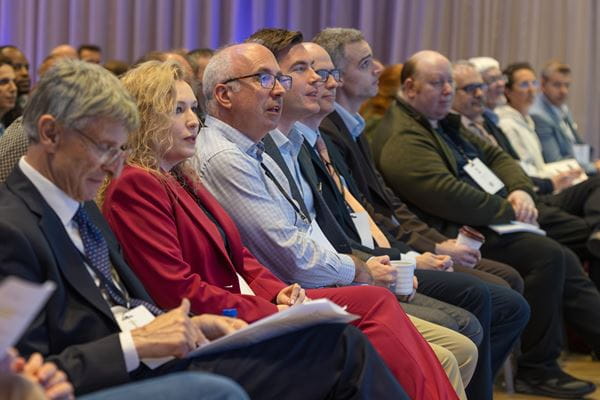
From artificial intelligence (AI) and sustainability assurance to FRS 102 implementation and professional judgement, ICAEW’s Audit and Assurance Conference explored how auditors can continue to deliver quality and trust in an increasingly complex world.
If there was one theme that connected the keynote, panel discussions and technical sessions at this year’s Audit and Assurance Conference, it was the growing need for auditors to navigate uncertainty.
Economic volatility, geopolitical instability, technological disruption and evolving reporting requirements are all creating new challenges for businesses and the professionals who audit them. Yet speakers throughout the day consistently argued that these developments should not be viewed in isolation. Instead, they are part of a broader shift that is changing the environment in which auditors operate.
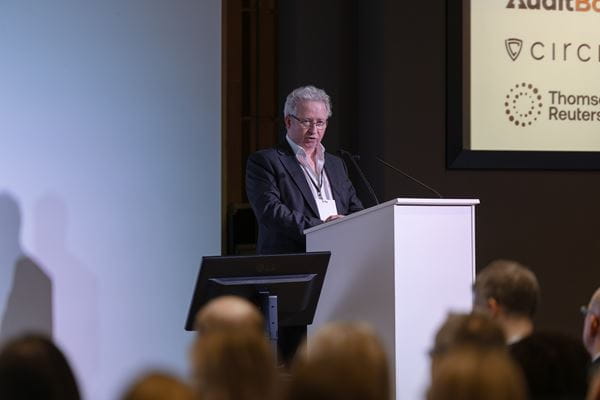
The conference opened with a keynote from Sir Andrew Likierman, Professor of Management Practice in Accounting at London Business School, whose focus on professional judgement provided a thread that ran through many of the subsequent discussions.
As organisations face increasingly complex decisions, the ability to exercise sound judgement is becoming more valuable, not less.
“While AI is brilliant at helping us exercise judgement, it cannot exercise judgement itself. The exercise of judgement will be one of the key defining differentiators between the machine and the human being in the age of AI,” Sir Andrew said.
While AI is brilliant at helping us exercise judgement, it cannot exercise judgement itself.
Technology moves to the centre of the conversation
AI featured prominently throughout the programme, reflecting its growing presence in both audit practice and businesses. Discussions ranged from the opportunities and risks of using AI-enabled tools within audit firms to the challenges of auditing organisations that are adopting and experimenting with AI technologies.
Technology is already helping firms analyse larger data sets, identify anomalies and streamline routine processes. However, delegates were reminded that the successful use of technology depends on maintaining appropriate governance, challenge and oversight.
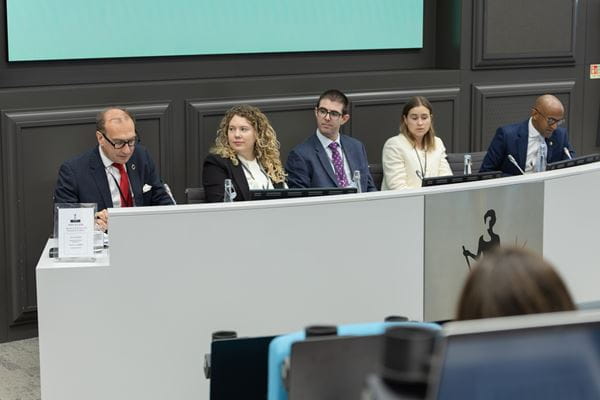
The conference’s opening panel, The role of the auditor in a changing world, explored how AI is creating new uncertainties not only for auditors but also for their clients. Sir Andrew observed that many organisations are still trying to understand the implications of emerging technologies for their own business models.
For auditors, that means understanding not only the technology itself, but also how uncertainty affects management decision-making, forecasting and risk assessment.
The message throughout the day was not that AI will replace auditors, but that auditors will increasingly need to understand how to use technology effectively while continuing to apply professional scepticism and challenge.
Regulation evolving alongside the profession
Technology was not only a theme for auditors; it was also a theme for regulators. In his closing keynote, Modernised regulation for an evolving profession, Anthony Barrett, Executive Director of Supervision at the Financial Reporting Council (FRC), outlined how the regulator is adapting its supervisory approach in response to technological change, new assurance markets and evolving business models.
While recognising the opportunities presented by AI and innovation, Barrett emphasised that regulatory frameworks must evolve alongside the profession they oversee. He highlighted the FRC’s work on AI guidance, innovation initiatives and technology-focused projects designed to help firms adopt new tools responsibly.
“A modern and effective regulator is not one that writes the longest rulebook. It’s the one that understands the issues, uses the right tools, periodically challenges itself, and acts in a way that supports confidence in the market.”
The message aligned closely with discussions throughout the day: innovation and quality are not competing objectives. The challenge for firms and regulators alike is ensuring that new technologies strengthen trust rather than undermine it.
Preparing for change
The conference also considered how auditors are adapting to significant changes in reporting and assurance requirements. In the session on FRS 102 and uncertainty, Anna Hicks, Partner, Technical and Training at Saffery, and Rhodri Whitlock, Director at HPL Associates, explored the practical implications of the periodic review amendments. Discussions focused on preparation, client readiness and the importance of revisiting established assumptions around areas such as revenue recognition and lease accounting.
In a practical example that highlighted the importance of scepticism and being mindful of completeness, Hicks and Whitlock noted that moving forward auditors should look out for leases embedded within other contracts they inspect, rather than relying on lease registers alone.
While the technical details varied, the wider message echoed themes heard elsewhere during the day: successful implementation depends not only on understanding new requirements, but also on planning effectively and engaging early with clients. The session provided a practical reminder that changes in reporting standards rarely affect accounting alone. It also has implications for audit planning, risk assessment, training and communication.
Building skills beyond financial audit
The conference’s sustainability assurance session explored how the profession is adapting to growing demand for assurance beyond traditional financial reporting. Chaired by Ravi Abeywardana, Director of Sustainability Reporting and Assurance at ICAEW, the discussion focused on the skills, mindset and capabilities required to operate in an expanding assurance landscape.
A recurring theme was that many of the capabilities that underpin high-quality audit remain directly relevant to sustainability assurance. Professional scepticism, evidence gathering, stakeholder engagement and the ability to challenge management continue to be critical, even when the subject matter differs from financial statements.
But Mark J. Lumsdon-Taylor, Global Executive Lead for Sustainability at MHA, observed that sustainability assurance is “not simply an external audit with a green lense on it”. While many audit skills transfer naturally, practitioners also need broader commercial business understanding, developed experience and confidence in dealing with less mature data sets and the ability to work with unfamiliar reporting frameworks.
Speakers also highlighted curiosity, communication and a willingness to learn as increasingly important attributes. Michelle Cardwell, Head of Accountancy Education at the International Federation of Accountants (IFAC), noted that “accountants need to be curious”, highlighting the importance of developing skills that enable professionals to connect financial and non-financial information and engage confidently with subject matter experts.
Trust remains at the heart of audit
Whether the topic was AI, sustainability reporting, accounting change or the future of assurance, speakers consistently returned to the profession’s core purpose: providing confidence in information that stakeholders rely upon.
The tools auditors use may evolve. The scope of assurance may expand. New technologies will undoubtedly continue to reshape how work is performed. But the need for independent challenge, professional scepticism and informed judgement remains constant.
Anthony Barrett returned to this theme in his closing keynote, arguing that confidence increasingly depends on maintaining trust in reporting and assurance. “In a world of mistrust and misinformation, trust in the integrity of UK financial statements remains high. That is a credit to both preparers and auditors.”
For delegates leaving Chartered Accountants’ Hall, perhaps the clearest takeaway was that the future of audit will not be defined by technology alone. Instead, it will be shaped by how effectively auditors combine technological capability with the human qualities that machines cannot replicate: judgement, scepticism, integrity and professional curiosity.
Professional judgement

