Here, we place Bates’s work at Chartered Accountants’ Hall in the context of his wider career, from his relatively modest early work to his later commissions for public monuments.
Early life and training
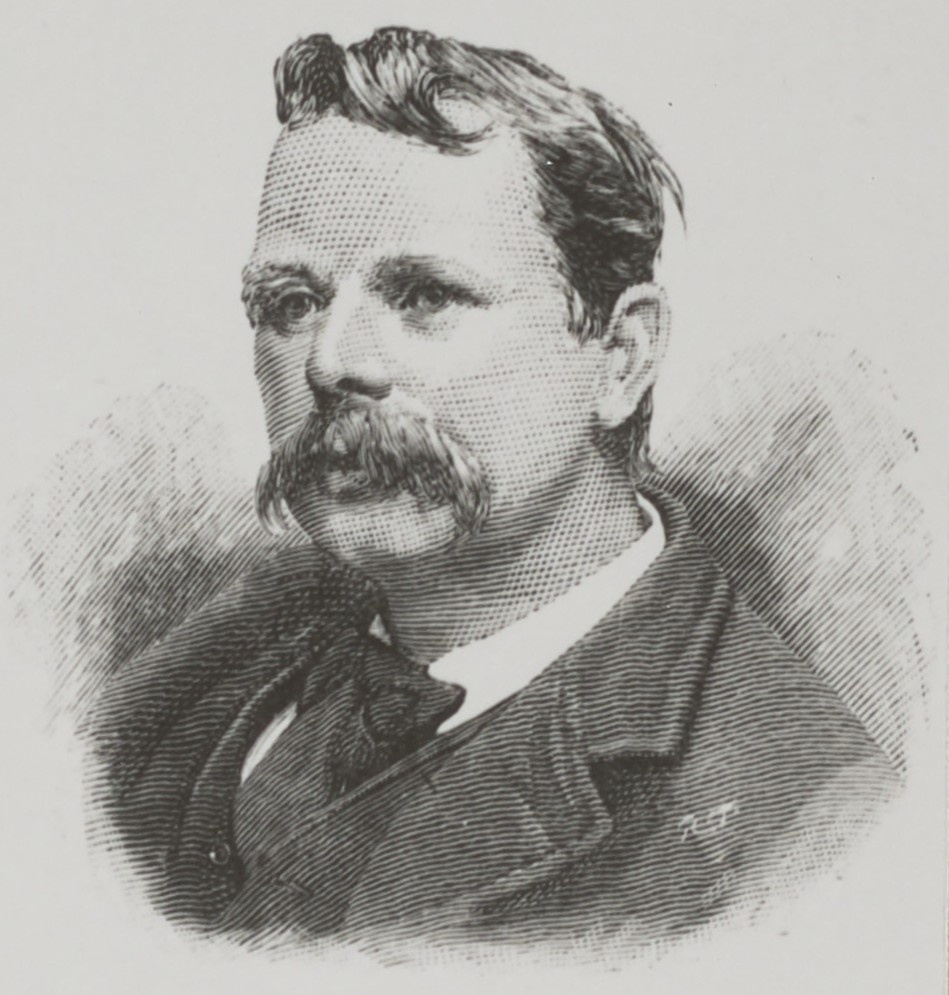
Born Henry Bates in Stevenage on 26 April 1850, Bates was the son of a master builder. He worked briefly as an architect’s clerk before joining the London firm of architectural carvers Farmer & Brindley, by whom he was employed from 1869 until c.1882.
Between 1869 and 1879 he travelled widely in Britain, carving architectural ornament in situ. Working from a drawing or cast, he cut foliage and other designs into stone already fixed in place.
In 1879 he settled in London, combining work at the firm’s premises with evening classes at the South London Technical Art School in Lambeth. There he studied modelling under the French sculptor Jules Dalou.
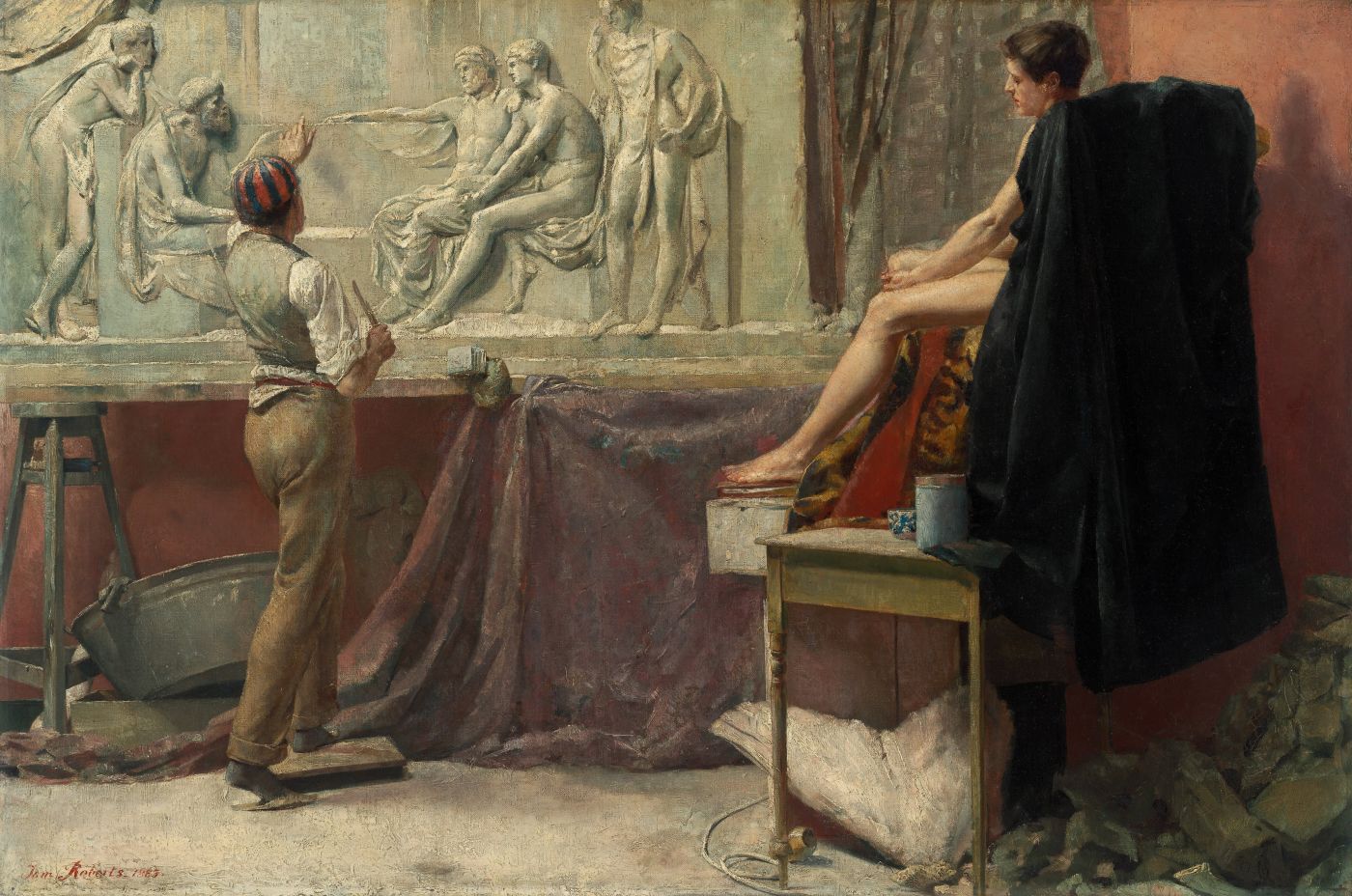
He entered the Royal Academy Schools in 1881. Two years later he won a gold medal and a £200 travelling scholarship for his relief Socrates Teaching the People in the Agora. The Australian painter Tom Roberts, a fellow student, depicted Bates working on the Socrates relief in The Sculptor’s Studio (1885), now in the National Gallery of Australia.

Aeneid reliefs and Hill’s Bakery — between classicism and modern life
Bates’s travelling scholarship took him to Paris, where he took lessons from Auguste Rodin, whose view of sculpture as a means of expressing pure energy was an enduring influence on his work.
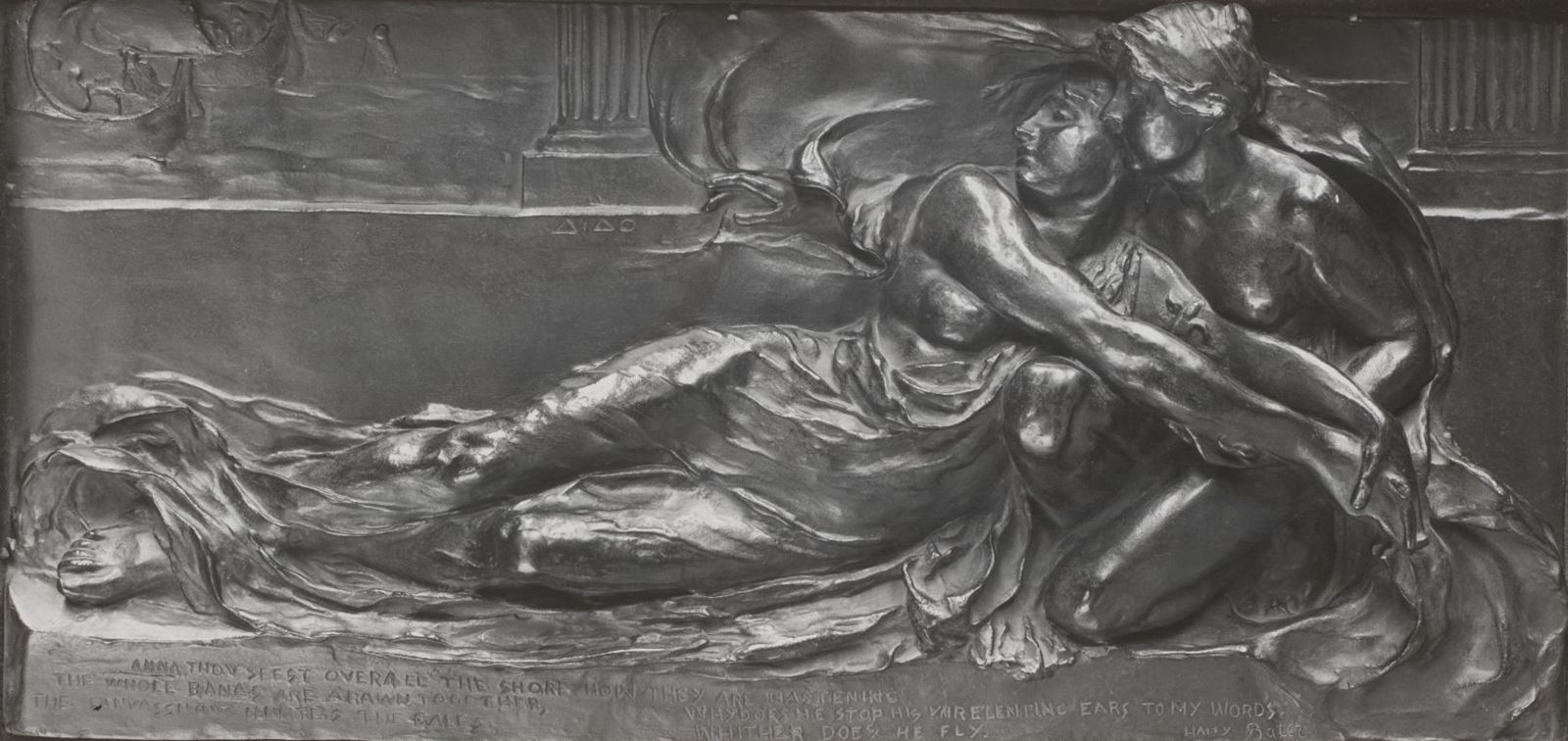
Whilst in Paris, he modelled three reliefs based on Virgil’s Aeneid, exhibited in bronze at the Royal Academy in 1885. Though the panels are rectangular, their figures fit the triangular outline of an imagined pediment. In one panel, Anna supports her sister Dido as they watch Aeneas’s fleet depart. Dido’s reclining figure fills the narrow end of the triangle, whilst Anna crouches at the taller end.
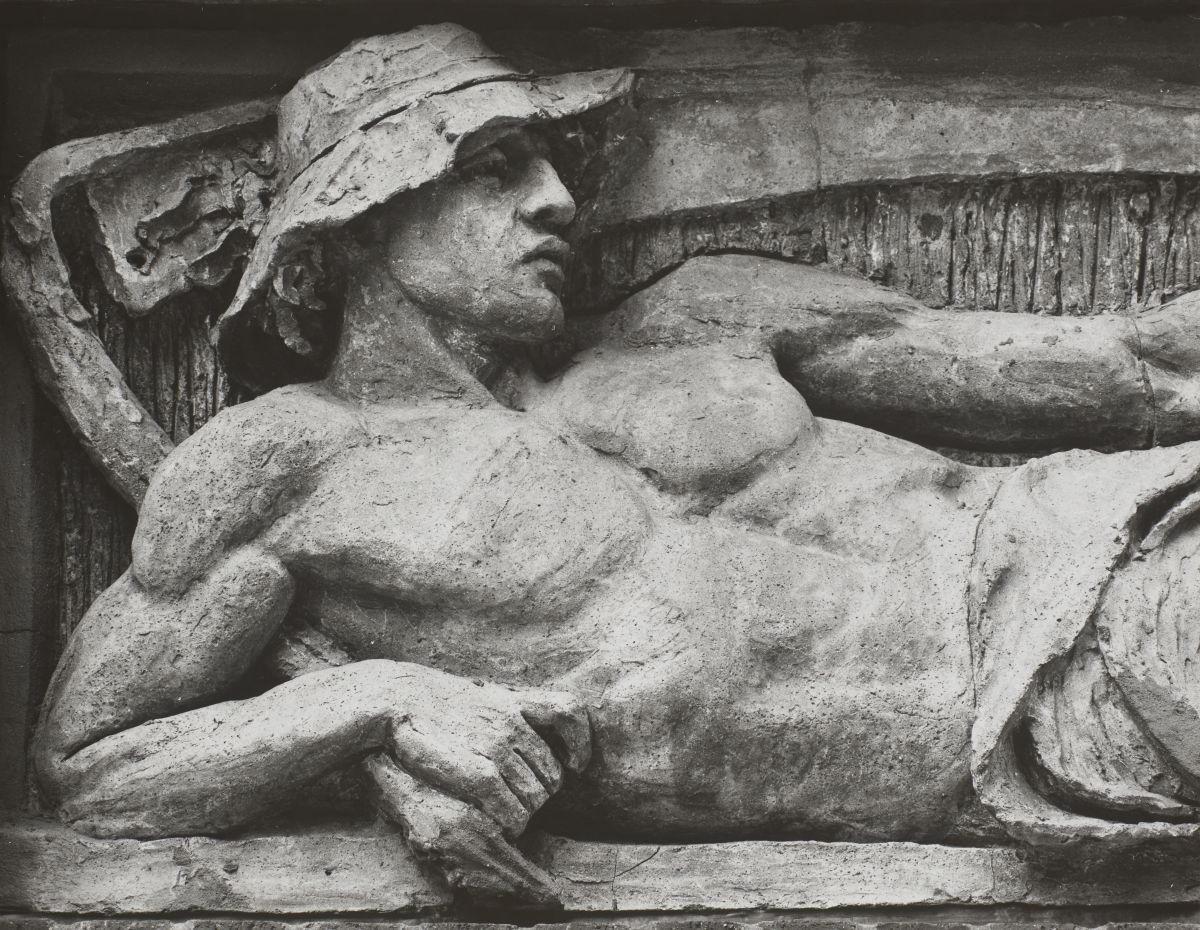
Bates adapted some of these poses for four terracotta panels on the front of William Hill & Son’s bakery in Westminster, completed in 1887 to designs by Thomas Verity. Set in pairs on either side of the central bay, the rectangular reliefs depicted ploughing, sowing, reaping and milling.
The figures retain their classical proportions, whilst details of dress and the small agricultural scenes behind them identify their occupations. Bates’s reaper pauses in his work, much like the labourer in The Mower by Hamo Thornycroft, his future colleague at Chartered Accountants’ Hall.
The Holy Trinity altarpiece — a work of Missionary Aestheticism
Around 1890, Bates was tasked with creating a marble altarpiece for John Dando Sedding’s Holy Trinity church on Sloane Street in London. The relief shows Christ lying between two kneeling angels, one at his head and the other at his feet.
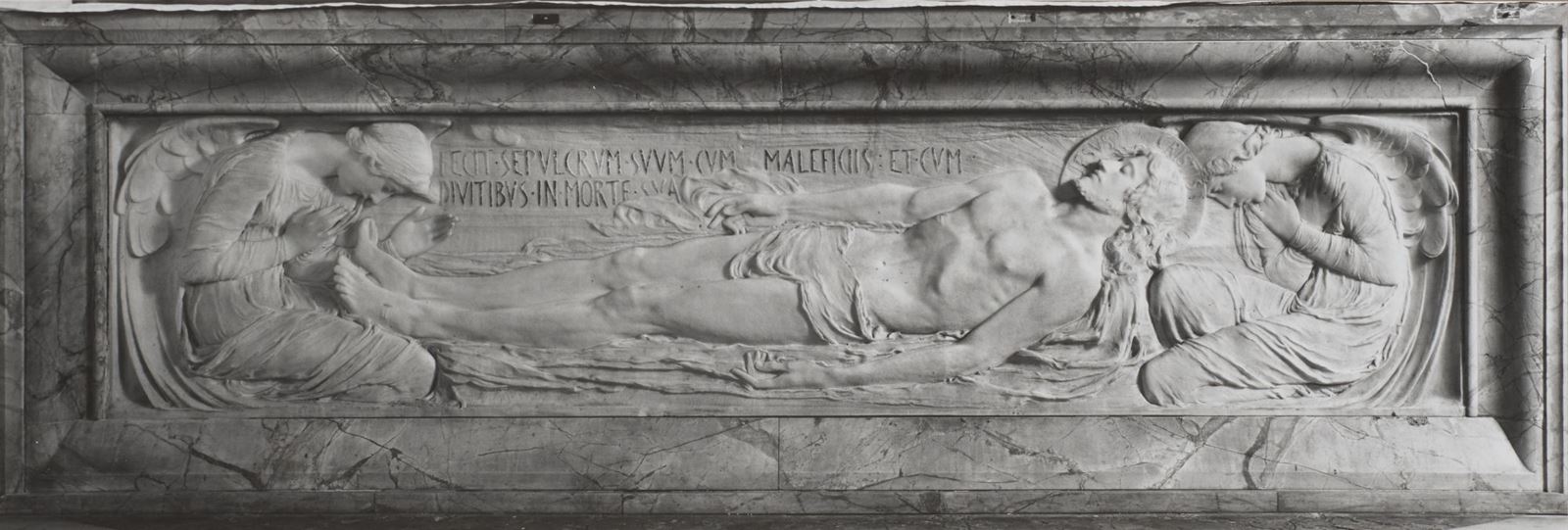
His closed eyes, the wounds in his hands and feet, and the narrow, tomb-like space suggest the Entombment, as does the Latin inscription above him, drawn from the Book of Isaiah. However, the art historian Jason Edwards has argued that the relief also evokes the Resurrection — Christ’s head and shoulders appear to rise, whilst the angels’ wings seem to open a space above him.
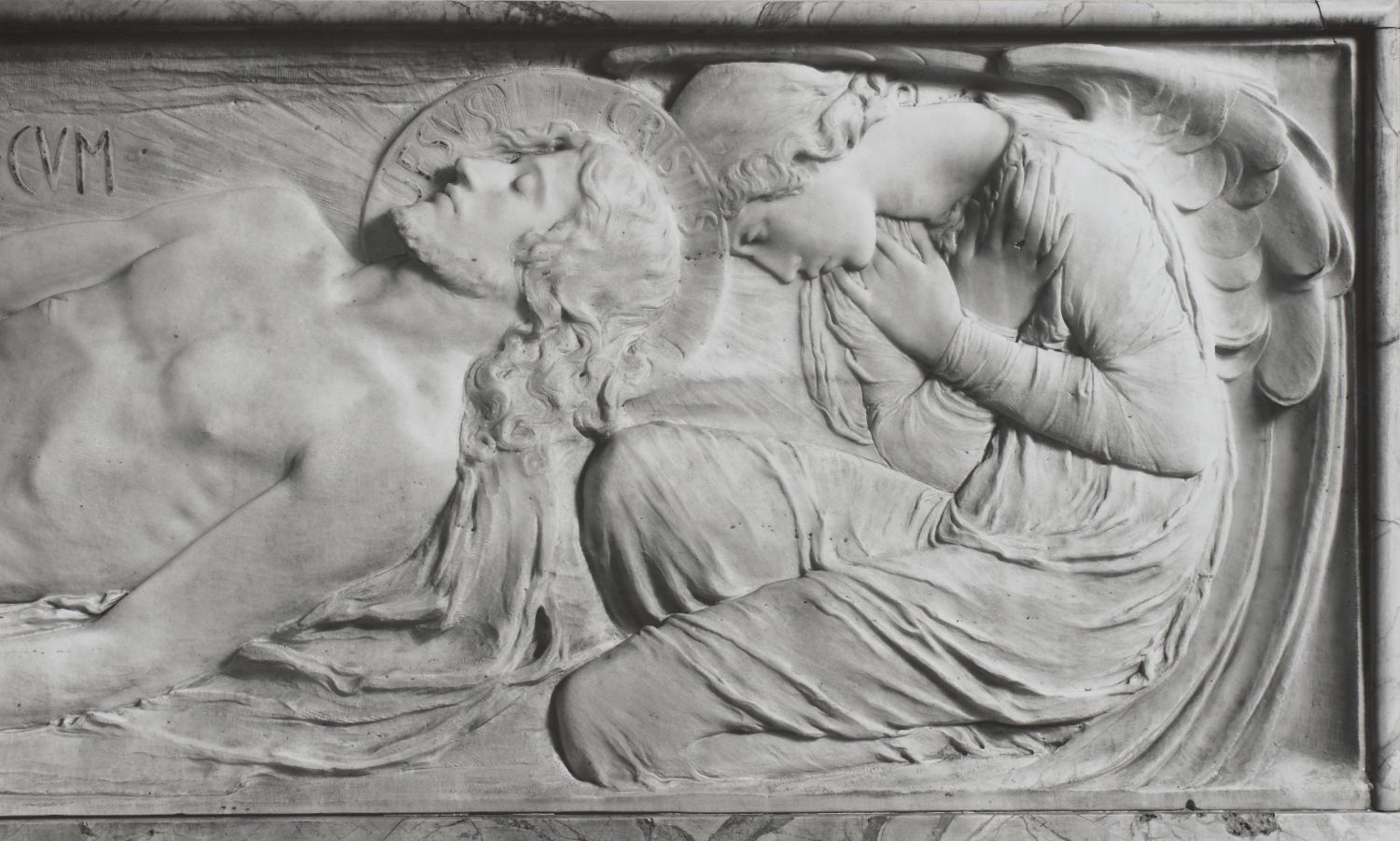
Edwards places the work in the tradition of ‘Missionary Aestheticism’, which sought to enrich spiritual and cultural life through the beauty of public art. In his view, Bates’s altarpiece explores the tension between the iconographies of Christ dead and resurrected, confronting the congregation with questions of faith and doubt.
Chartered Accountants’ Hall — bringing Belcher’s designs to life
At Chartered Accountants’ Hall, designed by John Belcher in 1888 and constructed 1890–93, Bates was entrusted with executing the sculptural details which animate the lower façade, whilst Hamo Thornycroft handled the frieze.
How Bates obtained the commission is uncertain. He may have met Belcher and his assistant Beresford Pite through the Art Workers’ Guild, of which Bates was briefly a member in 1886. A recommendation from his former employers, Farmer & Brindley, who undertook subsidiary carving for the building, is another possibility.
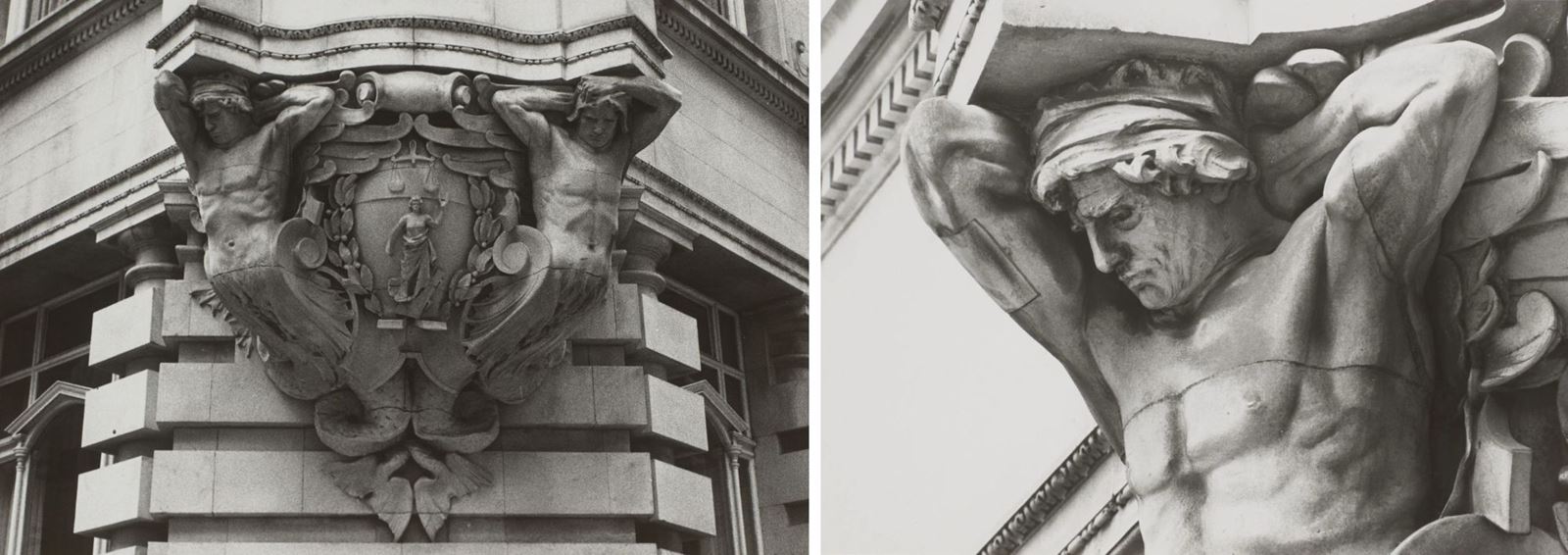
Perhaps Bates’s most notable contribution to the building is the corbel, or projecting bracket, beneath the window at the corner of Moorgate Place and Great Swan Alley. Apparently inspired by a Renaissance-era Genoese grotto, its two figures appear to bear the weight of the projecting masonry through their shoulders and backs. In 1895, the architect Reginald Blomfield described it as “the finest work of its kind in this country”.
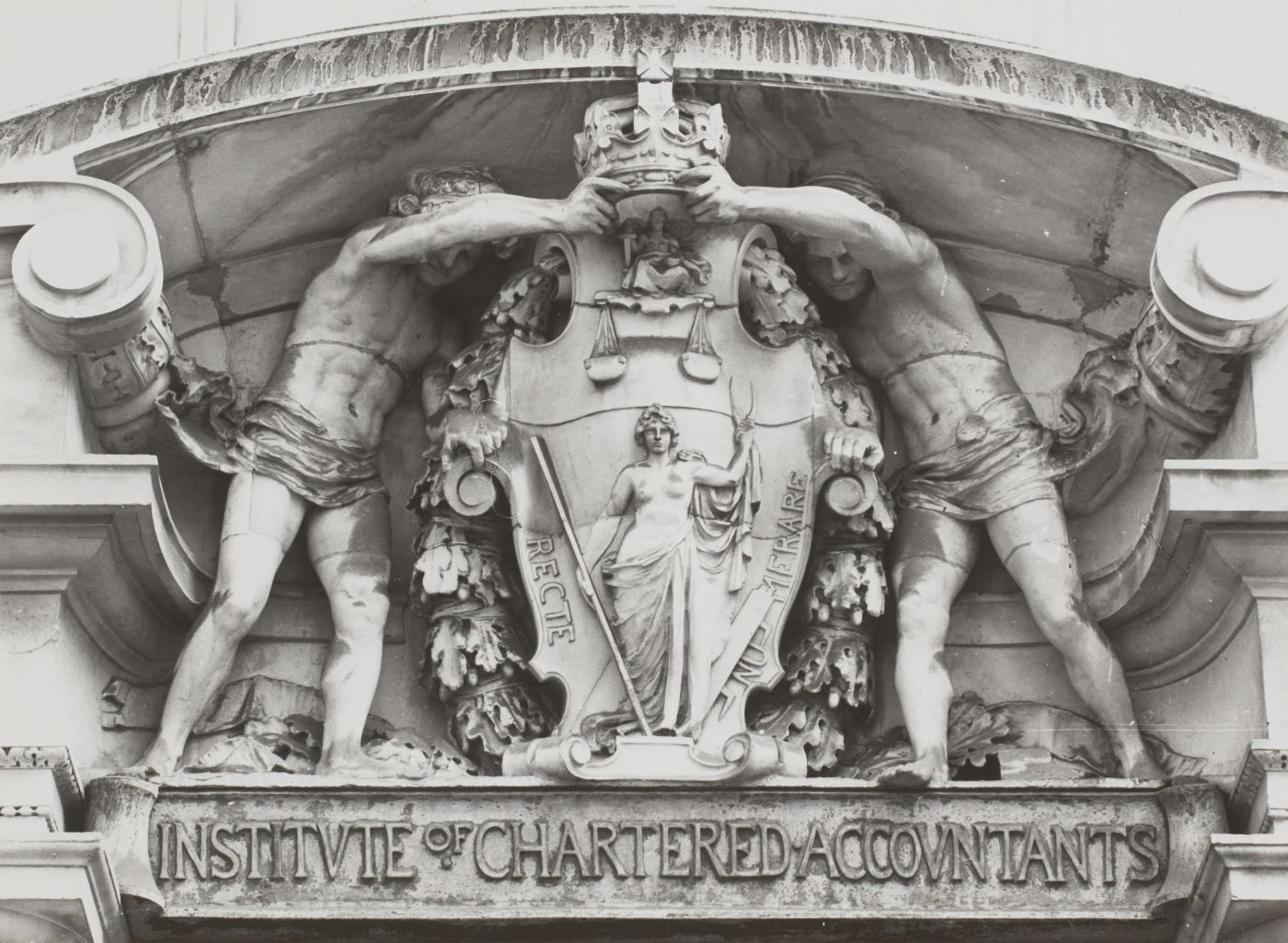
In Bates’s sculpture over the principal entrance in Moorgate Place, meanwhile, two classical youths hold a crown above ICAEW’s original coat of arms. The shield bears the figure of Economia, the personification of Economy, and the crown represents the Royal Charter granted in 1880. The youths raise their arms towards the centre of the group, framing the shield between them.
Bates also created the winged half-figures which rise from tapering shafts beneath the first-floor windows of the original building. Like the corbel group, these seem to be inspired by the architecture of Genoa — they bear a striking resemblance to similar details on the façade of the Palazzo Podestà.
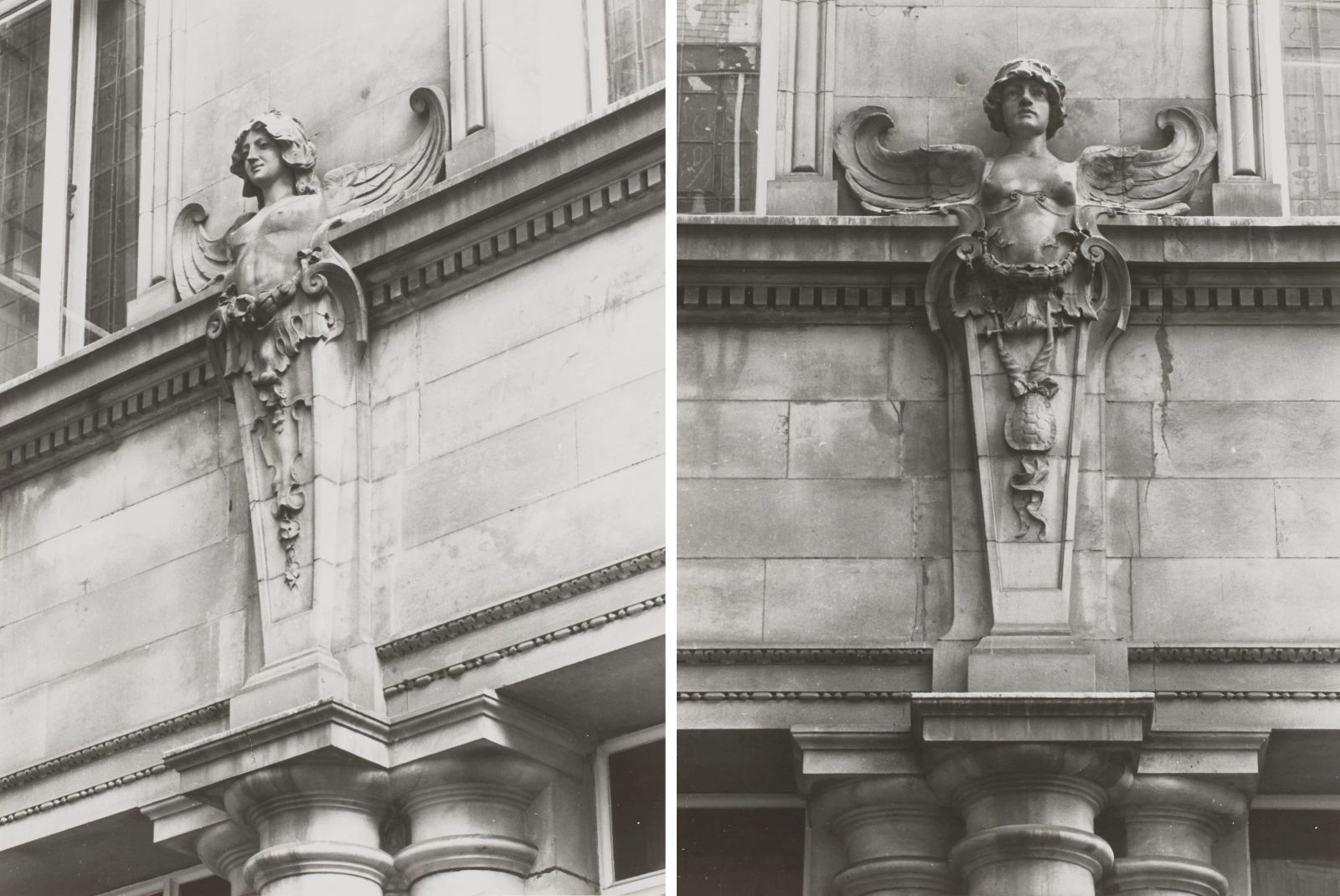
Although the general forms of these consoles, terms and groups were of Belcher’s design, a comparison of Belcher’s 1888 drawings with the finished building show that Bates made changes to their proportions and poses – changes which, according to Susan Beattie, “demonstrate his extraordinary sensitivity to architectural as well as sculptural values”.
Bates’s contribution to the Hall drew praise at the building’s opening, when ICAEW President Edwin Waterhouse spoke of his “original and striking sculpture”. More recently, Susan Beattie has described it as “heroic and yet full of humour and variety” and so perfectly matched to Belcher’s building as to be “an indispensable part of its meaning and character.”
Freestanding works and public monuments — from military dignity to symbolist fantasy
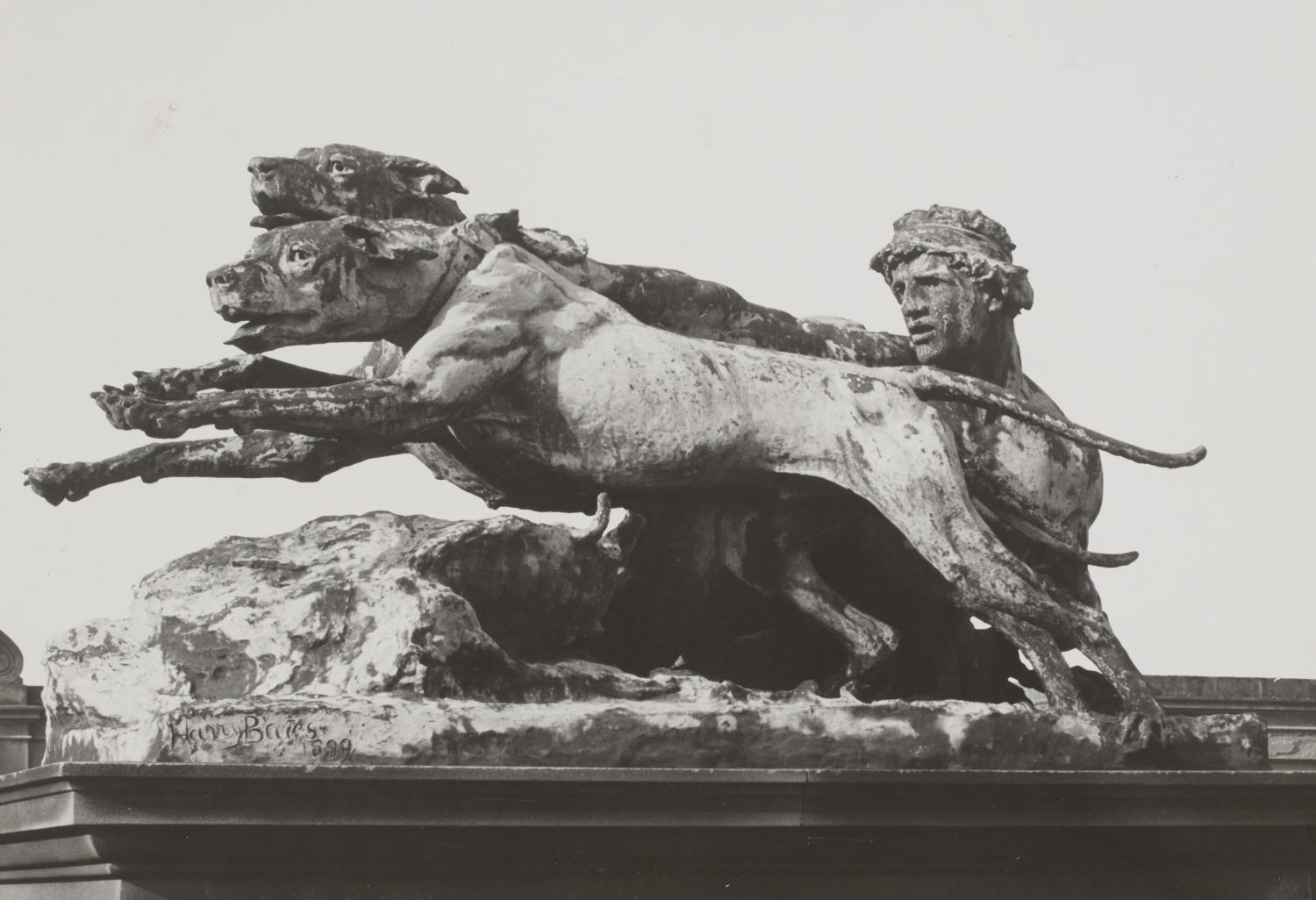
In the last decade of his career, Bates exhibited freestanding works such as Hounds in Leash (1889), which depicts a huntsman restraining two dogs, and Pandora (1890), a kneeling marble figure holding a carved ivory casket.
In the former, the huntsman braces himself against the pull of the hounds with great intensity, much as the figures on Bates’s corbel at Chartered Accountants’ Hall appear to shoulder the weight of the projecting window. Here, once again, Bates demonstrates a remarkable capacity for rendering energetic action.
After being elected an Associate of the Royal Academy in 1892, Bates began to take commissions for significant public monuments, including an equestrian monument to Lord Roberts for Calcutta (now Kolkata) and a statue of Queen Victoria for Dundee to mark her Diamond Jubilee.

Bates died in London in January 1899, having just completed the “bizarre polychrome symbolist fantasy” of Mors Janua Vitae. By the time of his death he sadly found himself in poverty, his finances depleted by his decision to fund elements of the Lord Roberts monument from his own pocket.
Can't find what you're looking for?
The ICAEW Library can give you the right information from trustworthy, professional sources that aren't freely available online. Contact us for expert help with your enquiries and research.
ICAEW accepts no responsibility for the content on any site to which a hypertext link from this site exists. The links are provided ‘as is’ with no warranty, express or implied, for the information provided within them. Please see the full copyright and disclaimer notice.
Learn more about Chartered Accountants’ Hall
The Library team has produced a history and overview of Chartered Accountants' Hall, home to ICAEW since 1893.
Browse resources