
Earlier this month, we had the privilege of organising the UK Excel Esports Finals. Thirty-one finalists from across the country gathered to compete in three challenging Excel cases, all hoping to earn the title of UK Champion, 2026 (and winning the much-coveted blue WWE-style belt!)

Reflections on what this competition means in an AI-driven world
On the surface it was a competition. Yet as we looked around the room throughout the day, we found ourselves thinking that the competition itself was secondary to the real story.
We started thinking about the journeys each of the 31 finalists had been on, and the strength of the community that has grown around them this year.
Every finalist earned their place through months of competition, practice and persistence. Some work in finance, others in data, consulting, technology, engineering or education. Some have been part of the Excel community for years, while others have only recently discovered competitive Excel. Despite their different backgrounds, they all shared one thing: a desire to learn and improve.
In this period of extraordinary change and technological development, we think that is something worth reflecting on.
New AI models and features seem to appear every week, expectations are evolving at what feels like a daily pace, and many professionals are trying to understand what skills will matter most in the years ahead. Against that backdrop, spending a Saturday solving Excel problems might seem like a total waste of time.
And yet, watching the finalists work through the cases, it felt more relevant than ever.

The skills our competitors displayed in spades
The three finals cases challenged competitors in different ways, and success wasn't simply about memorising formulas or knowing the greatest number of keyboard shortcuts. Participants needed to understand the problem in front of them, work through complex and sometimes dauntingly extensive instructions, manage pressure and make good decisions with the information available.
The ability to work through these problems and regularly rethink or adapt an approach when it isn’t working is more than just an Excel skill. These competitors displayed valuable professional skills that hold real weight in an AI-centric world, built and strengthened through practice in a supportive yet competitive environment.
As accountants, analysts and business professionals, we are often faced with imperfect information and complex decisions. The tools we use may change over time, but our ability to think critically, solve problems and communicate clearly remains incredibly valuable. Watching the finalists tackle unfamiliar challenges was a reminder that these capabilities are often what separate good professionals from great ones.
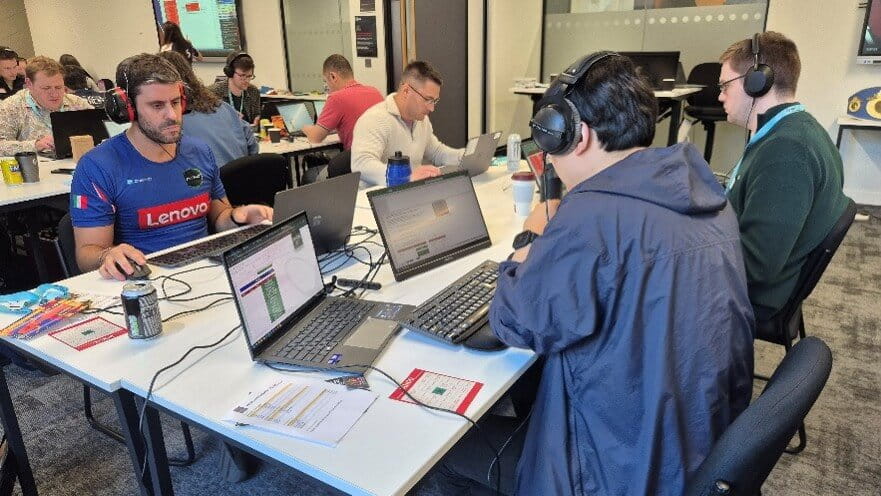
Learning extends far beyond the competition
In many ways, Excel can be a solitary activity. We sit at our desks building models, analysing data and solving problems. Events like this remind us that there is a huge community of people facing many of the same challenges every day, and that the opportunity to learn from others is never that far away from us. We just need the desire to seek it out.
As the day progressed and the cases became more demanding, we were continually impressed by the quality of the solutions being produced. What was fascinating was that there was rarely a single approach. One competitor might solve a problem with an elegant dynamic array formula. Another would build a structured model that was easy to audit and maintain. And then there were our pre-built LAMBDA competitors! More on that topic a bit later.
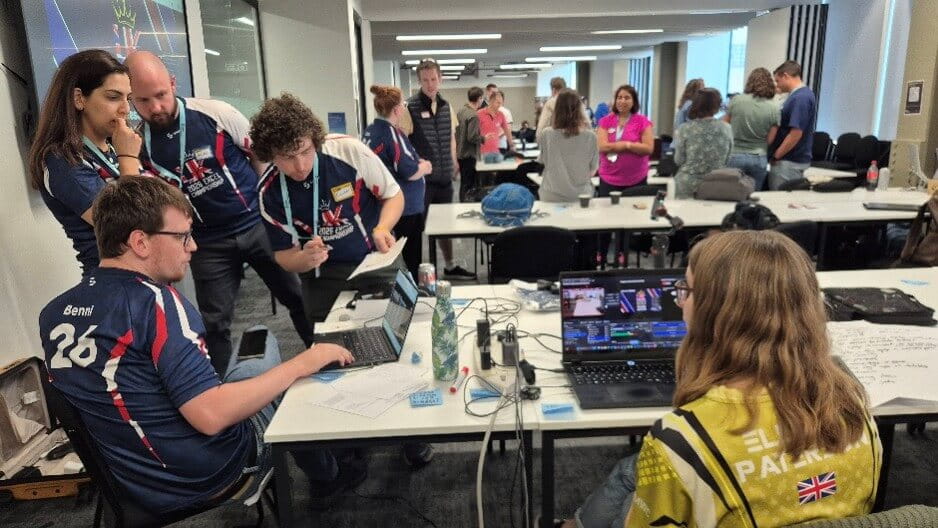
The spirit of helping and supporting others within the Excel community
Too often, we talk about finding the "right" answer, but many of the problems we tackle in our working lives are solved through a combination of creativity, judgement and experience. Great spreadsheet developers, like great accountants, rarely succeed because they follow a single formula - they succeed because they learn from others, stay curious and remain open to new ways of working.
Of course, everyone wants to perform well in a competition - and there was plenty of competitive spirit in the room. But every competitor also celebrated others’ successes, while sharing different applied techniques and knowledge. For a group of people technically fighting against one another, there was an incredible sense of generosity and togetherness.
That spirit is something we’ve both come to value enormously within the Excel community.
Whether it's through ICAEW Excel Community events, Excel on the Road, user groups or Excel Esports, we continually see people investing their own time to help others learn.

Learning, adapting, and challenging ourselves
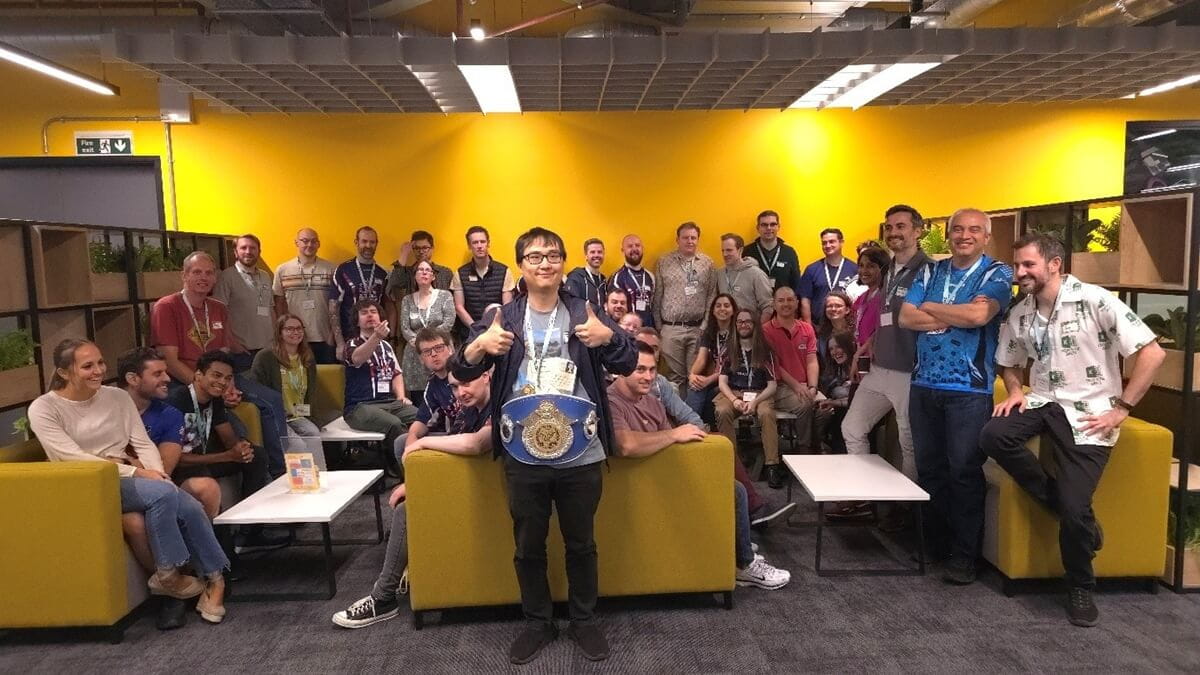
As we closed the event and announced the winner (congrats Ha Dang!), we started reflecting on the personal achievements of all of our finalists, rather than looking at individual rankings.
Each finalist had challenged themselves to compete across an entire Excel Esports season, and had stepped out of their comfort zone, committing so much time to developing their skills in advance of the finals. In a world where it is increasingly easy to stay within familiar boundaries or to delegate work and thinking to others (i.e. robots…), that willingness to keep learning and pushing yourself is something worth celebrating.
Excel Esports isn't simply about who can build the fastest model or solve the hardest case. It's about curiosity. It's about continuous improvement. It's about discovering that there is always another technique to learn, another perspective to consider and another challenge waiting to be tackled.
The UK Excel Esports Finals showcased some incredible spreadsheet talent, but they also served as a powerful reminder of something bigger. In an age of rapid technological change, the professionals who will thrive are not necessarily those who know the most right now, they are the ones who will remain curious enough to keep learning and evolving long into the future.
Looking around the room on that finals day, we both felt very fortunate to be able to spend our time with 31 people who embodied exactly that mindset.
And we think that's something the entire ICAEW Excel Community can be proud of.
We mentioned pre-built LAMBDAs earlier, and we’ve also attached a small workbook that showcases some of Giles’ Excel Esports LAMBDAs in action. The idea with a pre-built LAMBDA set is that you can immediately call upon them in the heat of battle to carry out calculation steps you’ve had to work through before.
Some think this is bad for the sport, and some just see it as a useful strategic route that rewards you for good preparation. No matter what you think from a competitive perspective, stepping into the Excel Esports world and committing to build your own LAMBDA collection will, without doubt, help you learn how to use this far more advanced feature of Excel. Have a look through the workbook yourself and see what you think.
- Cells, Chaos, and Collaboration: Excel on The Road in Amsterdam
- Global Excel Summit 2026: The sum of what you missed, sorted by where to begin
- Excel on the Road is… back on the road!
- From codebreaking to spreadsheets: what Bletchley Park can teach today’s Excel users
- Edinburgh Fringe: Excel comedy laced with tips, and flat earth believers
Archive and Knowledge Base
This archive of Excel Community content from the ION platform will allow you to read the content of the articles but the functionality on the pages is limited. The ION search box, tags and navigation buttons on the archived pages will not work. Pages will load more slowly than a live website. You may be able to follow links to other articles but if this does not work, please return to the archive search. You can also search our Knowledge Base for access to all articles, new and archived, organised by topic.